Mallee Fowl in the Murraylands region
No Comments »4th July, 2015; Category: Bush birds, Good Birding Sites, Great Birding Moments, Murray Bridge, Nests
Nearly 9 years ago I wrote the following article:
A few days ago I had a new comment on this post with an observation about the lack of Mallee Fowl in the park. Here is the comment:
I visited Ferries MacDonald CP on Tuesday 23 June and noticed that 1080 poison baits have been used to attempt to eradicate foxes. There were signs on the boundary fences warning dog owners. I did not see any mallee fowl despite spending several hours wandering through and around the park. I suspect there are none left unfortunately. I last visited the park thirty years ago and saw one there at that time as well as a few active nests. The park is not large and is surrounded by farmland. It may be too small to provide a suitable habitat for mallee fowl. I hope I am wrong. David.
The following was my reply:
As a result of your comments my wife and I briefly visited the park last Sunday. We actually spent more time in the nearby Monarto Conservation Park.
The poison baits programme has been ongoing for quite some time, probably years, and is a common practice in many parts of Australia. I have walked through both of these parks on numerous occasions over the last 30 years (I live in Murray Bridge) and have only ever seen Mallee Fowl on one occasion, two together on the side of the road near where the two roads intersect.
Last Sunday I checked on one of the Mallee fowl nest mounds that I have checked regularly since finding it some 10 years ago. It was active as recently as about 3 years ago, but sadly it now looks as if it hasn’t been used in at least the last two years, possibly longer. I know of at least 3 other mounds but I would be hard pressed to find them now. Extensive surveys of nesting sites have been conducted but I do not know when the last was done, nor the results.
On a related matter, national parks rangers were, I believe, removing eggs from the active nests, taking them to Monarto Zoo for hatching artificially and then returning the birds to the wild, including this park. Some birds were released with radio tracking devices and the failure rate was near to 100%, probably due to fox predation.
On a brighter note, a friend who lives less than a kilometre from the park saw a Mallee Fowl wandering through his garden only last year, so there is hope that some are surviving in this area. There are also regular reports of sightings east of the Murray River, and from the south east parts of the state.
Further reading:
- Ferries-McDonald Conservation Park – now updated with new information
- Mallee Fowl – the incubator bird
- What kind of duck was that? An exciting observation of Mallee Fowls
- Birds of Monarto Conservation Park
A new bird for me
No Comments »12th April, 2015; Category: Botanic Gardens, Bush birds, Great Birding Moments, Honeyeaters
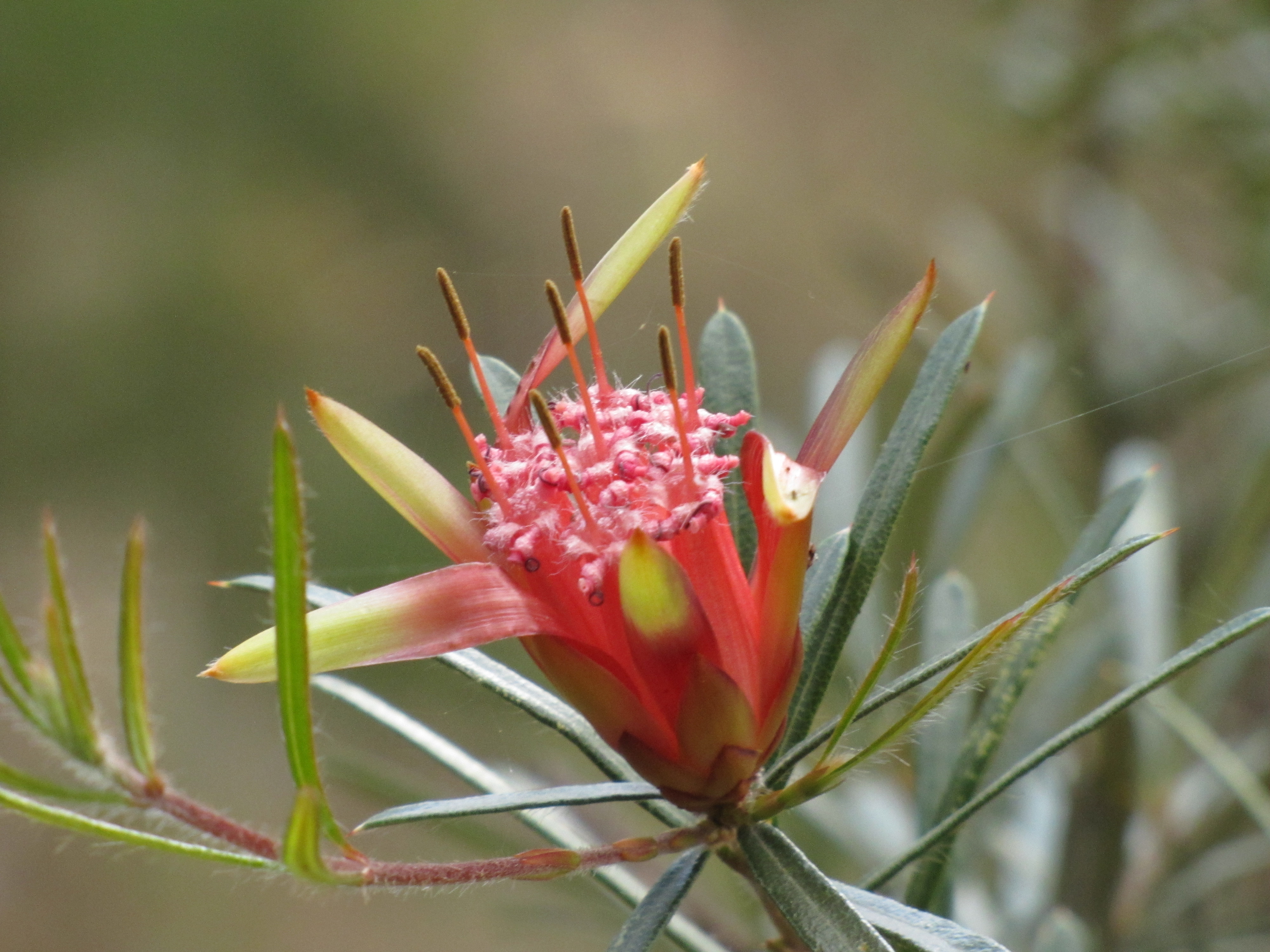
Lambertia formosa
Over recent years we have often visited family in Sydney, a two day drive from home. Whenever we have the chance we visit local bushland, parks and botanic gardens. Today was one such opportunity. For nearly two hours this afternoon my wife and I visited the Ku-ring-gai Wildflower Gardens in St Ives. My wife is interested in Australian native plants and areas featuring our native plants also attract a wide range of our native birds as well.
Over the years I have had mixed results birding at these gardens. On some occasions the birdlife is so prolific I have trouble keeping up with identifying what I am seeing, writing down a list of birds seen, and photographing birds as they come into camera range. On other occasions the birdlife seems almost non-existent.
Like today.
During the eating of our picnic lunch I heard only 4 individual birds: Australian Raven, Noisy Miner, Black-faced Cuckoo-shrike and a Red Wattlebird. I actually only saw the last two in that list. It was not a good start. Little did I know how our time in the gardens would end.
After lunch we went on one of the walks through the natural bushland near where we had lunch. This walk has proved quite productive birding on a few occasions. During the walk we saw a few native plants in flower and this sustained our interest. I’ve shown several of these flowers on this post.
Other bird species encountered include an immature Grey Butcherbird, several Silvereyes, Sulphur-crested Cockatoos, Rainbow Lorikeets and a Little Wattlebird. I think I saw a small flock of Red-browed Firetails fly across the road as we left, but they flew too quickly for a positive identification.
Just moments before we were about to leave, however, I had one of those wonderful experiences I have called Great Birding Moments on this site. I saw a male Scarlet Honeyeater – for the very first time in my life! A “lifer”! This has been one species I have wanted to see for a long time but it has eluded me so far. What is more, I managed several very poor photos. I hesitate to show one here because it is not up the standard I like to show here, so please forgive me. I will try to get a better one someday soon.

Scarlet Honeyeater
I should add that this photo was taken in poor light – it was very overcast – against dark clouds and at full zoom on my camera at a distance of about 40 metres. And the bird was sitting at the top of a 20 metre tree. So, all things considered, I was really pushing the limitations of my camera. The image is slightly cropped as well.
Further reading:
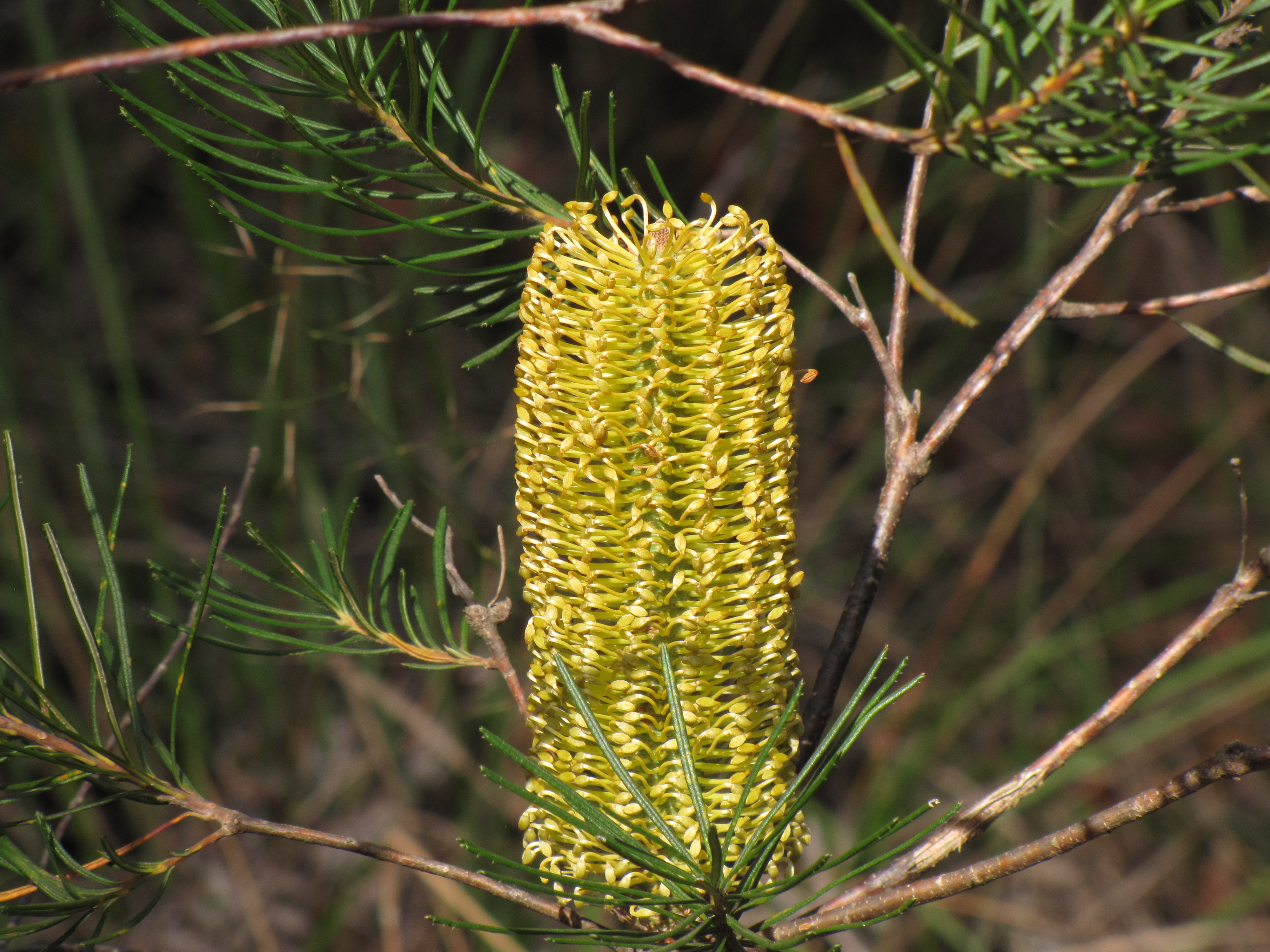
Banksia oblongifolia
More Superb Fairy-wrens
2 Comments »29th January, 2015; Category: Bird baths, Bush birds, Garden birds, Great Birding Moments, Nests, Wrens
Most mornings we have breakfast in our sun room overlooking our garden and several bird baths all within five metres of where we sit. Quite a few of the photos I have shared here over the years were taken from that very spot. After breakfast I usually read the daily paper and attempt the various puzzles as time and patience allow.
Yesterday I looked up from my paper to see our little family of Superb Fairy-wrens coming in for a drink and a short splash in the water. As I watched I did a quick count – and then an excited double check. We now have five wrens in our garden. They have either been joined by another, or have been successful in breeding this summer. One of them was begging from the coloured male, so I lean towards a happy nesting event recently.
This little troupe of birds has grown steadily in numbers over the last three years. I had recorded this species in our garden over twenty years ago and then they disappeared until three years ago. I suspect the many feral cats in the district are to blame.
On our arrival home after an overseas trip in the middle of January three years ago we were delighted that a coloured male and a female had taken up residence in our absence. Several family groups have always been present up the hill from home in some bushland about a kilometre away.
For some months we saw just the two of them. Later that year we saw three together on many occasions, and the next year there were four – and now we see five together. We are delighted to see and hear them in our garden on most days and pleased that they consider our garden a suitable habitat in which to reside and breed.
I am not showing any new photos today because I didn’t take any on this occasion. Instead, I have listed below some links to previous articles with photos of wrens for you to look at.
Further reading:
- Great birding moments #35 – Superb Fairy-wren
- Great birding moments #34
- Wrens at the birdbath
- Our wrens are back
- Beautiful Superb Fairy-wren
- Great birding moments #21 Splendid Wren
Great birding moments #35 Female Superb Fairy-wren
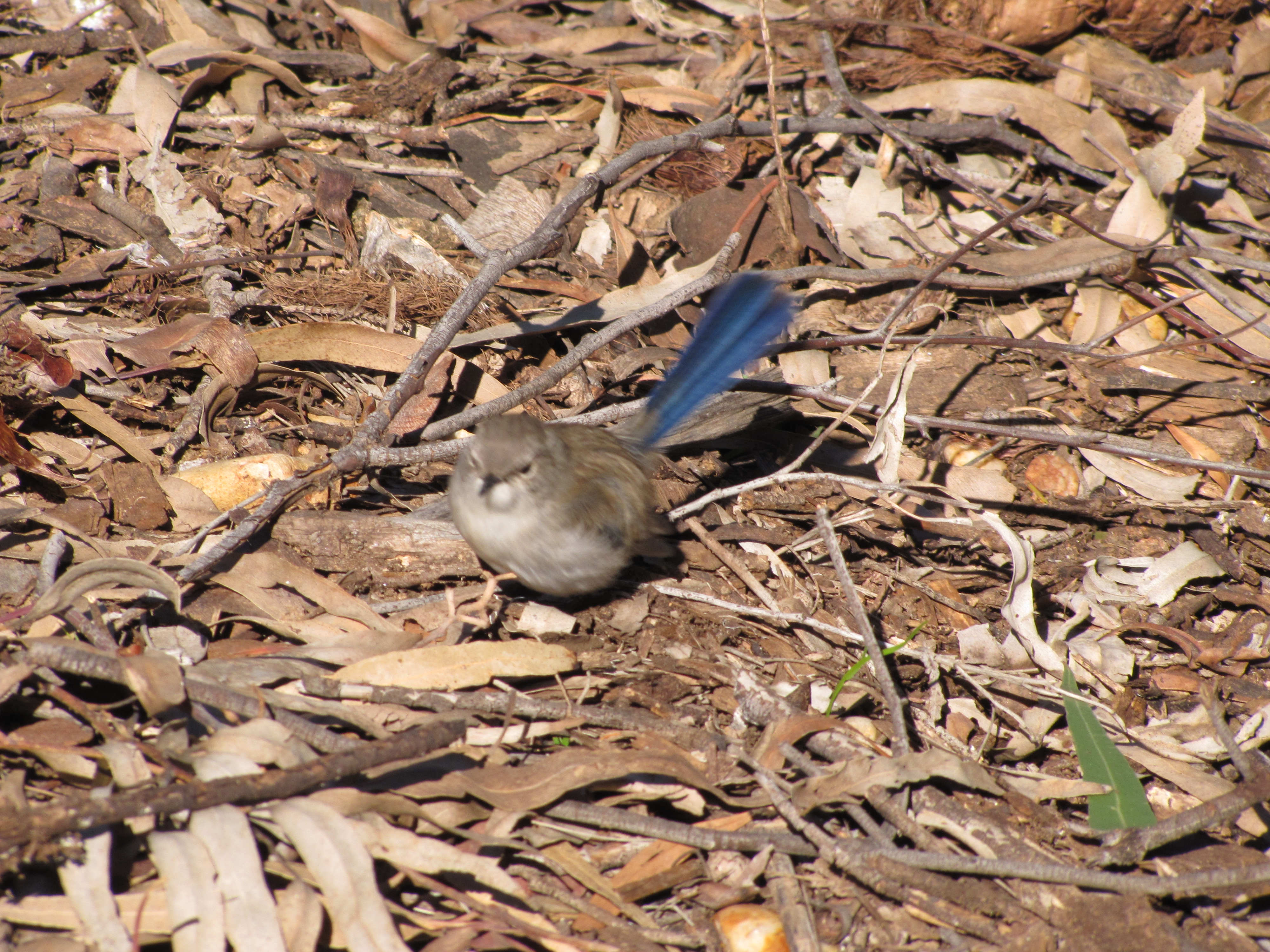
Female Superb Fairy-wren
I have a confession to make.
I have just informed my wife that I insist on doing the clothes washing.
Reluctantly she has agreed to my request. My reason is simple; many times in recent years I have had some wonderful birding experiences while hanging out the washing on the clothes line – or bringing in the dry clothes. My eyes are always gazing upwards when doing this easy household chore and I have seen some great birds during this activity. Perhaps the most stunning was seeing a Peregrine falcon at top speed heading for what I think were some pigeons. Whoosh!
Adding to the birding dimension is the fact that our clothes-line is surrounded by trees and low to medium Australian Native plants (see me wife’s site here), so there is always some bird activity all around me. Distractions are common!
My latest Great Birding Moment happened yesterday while taking in the washing. I had almost finished and a female Superb Fairy-wren landed on the clothes-line next to me. As it cheerily chattered to me I could have reached out and patted it. It stayed there calling quietly to me for nearly a minute – a whole magical minute!
How wonderful.
I felt so privileged – and truly blessed.
Good birding.
Further reading:
- Great Birding Moments #1-35 The above article is one of a series of articles along a similar theme.
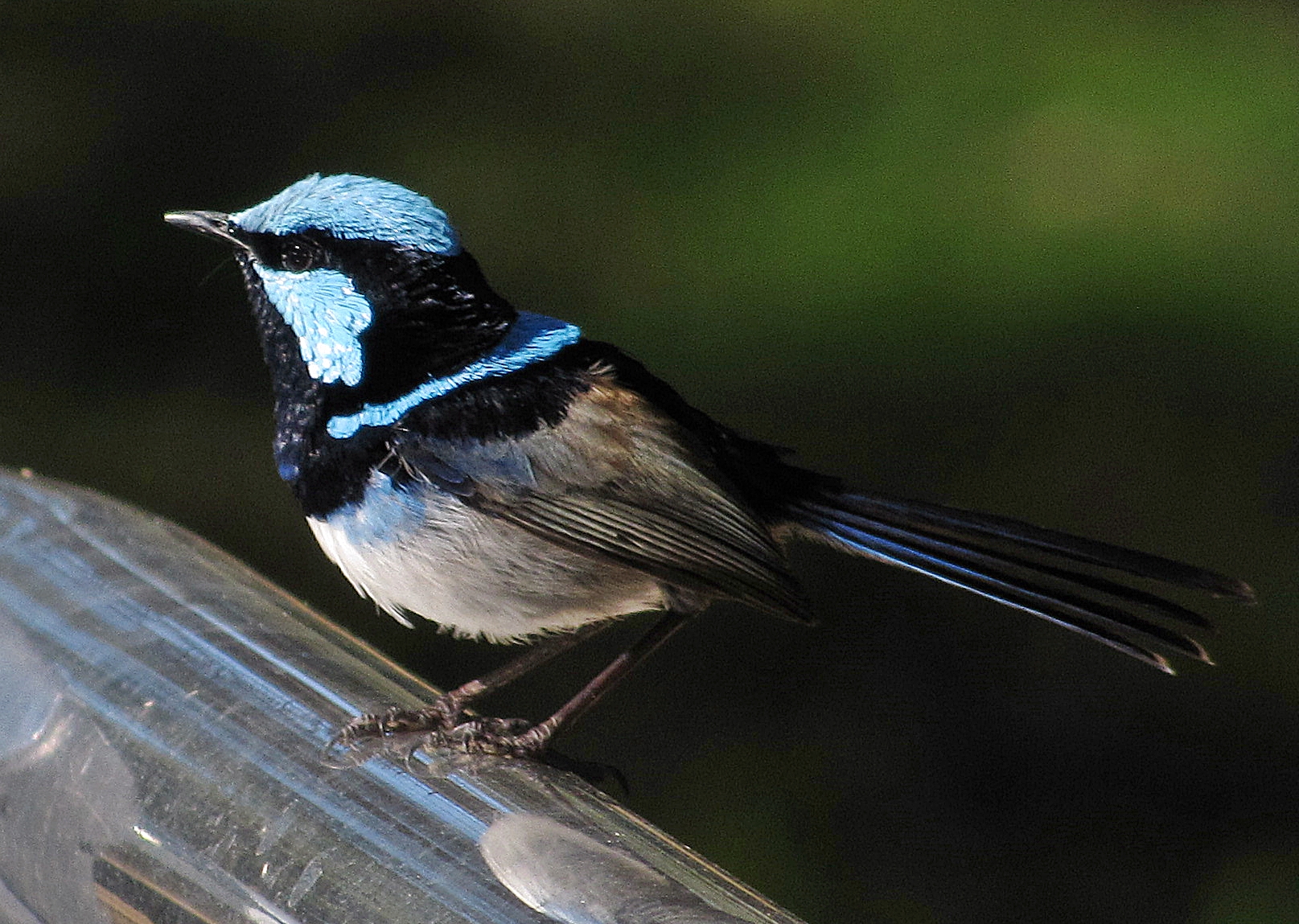
Male Superb Fairy-wren
A flash of colour on a dull winter’s day

Male Variegated Fairy-wren
My wife and I are currently visiting family in Sydney. Yesterday we were free from helping out with the grandchildren for a few hours, so we packed a picnic lunch and headed out to a few potential birding spots.
One of the places I was keen to revisit after many years was Long Reef Point next to the Long Reef Golf Course, Dee Why north-east of Sydney CBD.
It was a cool, dull, overcast day and the birding was quite slow. Despite this I made quite a nice little list of local resident birds but few photos. While there I realised it was the wrong time of year. Most of the migrant wading birds had long flown north to Asia for our winter. Wise birds.
During our visit, my wife and I sat quietly on a rock at the top of the point reaching out to sea from the mainland. Watching the waves come in can be very good for the soul, and very relaxing. We were pleased that it was a calm day; on windy days one could easily get blown off the cliff onto the beach or rocks below.
As we sat quietly a family of Variegated fairy-wrens came to visit within a few metres of where we sat. Despite the fact that wrens move incredibly quickly, I was able to get several good shots, shown on today’s post. The one below of female is quite delightful. It looks for all the world like she is scolding us for intruding on their territory.
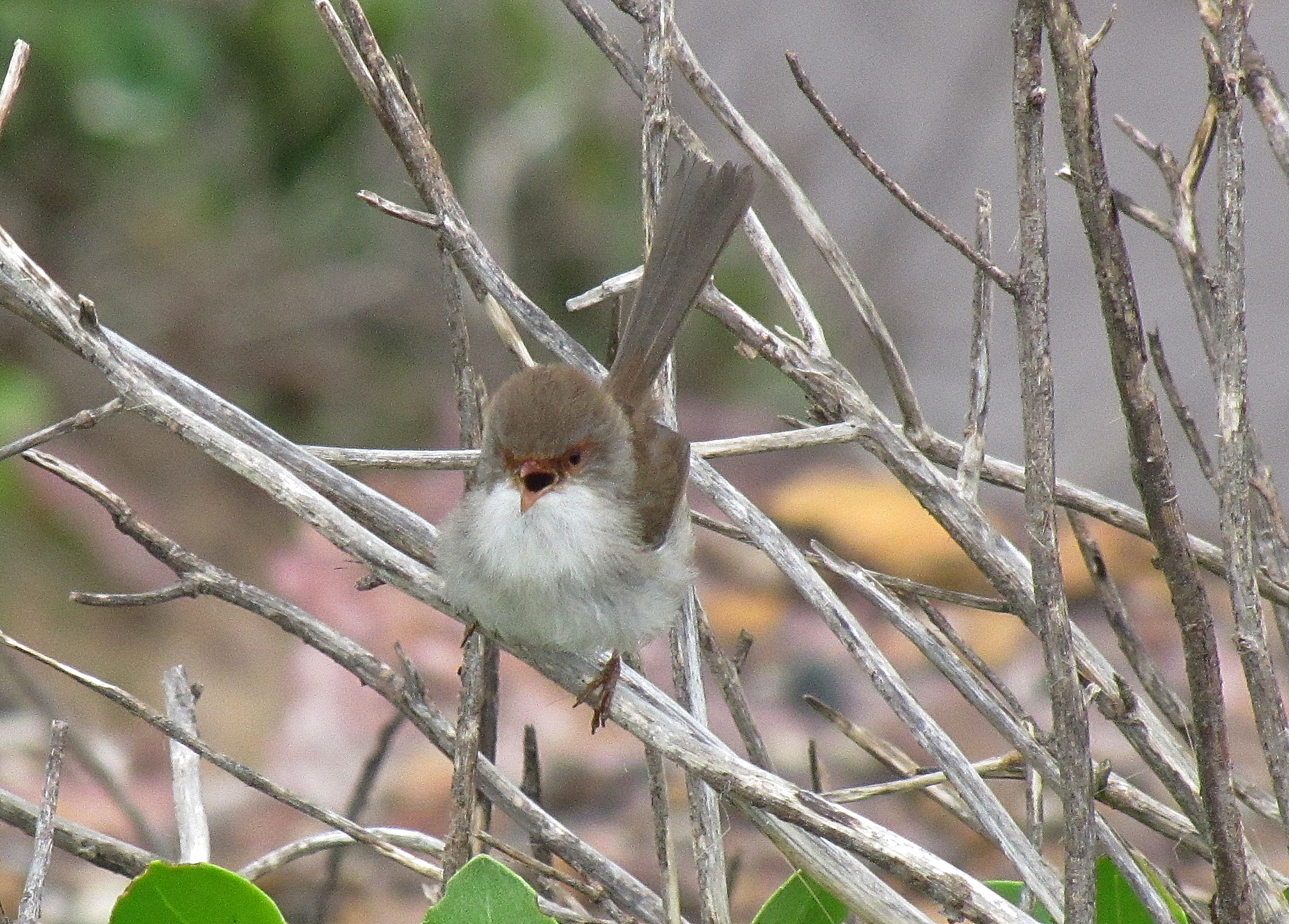
Female Variegated Fairy-wren
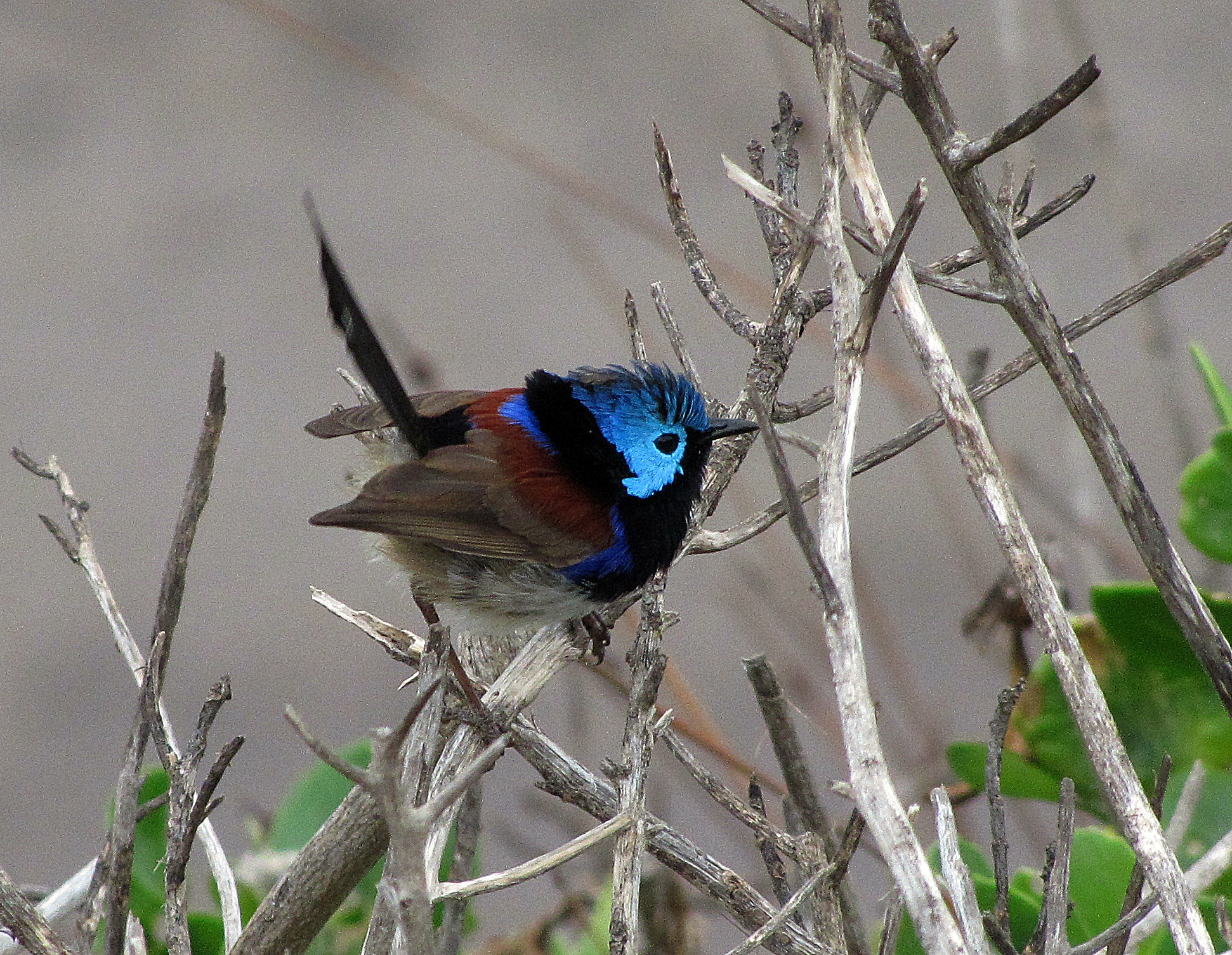
Male Variegated Fairy-wren