Silvereyes come for a bath
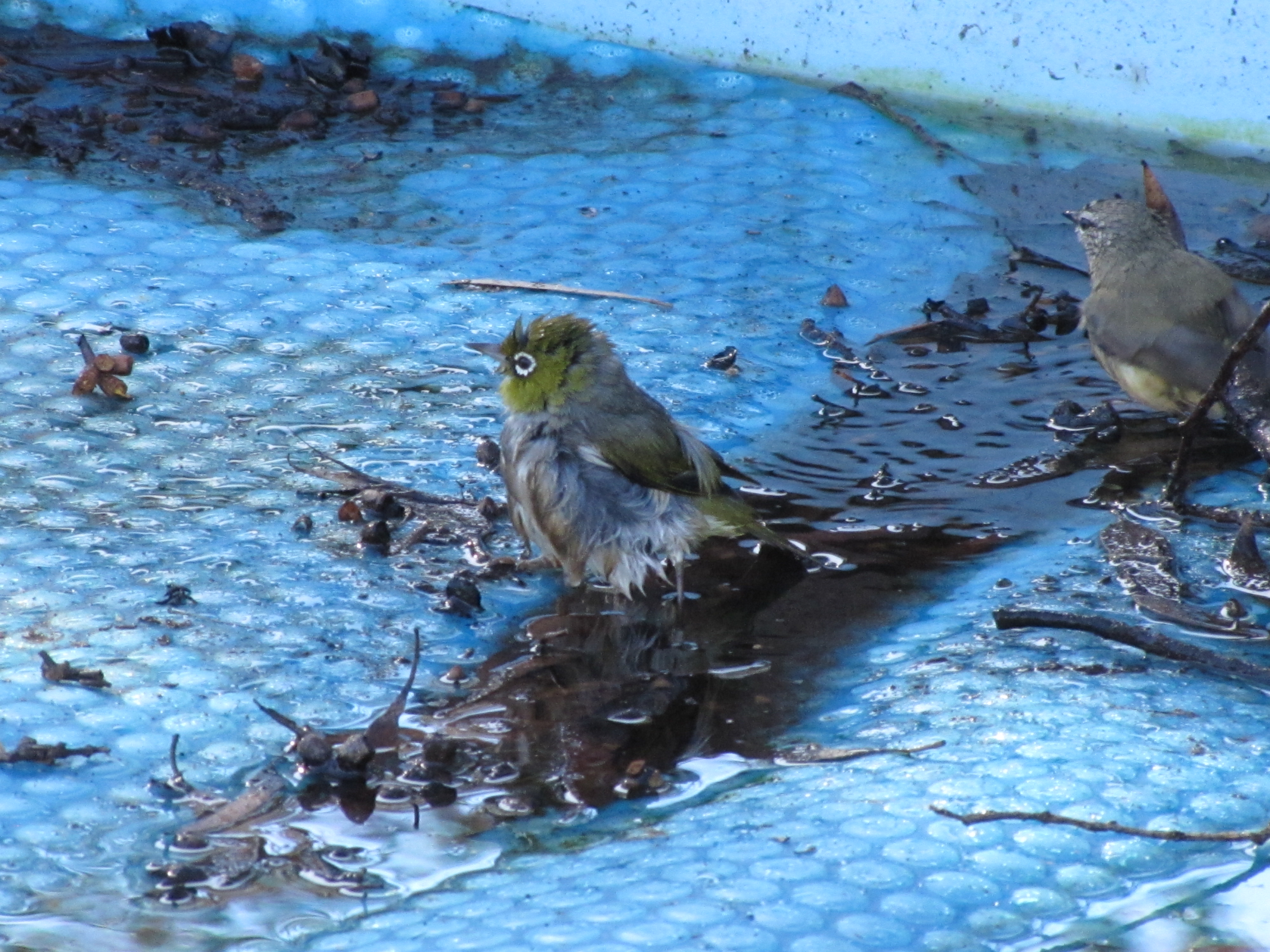
Silvereye (Yellow-rumped Thornbill in background)
In my last article here I posted some photos of Yellow-rumped Thornbills bathing in the small pools of water which gather after rain on our swimming pool solar blanket. On the same day, a small number of Silvereyes also came for a drink and to bathe. I have shown these in today’s post.
Our swimming pool is in our backyard, a short distance from our back veranda. On nice sunny days when it is not too hot in the middle of summer, or not too cold in the middle of winter, we enjoy sitting on the veranda to have our lunch. Sometimes we take a mid-morning break there for a cup of tea or coffee. We have also taken an afternoon break when gardening.
On all of these occasions, we enjoy the constant parade of birds in our garden, perched on the fence or in the trees nearby, and on the pool cover like the Silvereyes shown today. I often have my binoculars and camera at the ready while we sit there. On this occasion, I managed to get many photos of the Silvereyes and the Yellow-rumped Thornbills. A Grey Fantail was also fluttering around, but you will have to return in a few days’ time to see those photos in my next post.
The water that gathers on our swimming pool cover in the winter and spring months are visited by many birds over the course of each day. In addition to the species I have already mentioned, another frequent visitor is the Magpie Lark. Both the male and the female come on a daily basis, often perching on the pool safety fence and calling loudly, their antiphonal singing a delight to hear. (Antiphonal: when the two birds sing a duet in parts.)
Our resident Australian White-backed Magpies also come to drink, and the bossy Red Wattlebirds will chase the smaller birds off. White-plumed Honeyeaters flit in and out nervously, while the Peaceful Doves take their time, gradually getting closer and closer until they gather the courage to stoop and drink. The Crested Pigeons also come for a drink, though they are usually more interested in mating displays than drinking.
The Welcome Swallows occasionally swoop low over the pool but more often they are seen much higher in the air. The many House Sparrows and Common Starlings come frequently to drink and bathe, but the resident Mallee Ringnecks rarely do so; they prefer to feed in the nearby trees. The Willie Wagtails, however, are frequent visitors to this part of the garden.
As you can see, it is never boring in our garden if you are a birder like myself.
Good birding,
Trevor
PS: Over the years, I have written articles about all of the birds mentioned in this article. To see photos of them, and to read more about each of them, use the search facility in the top right-hand corner of any page.
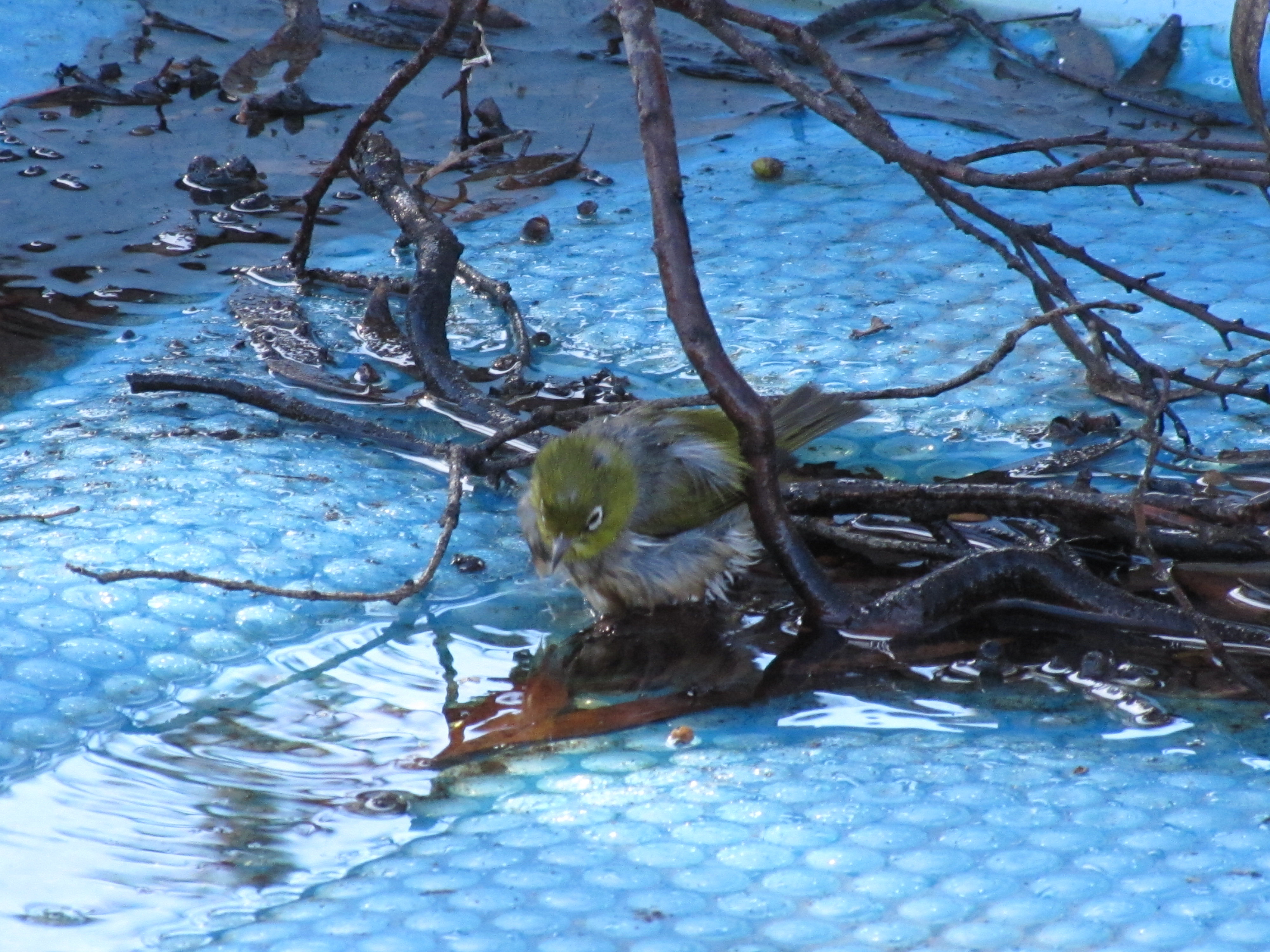
Silvereyes
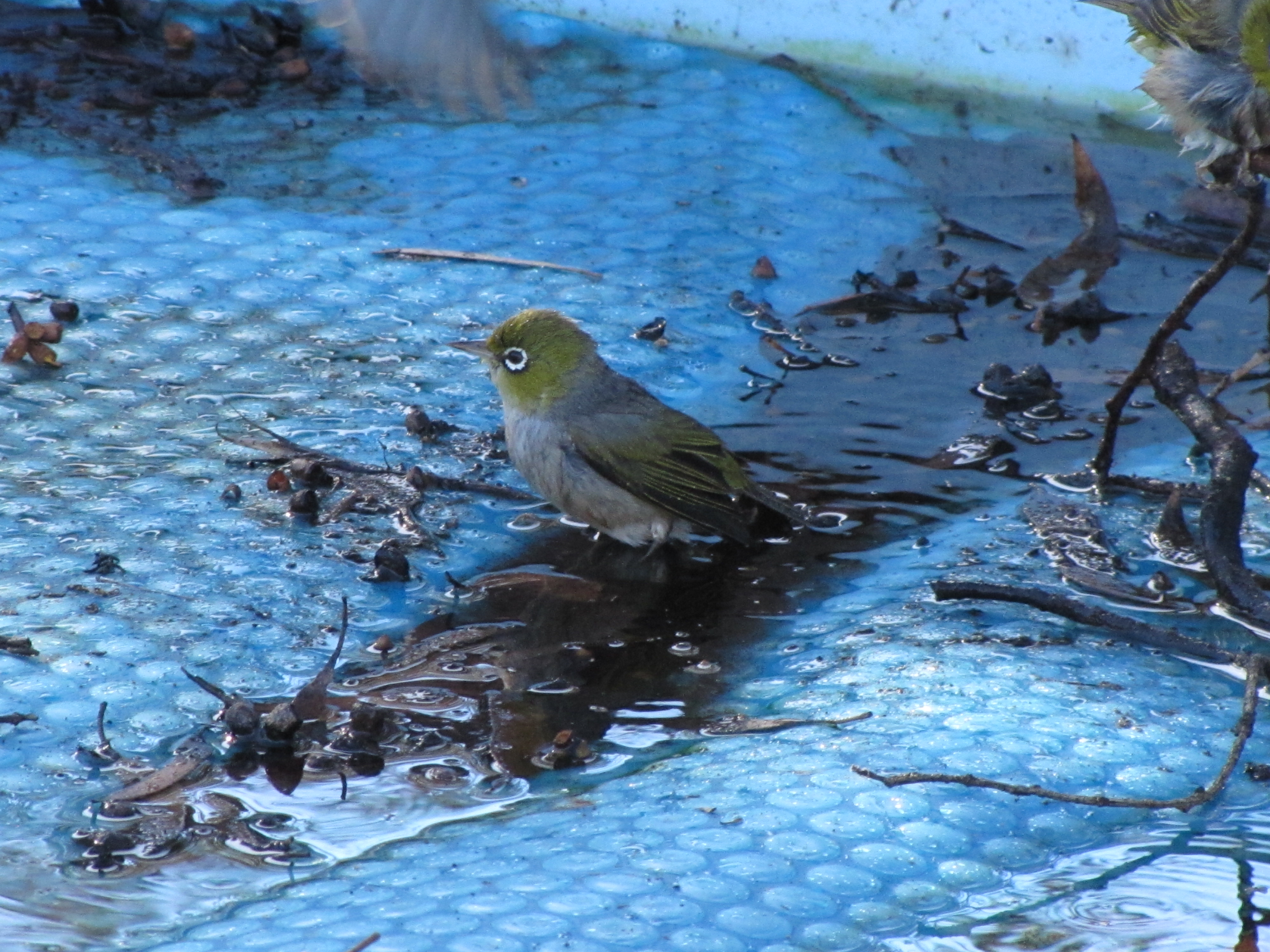
Silvereyes
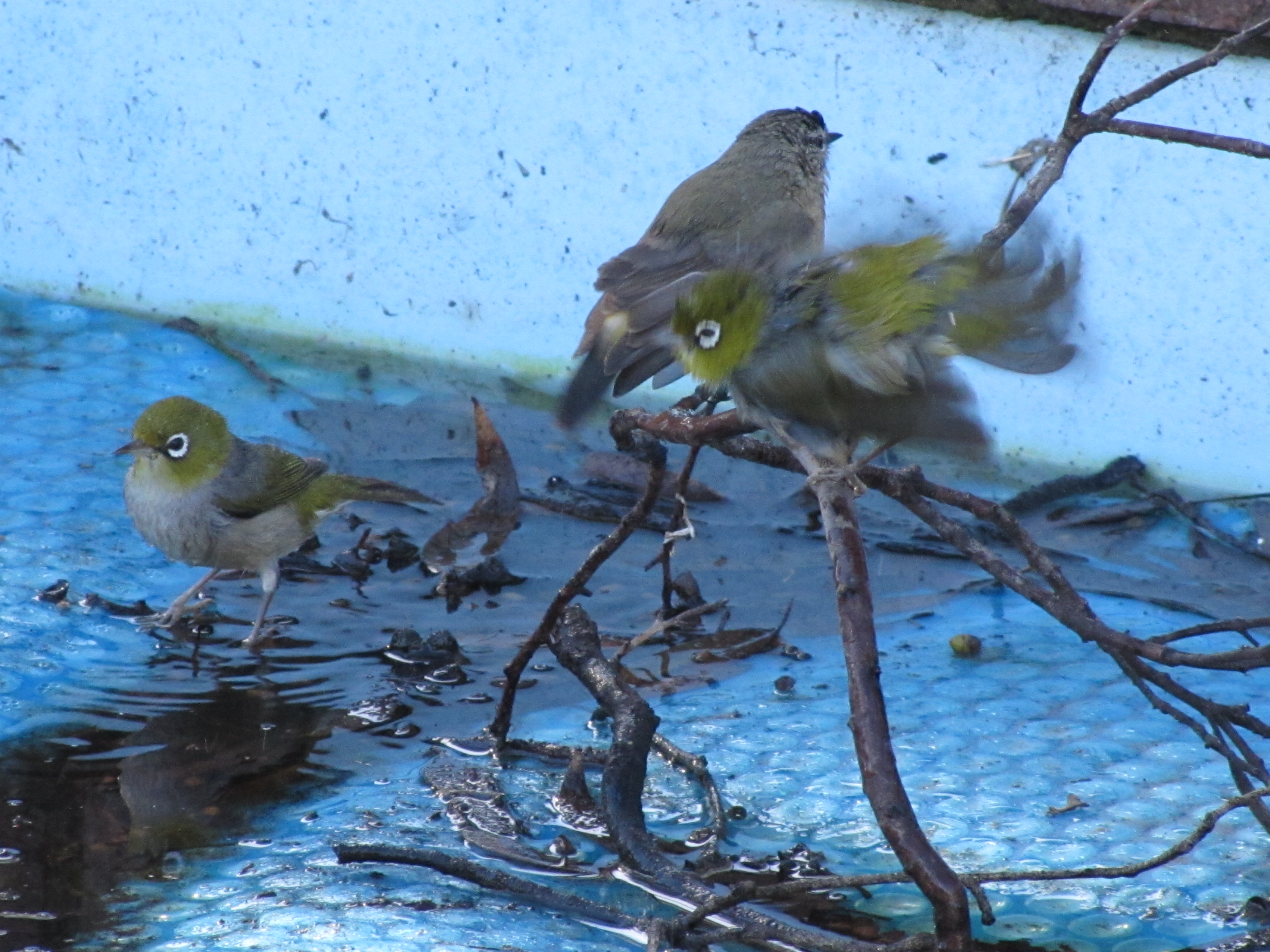
Silvereyes (Yellow-rumped Thornbill in the background)
Another close encounter
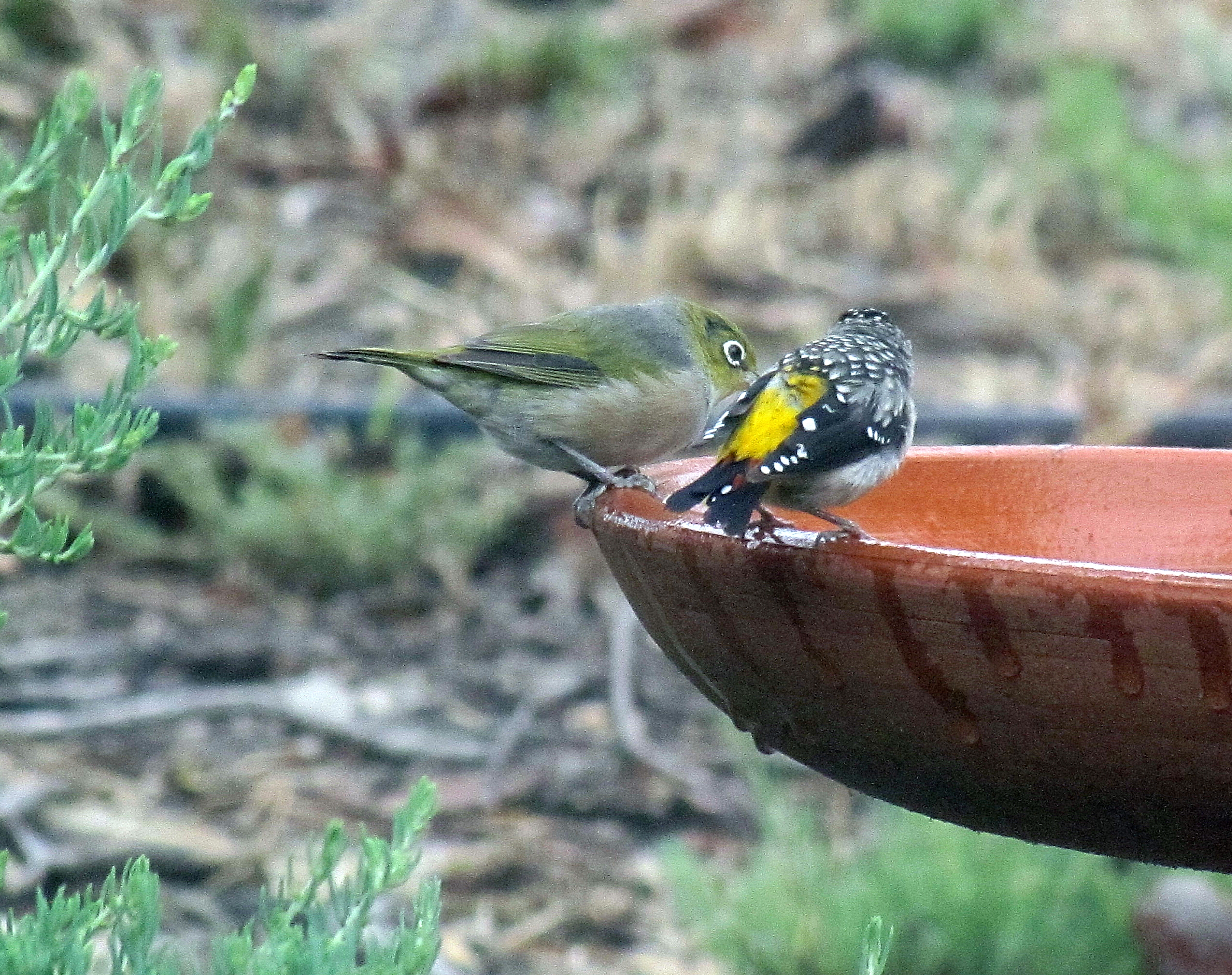
Silvereye and Spotted Pardalote
I had another close encounter with one of the resident birds in our home garden this morning.
I had just finished watching a long parade of birds coming to either drink from our bird baths, or to have an early morning splash before a warm day. The various visitors had quite depleted the water, so it was time to get a bucket of water from the rainwater tank and then clean and refill the bird baths.
After cleaning the containers I went to fill them up again with fresh water but was distracted by a little Spotted Pardalote coming in for a drink. It gradually approached closer and closer until it was about 50cm away from me. It watched me intently for about ten seconds, obviously waiting for me to refill the bird baths.
I love these close encounters. Pity I didn’t have my camera with me – the photo above was taken some time ago and also shows another regular visitor to our garden, a Silvereye.
Other species seen while having breakfast include:
- Brown-headed honeyeaters
- Red Wattlebirds
- New Holland honeyeaters
- Spotted Turtledove
- Crested pigeon
- Australian Magpie
- House sparrow
- Striated Pardalote
- Yellow thornbill
It ain’t half hot
1 Comment »15th February, 2014; Category: Bird baths, Bird Behaviour, Garden birds, Pardalotes, Silvereyes
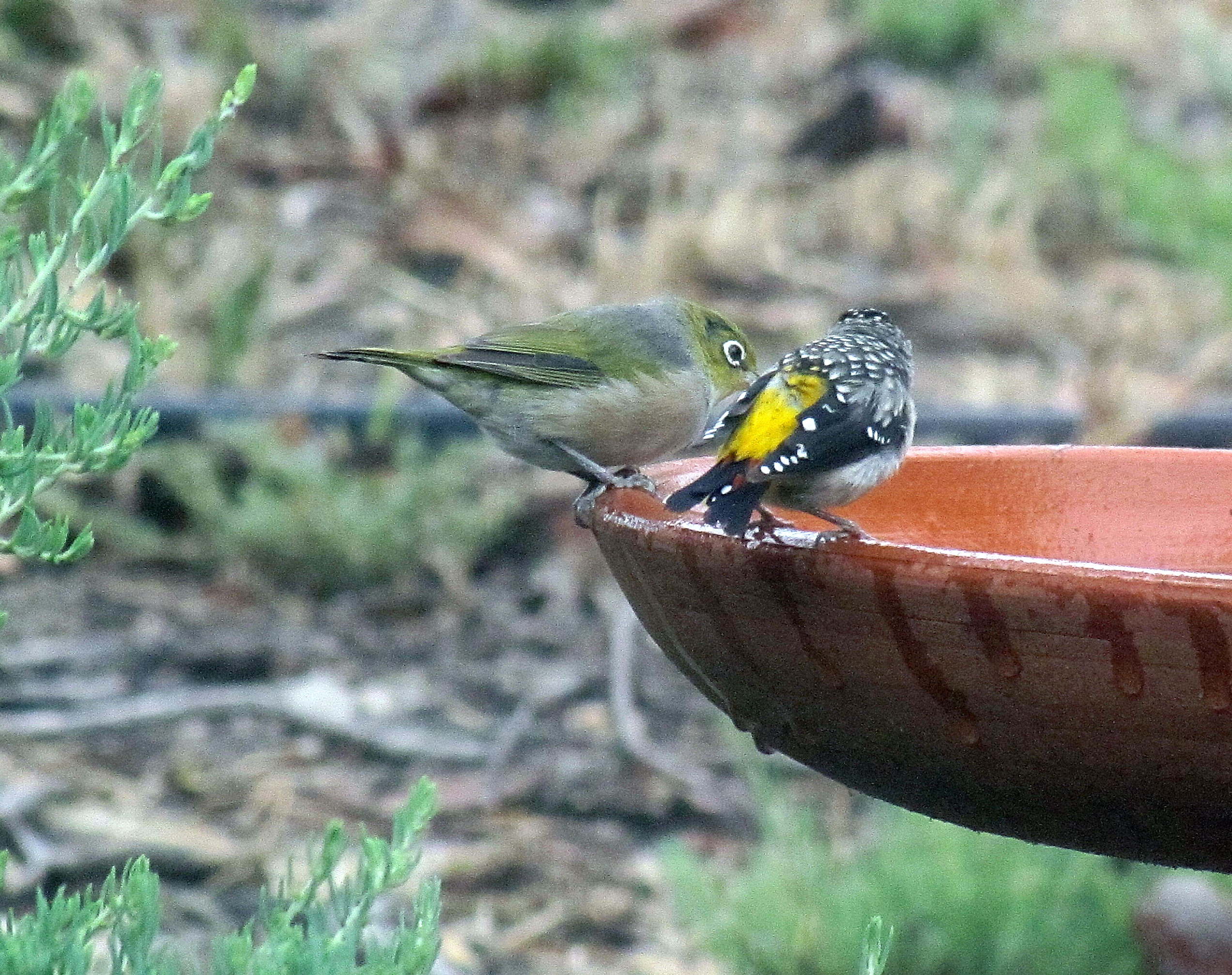
Silvereye and Spotted Pardalote
We love our bird baths.
We regard them as a good waste of time. The visiting birds bring us so much joy and entertainment. During the warm weather like we’ve been having this summer, I daily refill each bird bath before I have breakfast. This meal is usually eaten in our sun room – just a few metres from several of the bird baths.
During warm weather there is a constant stream of birds coming to drink and/or bathe. Almost every day there is something of note worth stopping to watch. On this occasion I had my camera ready. A Spotted Pardalote and a Silvereye drinking side by side is an unusual sight. They seem almost as if they are chatting about the hot weather – or perhaps even the vintage of the water!
Yesterday I wrote about the Silvereyes that visit our garden (click here to read). The Spotted Pardalote is another frequent visitor to the bird baths and I regard it as a resident breeding species on our 5 acre property. Hardly a day goes by without them visiting the bird bath – in fact, they seem to visit every few minutes during the hottest parts of the day.
The colours on the one shown in the photo above are particularly brilliant. It could mean that it is showing its full breeding plumage.
The dainty Silvereye
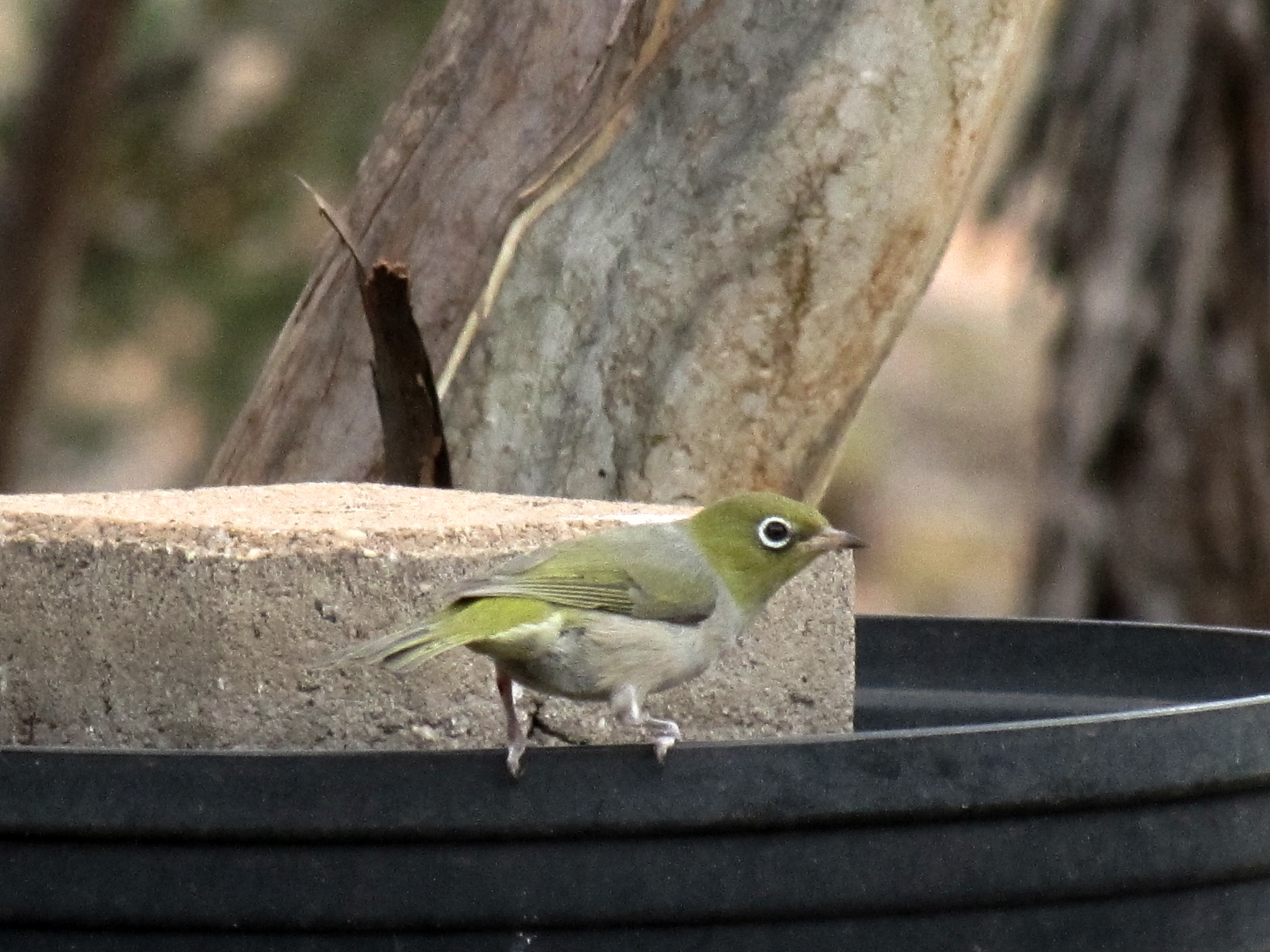
Silvereye
Silvereyes are small, dainty birds about the size of a House Sparrow. They are relatively common and widespread throughout its range in eastern and southern Australia.
I can’t call this species a resident species in our garden here in Murray Bridge, but it is a frequent visitor throughout the year. In recent weeks several of them have become regular visitors to our bird baths during the extremely hot weather we have experienced. (Many records have recently been broken regarding high temperatures.)
While I have called it a dainty bird with a delicate demeanour and a soft alluring call, there is a darker side to this bird according to some people. They have a liking for fruit ripening on trees and vines. Their sharp beak is ideal for piercing grapes, apricots, peaches , berries and other fruits, leaving the fruit spoiled as a result. That is why I have gone to much trouble – and expense – to cover our fruit trees with bird netting. My strategy seems to be working – so far.

Silvereye

Silvereye
Silvereyes at Culburra, SE South Australia
1 Comment »1st March, 2010; Category: Silvereyes

Silvereye, Culburra, SE South Australia
On my recent visit to Tintinara on a business trip I was able to take out some time to do some birding on the way home. I’d finished work, so the time was my own. Between Tintinara and Coonalpyn in the upper south east of South Australia the highway travels through some very interesting country. The dominant vegetation is mallee and wattle, mixed with banksias and a whole range of interesting smaller plants. My wife wasn’t with me; she is the plant expert in the family. She writes a blog about Australian plants (click here.)
About halfway between these towns is a locality known as Culburra. There was a small town there at one time; now only a few houses. At one point there is a road side rest area for tired travellers. I drove in here, parked the car and wandered into the bush. Nearby there is a water tank; I’m not sure of its purpose as there was a sign warning against drinking the water. A few metres away there was a metal slab set in the ground with water weeping from it. This probably covered a pipeline or possibly even an access point for fire fighting trucks.
The seeping water had formed several little pools and the local birds were taking advantage of the freely available water. I watched in the shadow of a nearby tree for some ten minutes while the procession of birds came to drink. The most frequent drinkers were the Silvereyes – shown in the photos. These beautiful little birds are common in the area and would have to be one of my favourites.
Click on the images to enlarge.
Further reading:

Silvereye, Culburra, SE South Australia

Silvereye, Culburra, SE South Australia