A house of mud
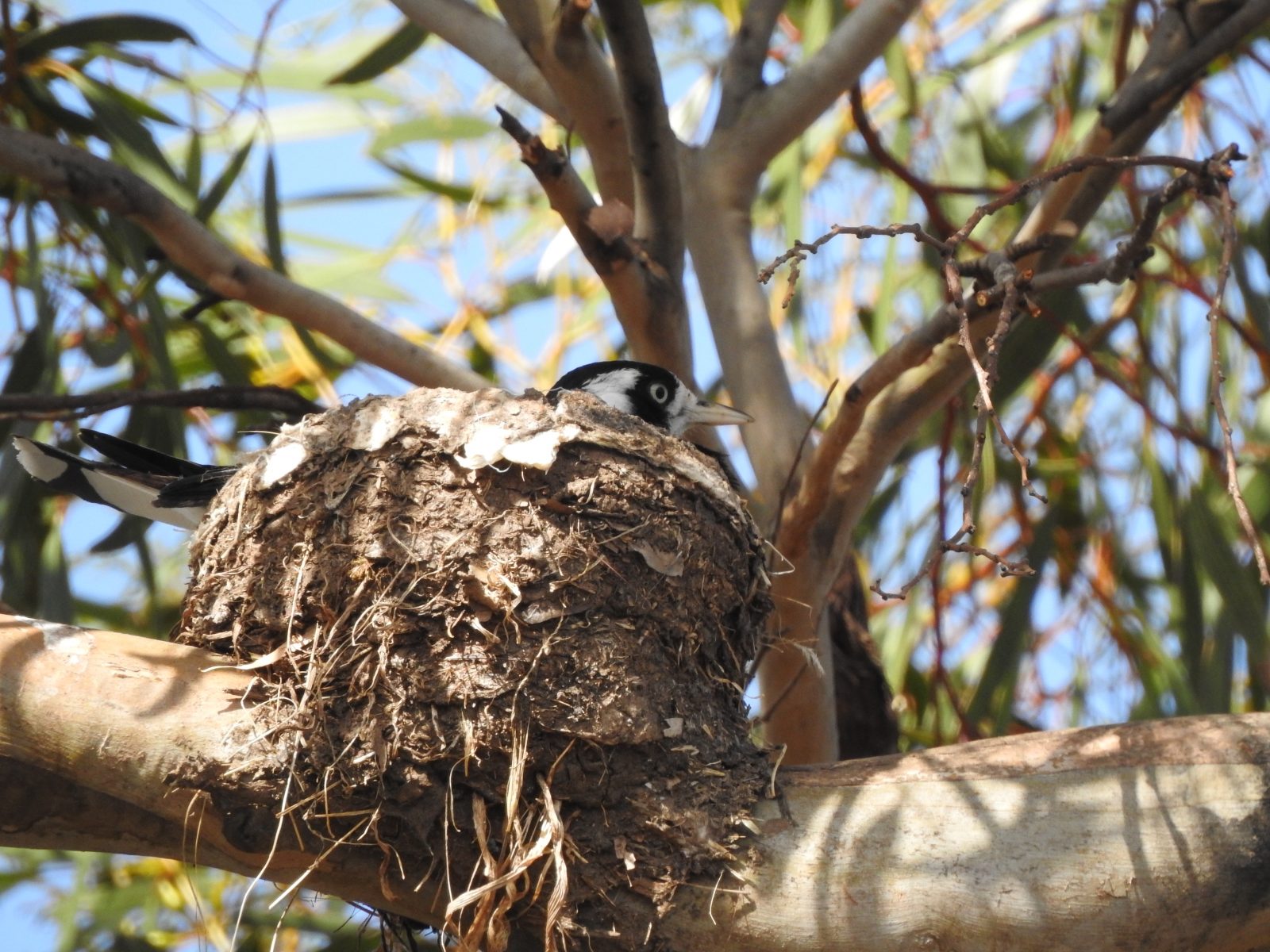
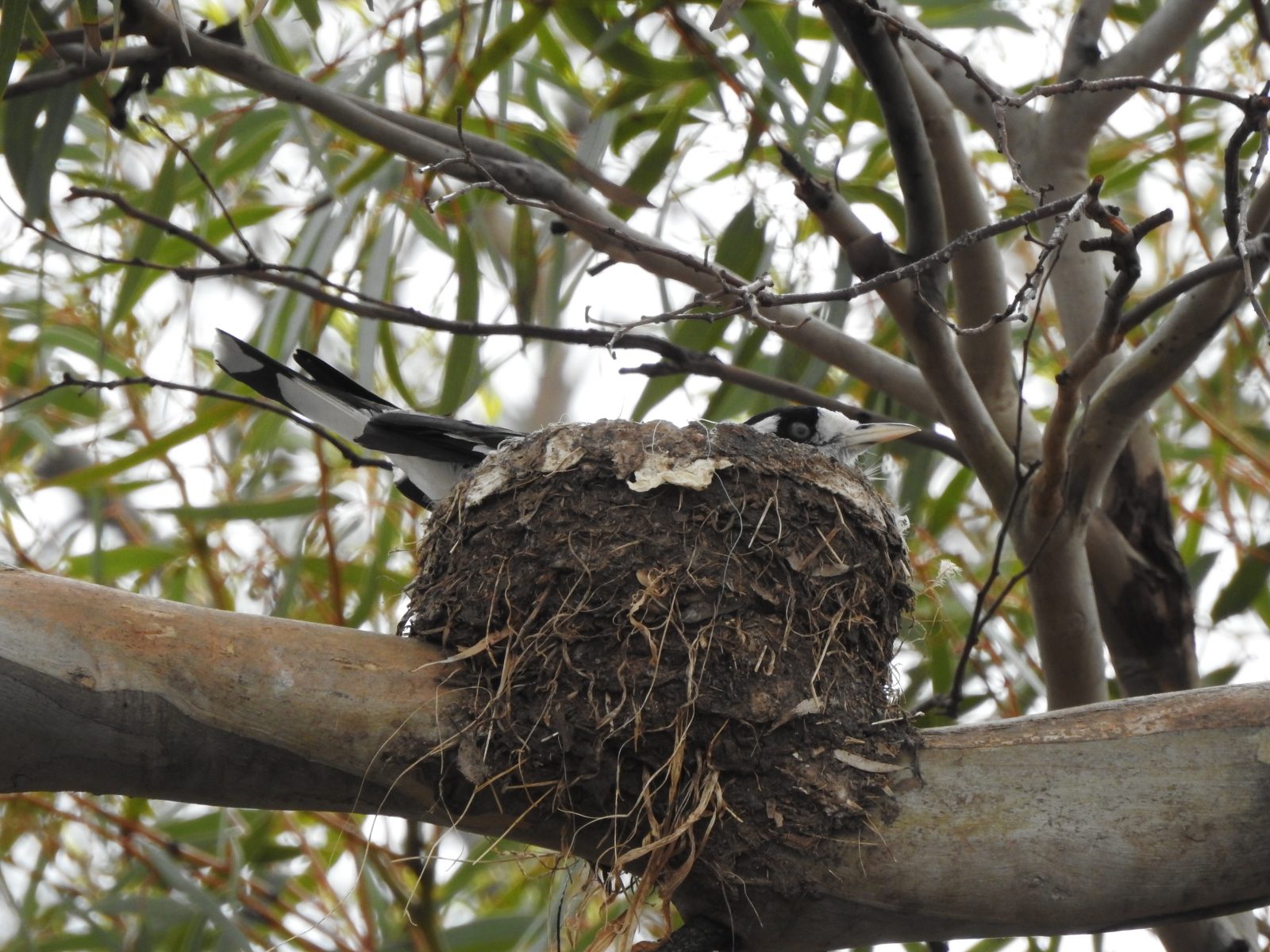
Magpie Larks’ nest
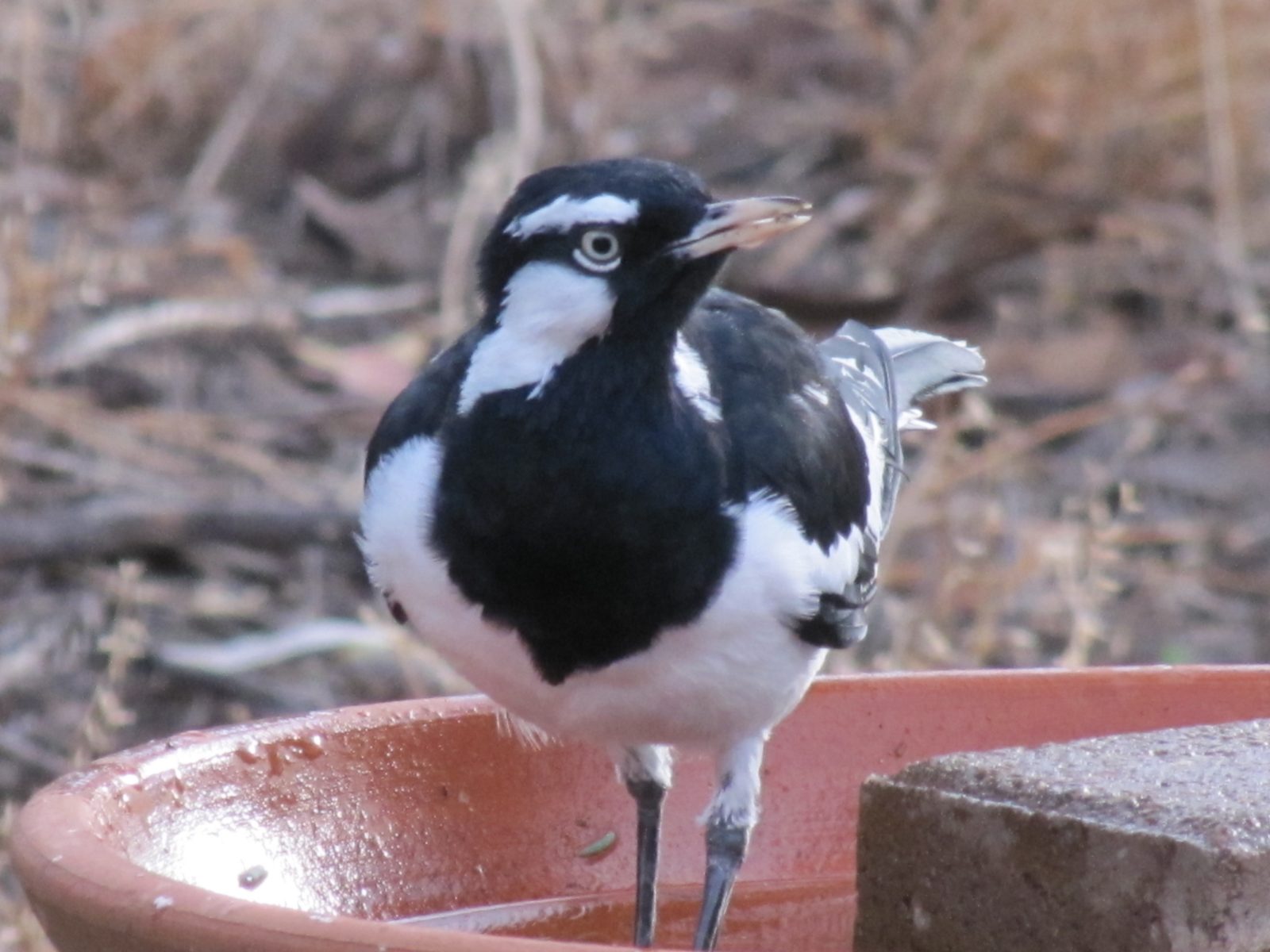
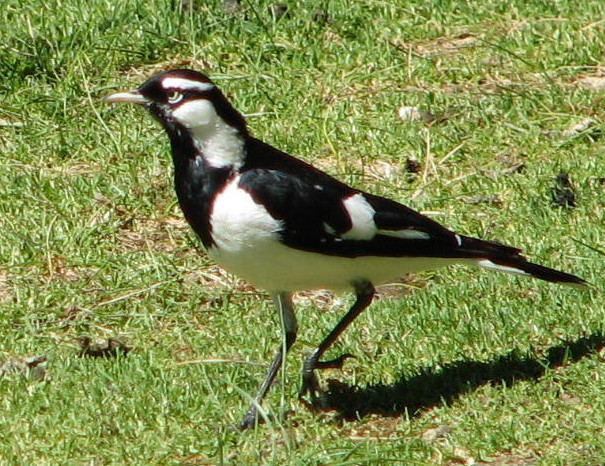
Magpie Larks are a resident bird species in my garden in Murray Bridge, South Australia. By “resident bird” I mean that I see them every day. The pair I have on my five-acre property on the edge of the town is also a breeding pair.
Magpie Larks are also known as Murray Magpies, Peewees (imitating their call), and Mudlarks. They are not magpies, nor are they larks. Confusing? Yep.
A cheeky falcon
This year they have nested twice. The first attempt was in a eucalypt tree next to my driveway. The mud nest was quite well camouflaged in the outer canopy of leaves – or so I thought. I found it very hard to get a photo of that nest because of the leaves and twigs nearby. Sadly, a very cheeky Brown Falcon flew in one day and took one of the chicks. Despite being chased by the parent Magpie Larks, the falcon got away with the chick in its talons.
A new attempt
Undeterred by the attack on the nest, the Magpie Lark pair tried again. This time they made their new nest in the tree near my back veranda. I could sit in my comfortable chair on the veranda and watch them build their new home. This took several weeks until they were happy with the result. Now they are sitting on eggs but I cannot tell how many; it is far too high for a ladder and it is not a good idea to disturb a bird sitting on a nest.
Guarding the nest
This time the pair of birds seems to be ready for anything. They chase off many different species who dare to come near. This includes a family of Grey Currawongs who came close a few days ago. Currawongs are not slow at taking what they want from the nests of smaller birds, whether that is eggs or young.
After their failure earlier in the season, I hope that this pair is successful in raising their chicks to maturity this time.
It’s Magpie Swooping season again
2 Comments »25th September, 2019; Category: Bird Behaviour, Birds in the News, Hints, Magpies and Currawongs, Nests
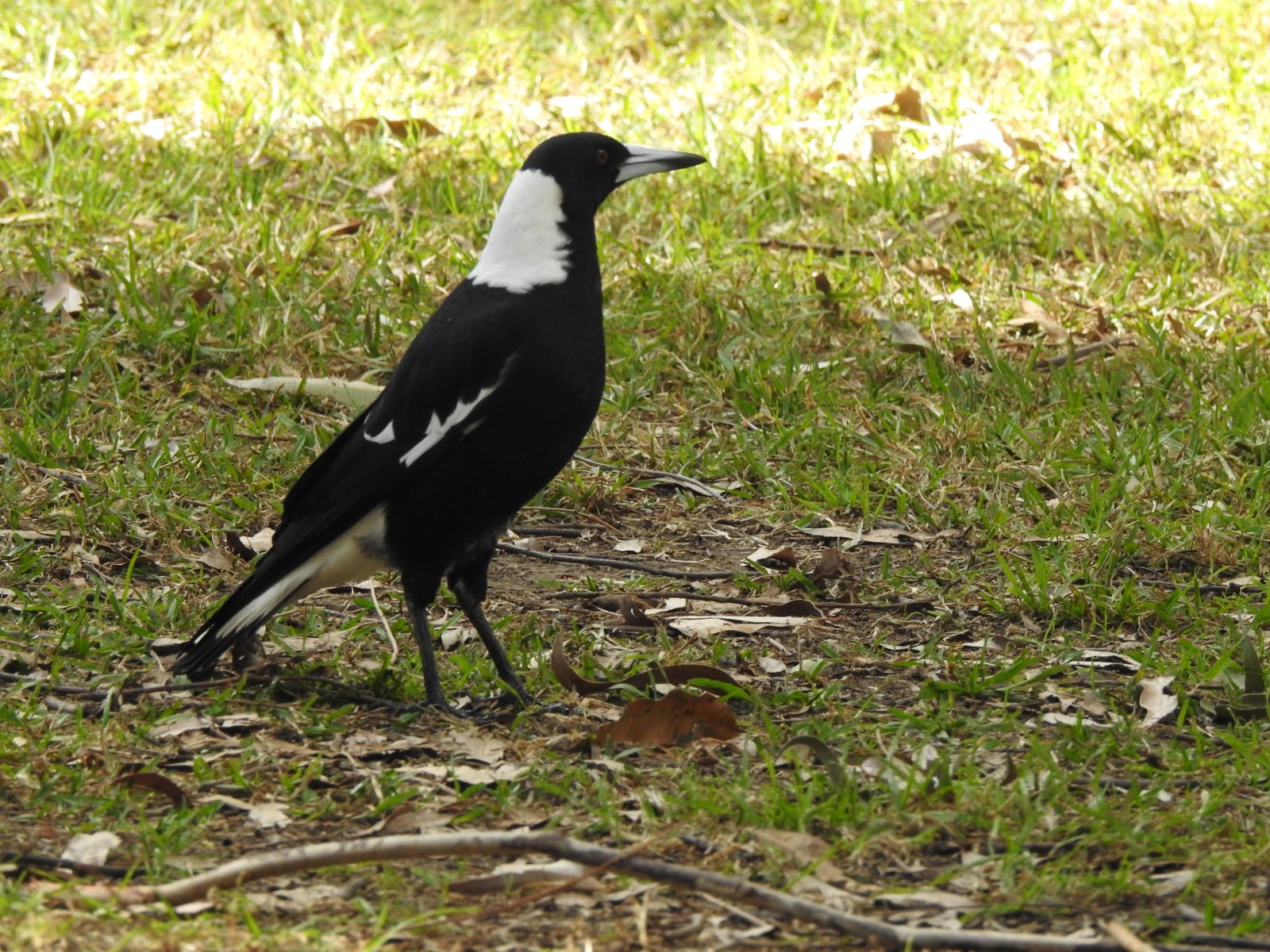
It is magpie swooping season again throughout Australia where Australian Magpies are found. That’s pretty much everywhere in Australia. This species is usually quite happy to co-exist with humans and will go about its life quite independently of us. They are relatively common in urban areas and very common in rural and farming environments.
Aggressive birds
Some individual Australian Magpies, however, have a very aggressive behaviour towards people during the nesting season, swooping them if they come anywhere near to their nest. This is particularly troublesome to young children who are sometimes terrified by a swooping bird. The elderly are also vulnerable as this story relates. Sadly, the elderly man who fell from his bicycle trying to get away from a swooping magpie severely injured his head when he hit a fence. He later died in hospital.
While this incident had a tragic outcome, this is not normal. Certainly, many people are terrorised by nesting magpies. Some have incurred serious injuries as a result, including eye injuries. My own sister-in-law suffered serious cuts to her scalp during a magpie attack when she was quite young. I also seem to remember a newspaper report of a cyclist who, in attempting to avoid being swooped actually rode into the path of a car and was injured by the car but not the bird.
Over the years I have written quite a few articles addressing this issue. I have listed some of them below. Some of these articles give advice on how to avoid getting swooped.
Further reading:
The Problem of Swooping Magpies
Do Blackbirds Swoop? Dealing with Aggressive Birds
Pesky Plovers – dealing with swooping birds
I invite readers to add their comments on how they deal with swooping birds. Or, you can comment on experiences with pesky birds.
Good birding – and stay safe.
Trevor
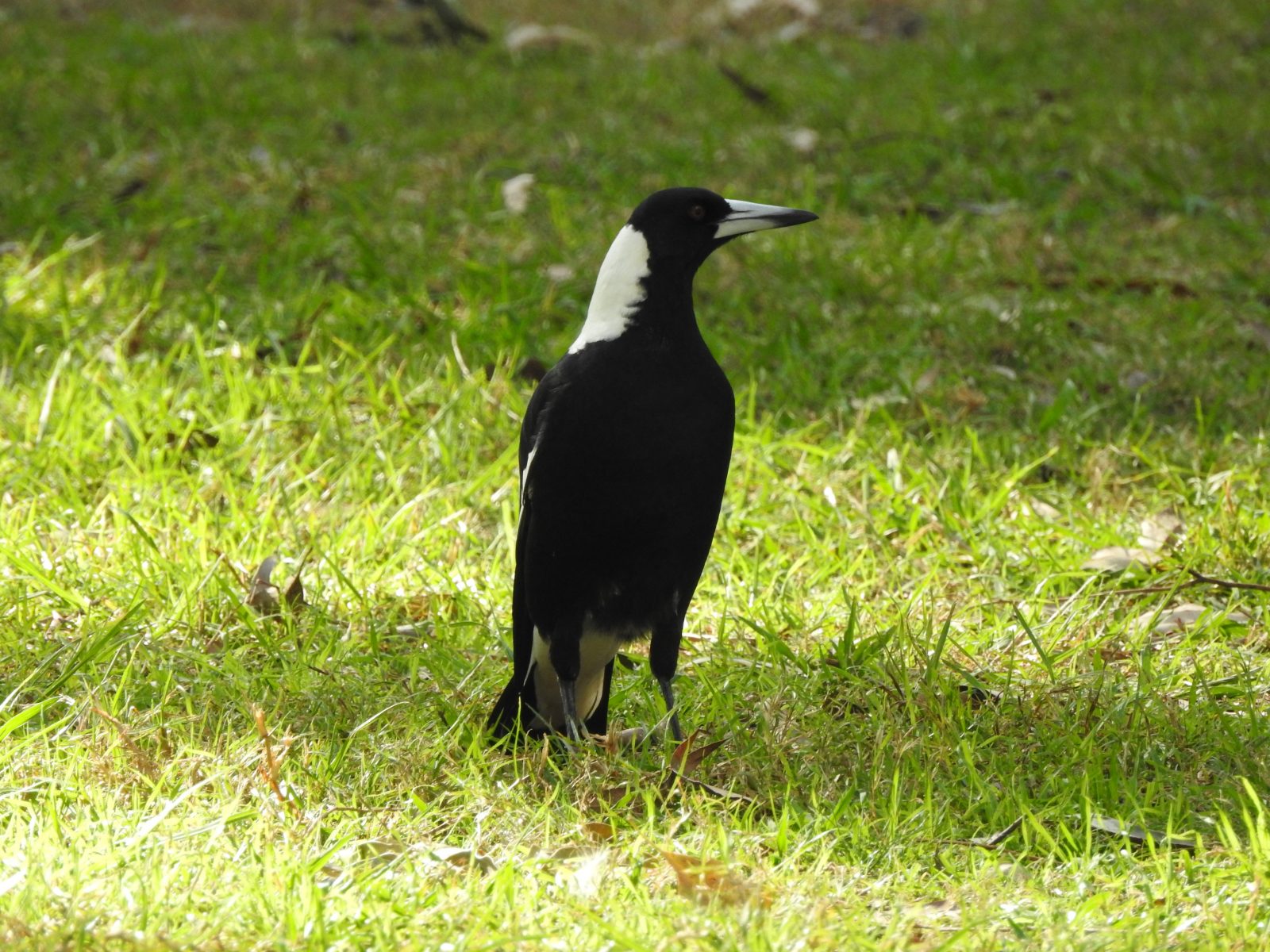
Just a shy little Jacky Winter
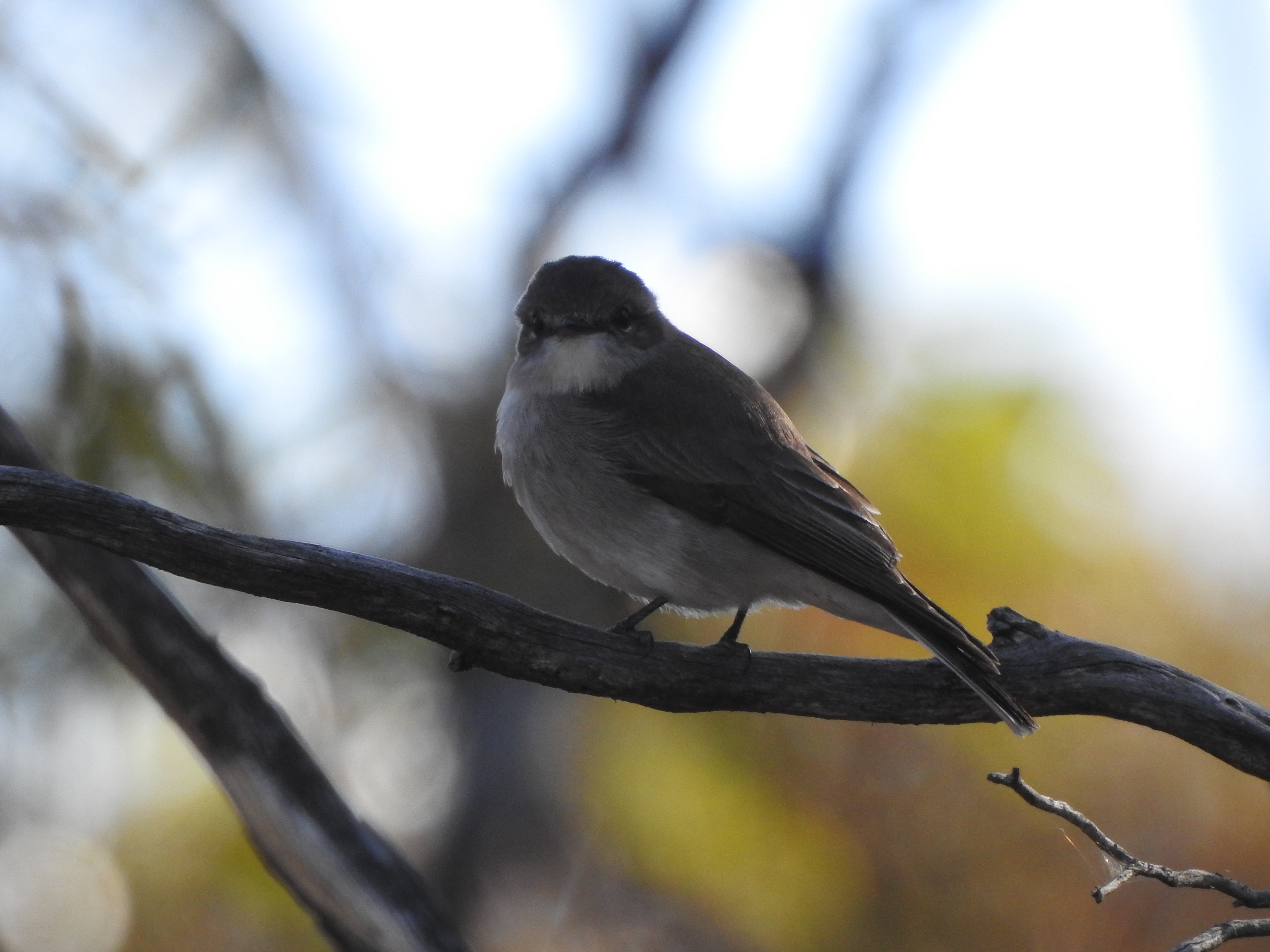
A poor photo of a Jacky Winter, Lowan Conservation Park
Earlier this year I went for a Saturday afternoon drive to the Lowan Conservation Park near Bowhill north-east of my hometown of Murray Bridge, South Australia. I needed to get out of the house after some cold wintery weather, and my daughter had never been to this park. She had just returned home after teaching for the last two years in Ethiopia. The day promised to be sunny and calm, ideal for a picnic and a spot of birding. Over the years I have visited this small park in the mallee areas of our state on a few occasions and it sometimes throws up a few birding surprises.
As we had afternoon tea – a cuppa and some treats from our local bakery – we sat in the afternoon sunshine. My daughter had her current book to read (Tim Winton’s The Shepherd’s Hut) and I had my camera and binoculars at the ready. Flitting around in the nearby mallee trees was a Jacky Winter, one of our flycatcher species. It’s called a Jacky Winter possibly due to its call which sounds a bit like it is saying ‘jacky winter, jacky winter.’ At least, that’s what it sounds like to me. Another common name is ‘Peter Peter’ and that is probably a closer rendition of its call. Whatever the origin of the name, the bird is a generally unassuming little bird which can often go unnoticed in the Australian bush. More often it is sighted quietly sitting on a branch, a tree stump or fence post watching the surrounding grass intently, just waiting to snatch up a tasty morsel – a passing insect or two.
On this visit to the Lowan Conservation Park, I had good views of this bird, but I had trouble getting my camera focussed on this individual. It kept flitting around, catching afternoon tea and calling all the time. Every time I would try to focus – off it would go again. The only time it sat still enough for a shot in focus it was in the shade – see the photo above.
So that you can get a better view of this species, I have posted several photos taken two years ago in the Murray-Sunset National Park in north-west Victoria. These shots include the beginnings of a nest consisting mainly of a spider web.
Further reading:
- Articles about Lowan Conservation Park
- Murray-Sunset National Park
- Birdlife Australia article about the Jacky Winter
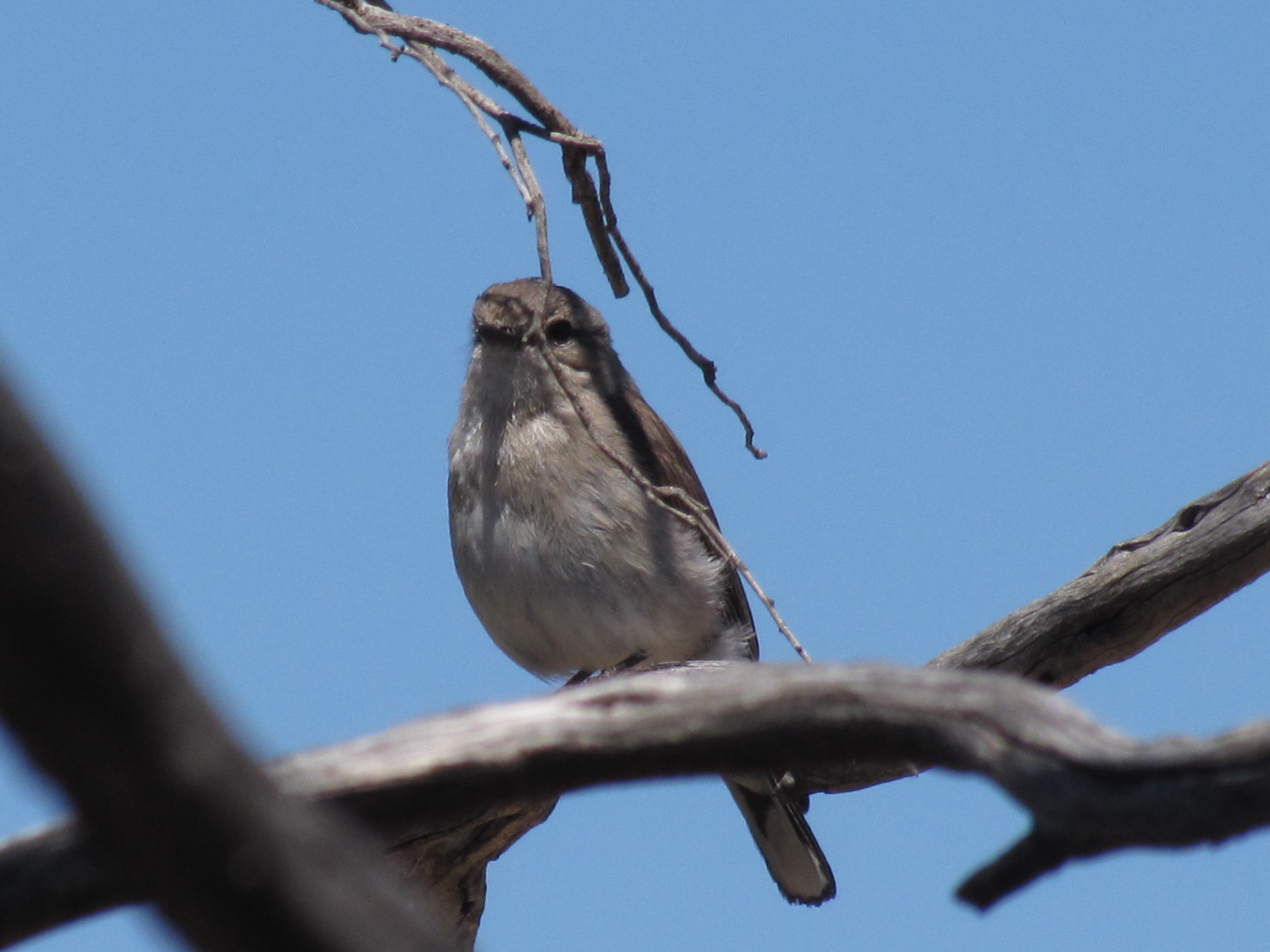
Jacky Winter, Murray-Sunset National Park, NW Victoria
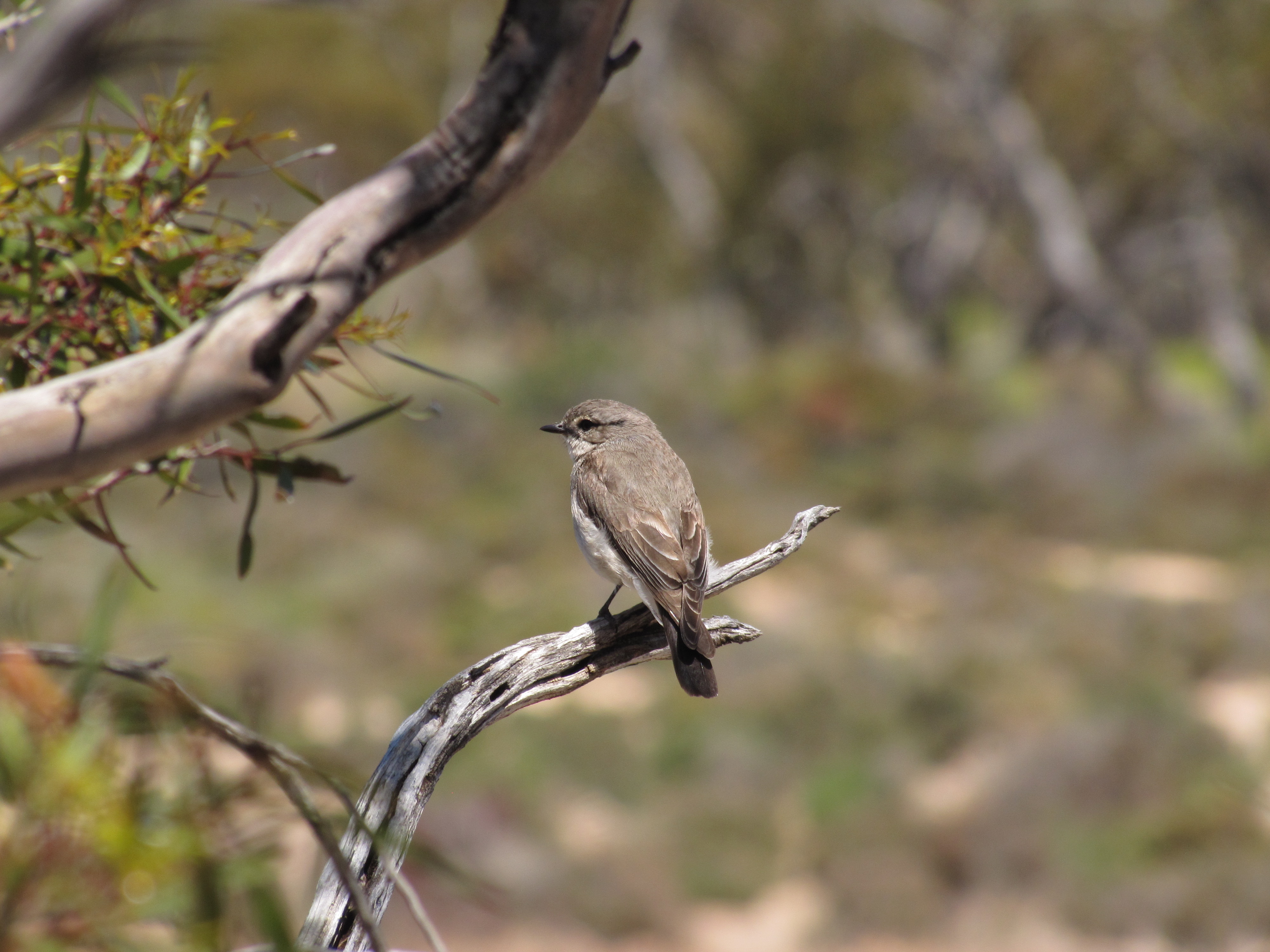
Jacky Winter, Murray-Sunset National Park, NW Victoria
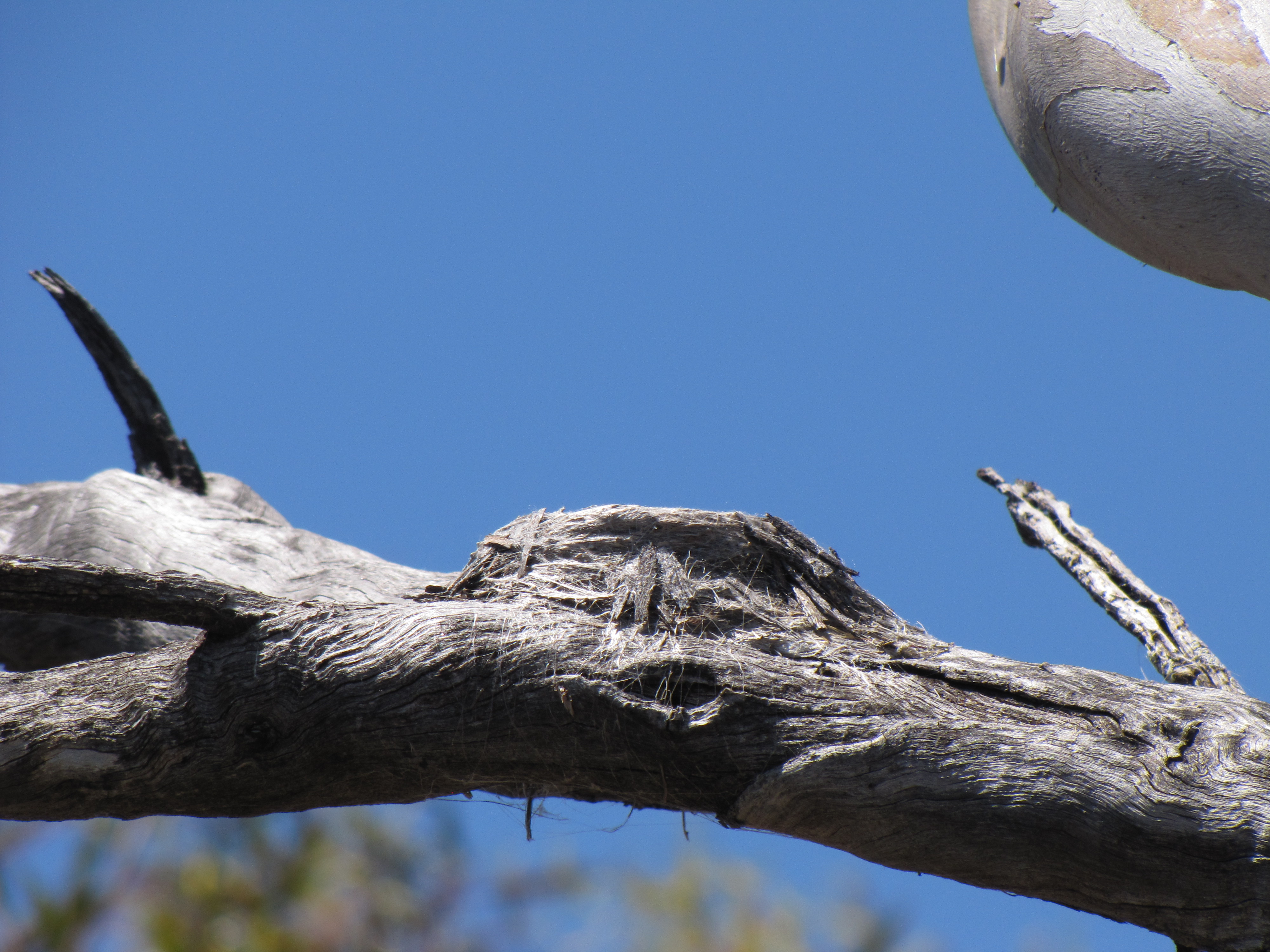
Jacky Winter nest, Murray-Sunset National Park, NW Victoria
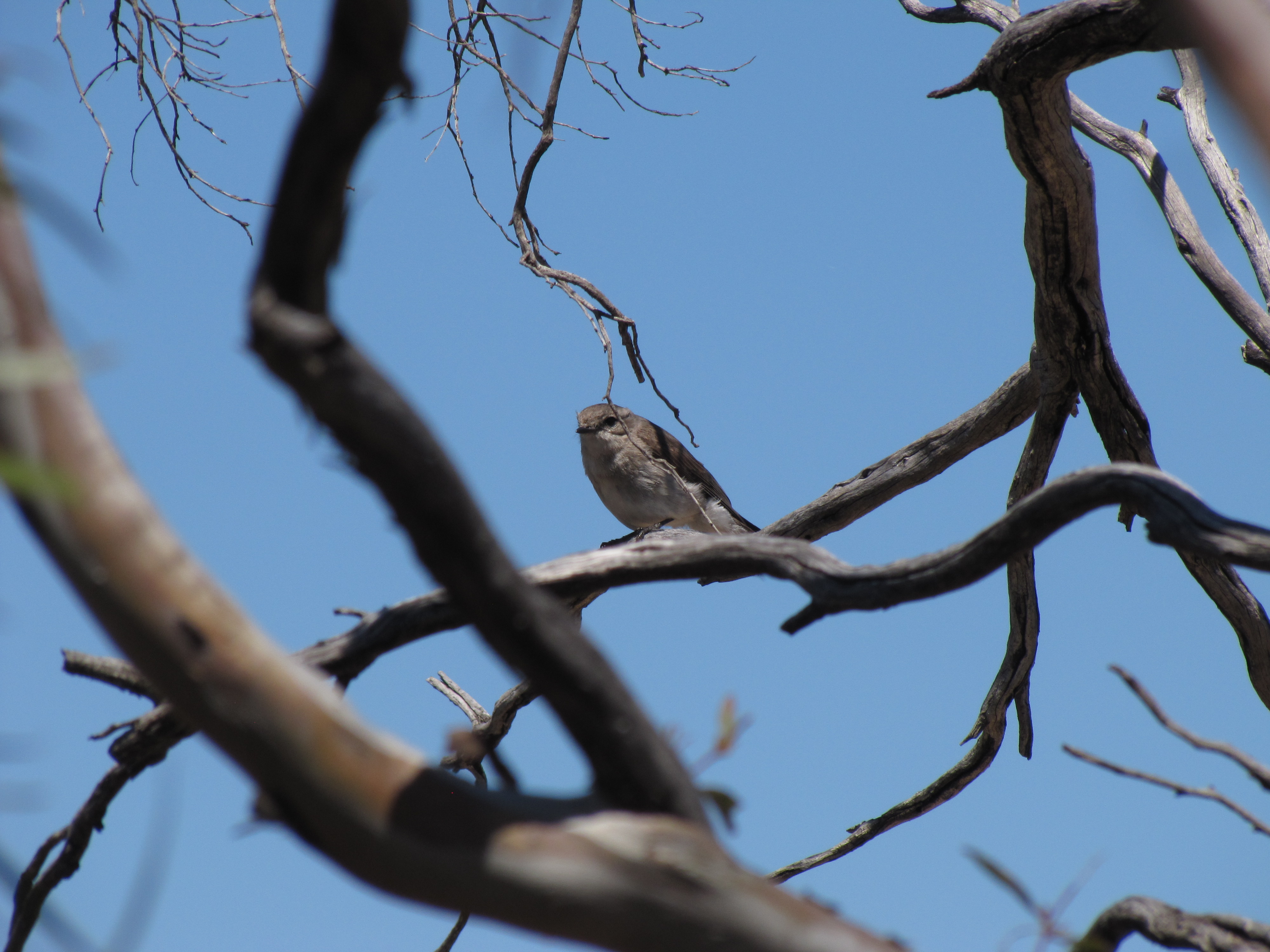
Jacky Winter, Murray-Sunset National Park, NW Victoria
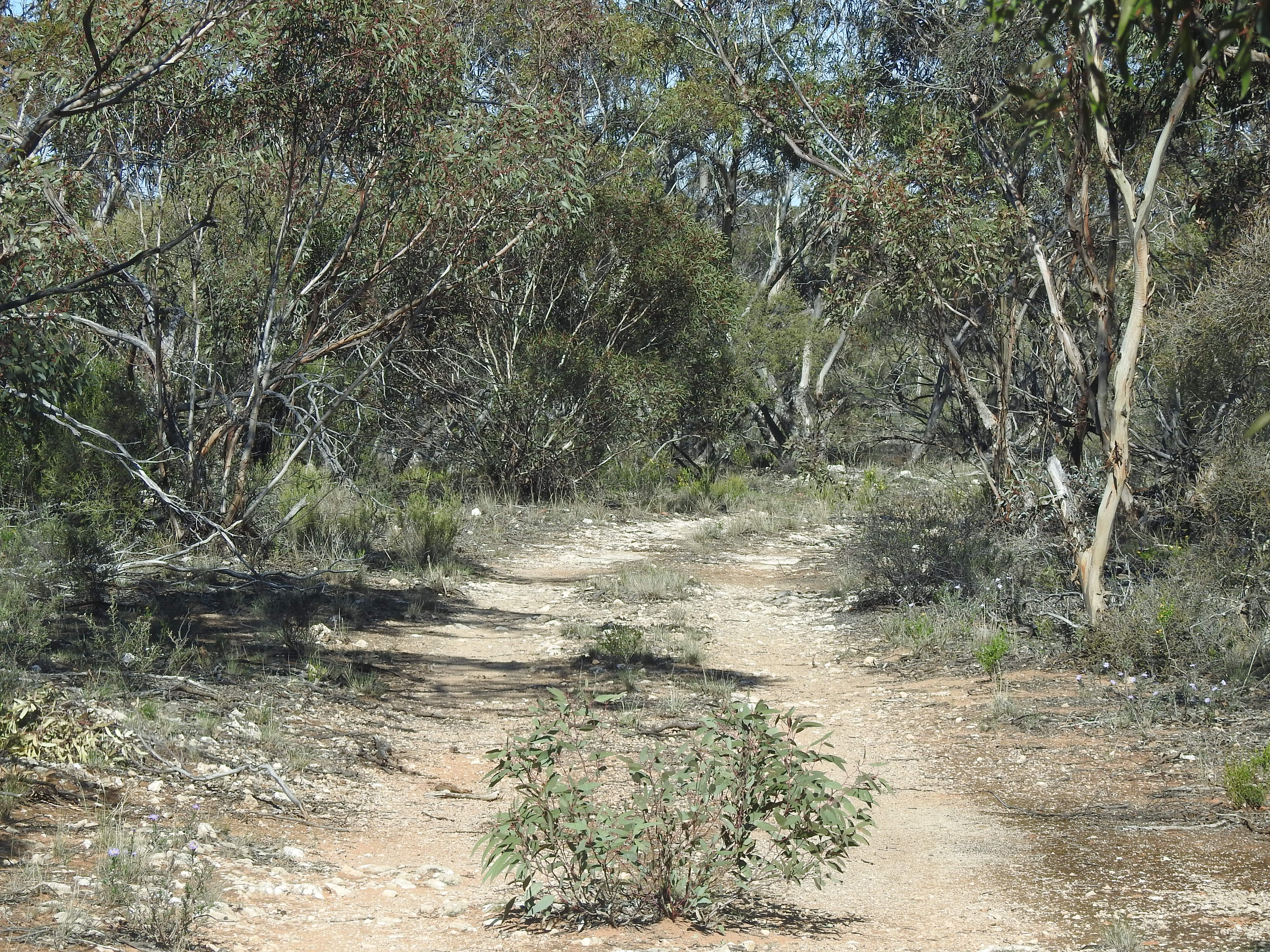
Mallee trees in Lowan Conservation Park, South Australia
Babblers building a nest
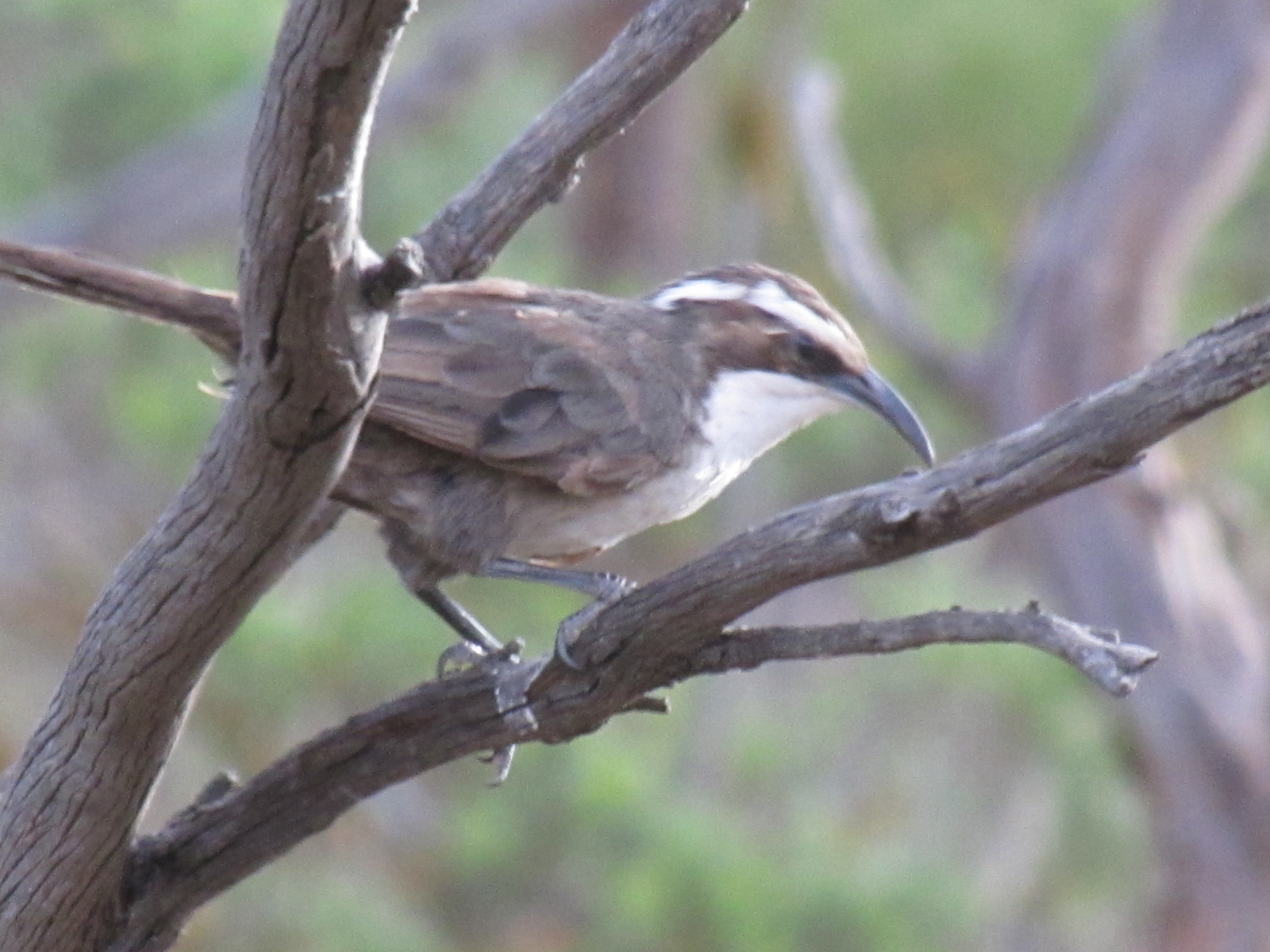
White-browed Babbler
The White-browed Babbler is a common bird species around where I live in Murray Bridge, South Australia. They could almost be considered as a resident species in our garden and on our five-acre block of land, but we don’t see them every day. Frequently – but not every day. Their range must be larger than just our property.
A few days ago my wife and I had been out for the morning. I drove down the driveway and we stopped in the car for a few minutes to enjoy the warmth of the sunshine. It was a cold, blustery day with occasional showers. As we sat there chatting, we noticed a White-browed Babbler hopping along the driveway in front of the car. It had a few small twigs in its beak and was pecking at the ground, collecting more twigs. As it flew towards us, it looked like it had whiskers sticking out from its beak.
The bird flew immediately into the Grevillia bush next to the car. We immediately realised that it had been carrying nesting material. After a minute or so, we saw it fly out of the bush to another spot in the garden where it started collecting more twigs. While it was gone, I went to the bush and easily found the partly made nest. I did not linger long because the nesting building bird was on its way back to the nest.
Over the next few days, the Babblers in our garden busily kept working on the nest. I had another peek into the bush the day before we left on our four week trip to Sydney. The nest then looked complete, but I did not want to hang around too long to check whether any eggs had been deposited in the nest. If there are eggs in there, they will probably hatch out before we return home. We may be just in time to see the new hatchlings when we return.
Further reading:
- White-browed Babblers
- White-browed Babblers and water
- White-browed Babblers – one of my earlier posts written over 10 years ago.
Spring – where are you?
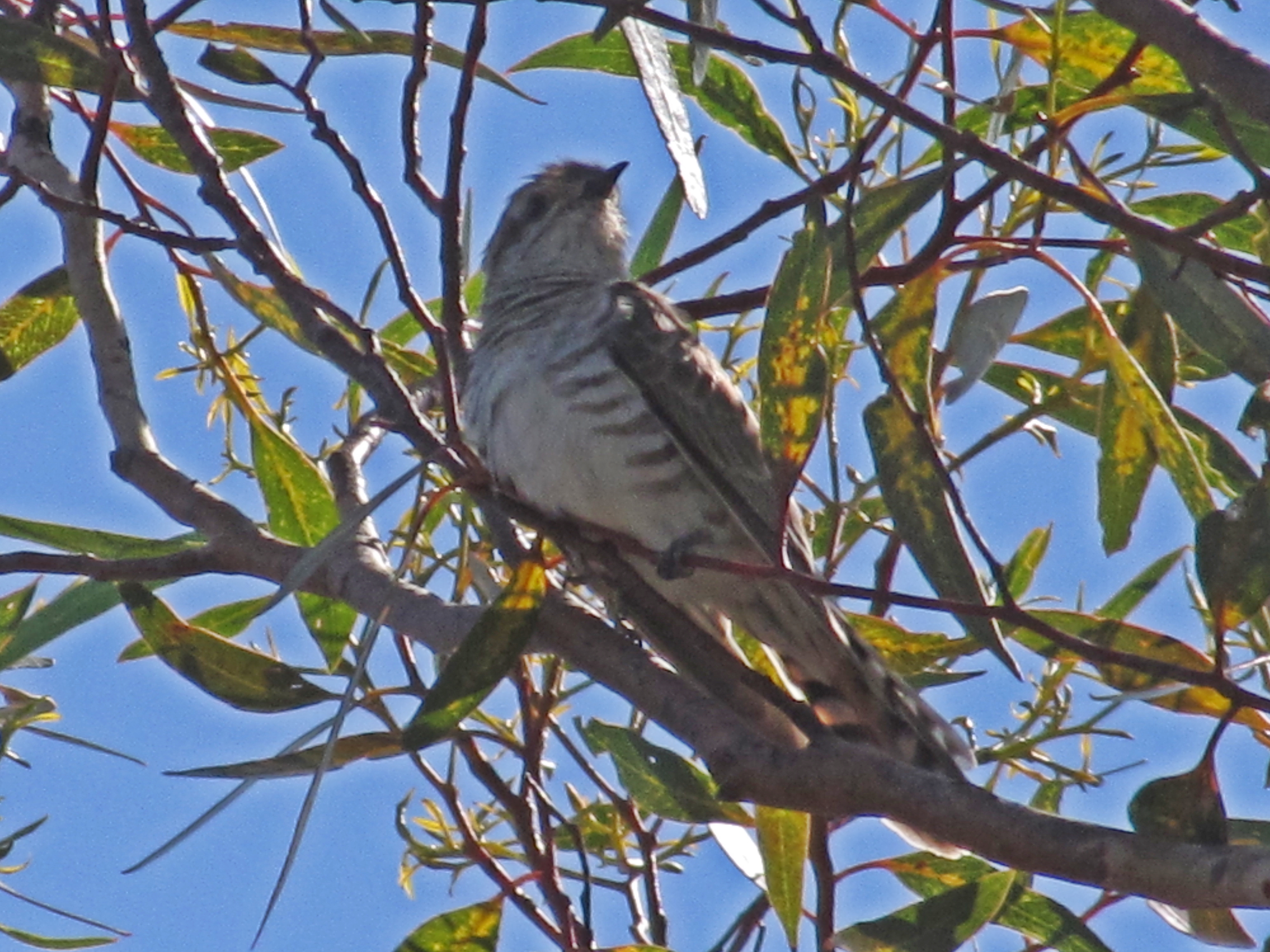
Horsfield’s Bronze-cuckoo
It is supposed to be spring here in southern Australia.
The calendar says so, but the weather is not cooperating. Since the beginning of “spring” at the start of September, the weather has been anything but spring-like. In fact, it has been decidedly wintery for the whole month. And August was no better. This year both August and September (so far) have been like the winter we didn’t have earlier on. We had more than double our monthly average rainfall in August and this month looks like going the same way.
To be fair – the earlier months this year were very dry. Large parts of South Australia were heading for a drought, along with other parts of eastern Australia which are still in severe drought. The farmers need all the rain they can get to establish their crops and pastures. The environment also needs the seasonal rains. During the earlier parts of winter, we had very cold nights and lovely sunny days. Now we still have very cold nights – and cold showery days as well. It hasn’t been good weather to get out birding.
A sign of Spring on the way?
A few days ago – on a brief few moments out in the garden between showers and wind gusts – I managed to both hear, and then get good views of, a Horsfield’s Bronze-cuckoo (see photo above). This species spends autumn and winter in the north of Australia and migrates south to breed around this time of the year.
The 14 species of cuckoos present in Australia are parasitic breeders. They lay their eggs in the nests of other birds, including thornbills, wrens and a range of other species. The parent cuckoos leave all the incubation, feeding and raising of the young to the host species. You could say that they have perfected the art of “out-sourcing” parenthood.
Further reading: