It’s Magpie Swooping season again
2 Comments »25th September, 2019; Category: Bird Behaviour, Birds in the News, Hints, Magpies and Currawongs, Nests
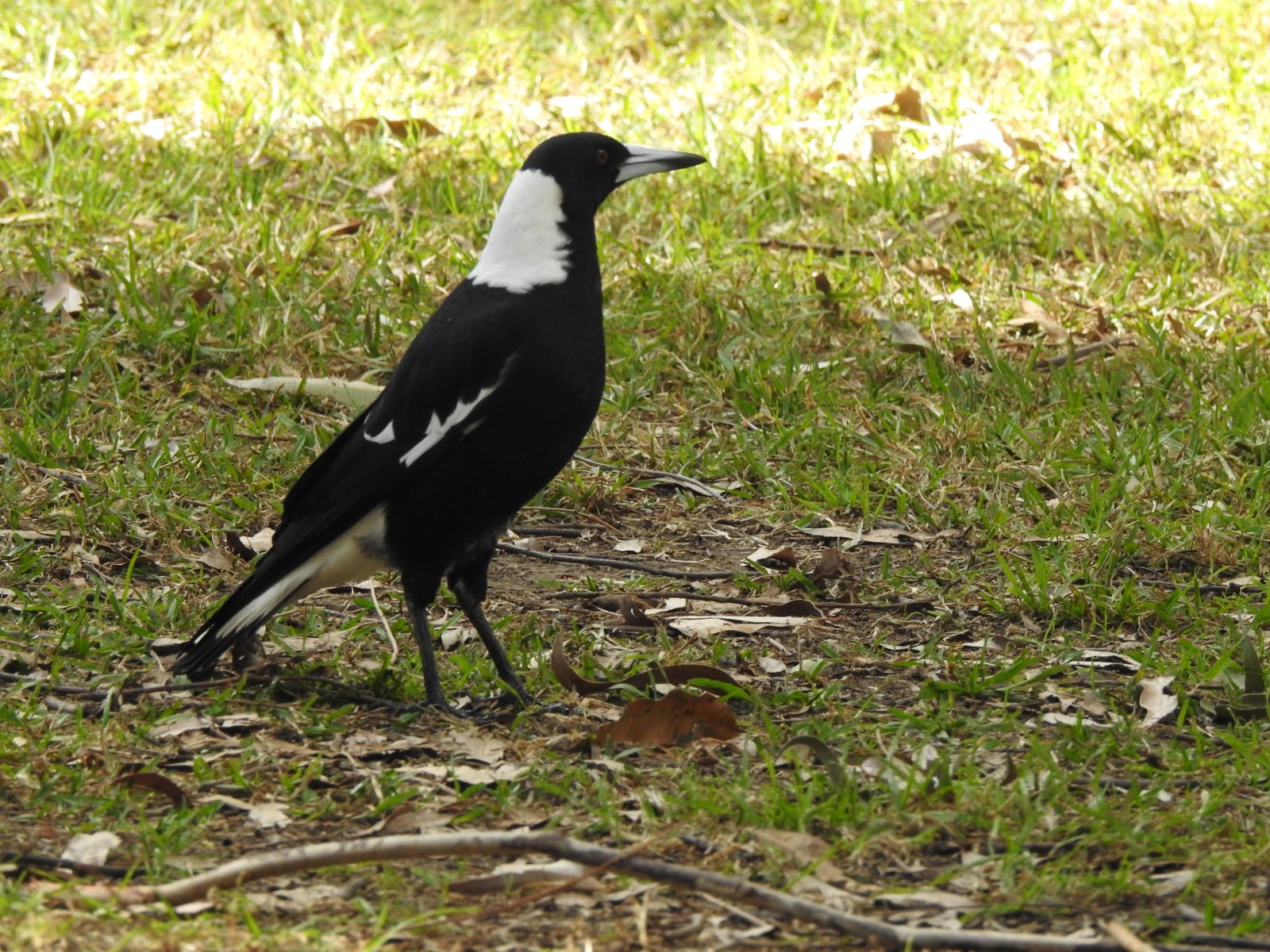
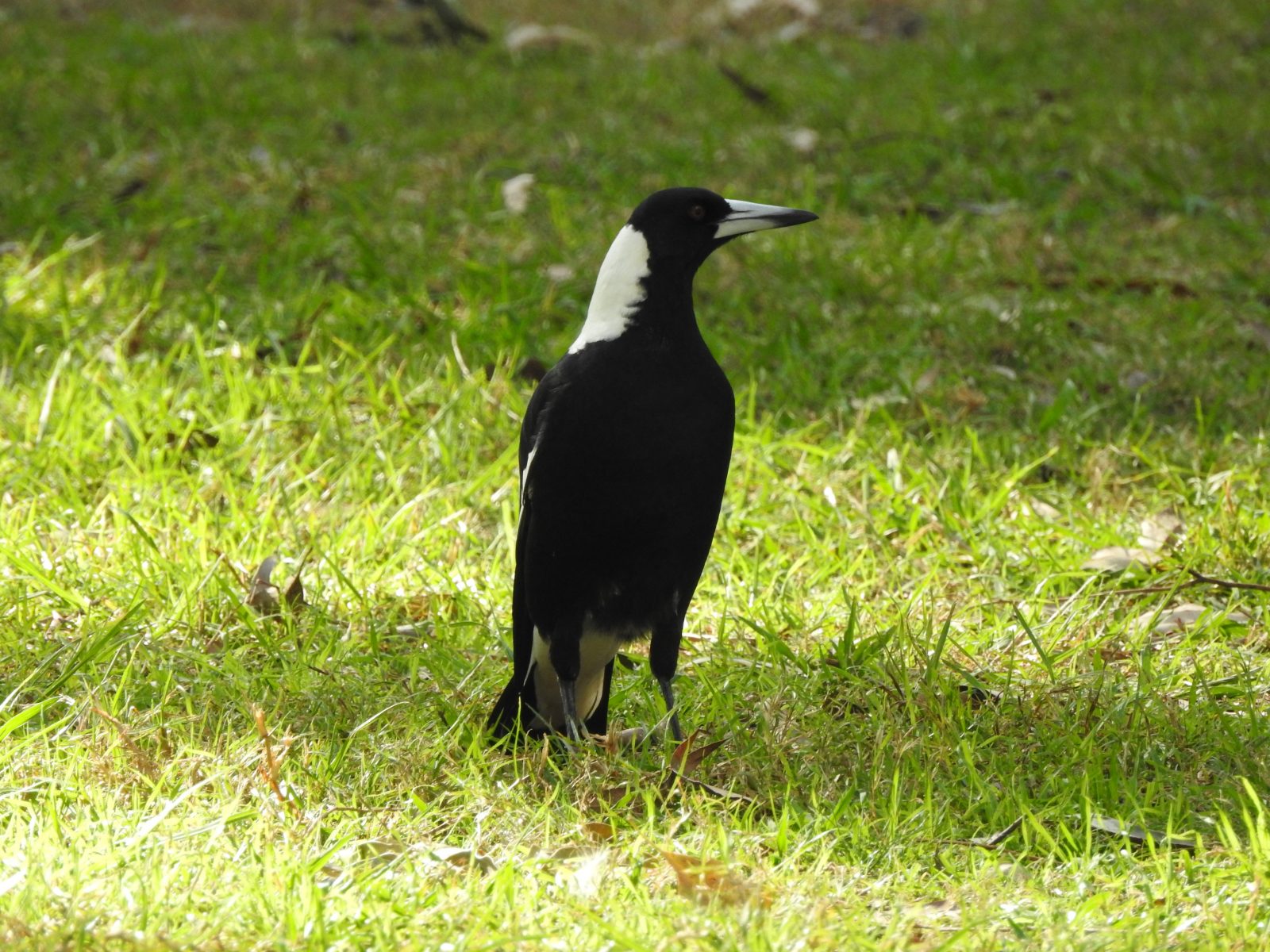
It is magpie swooping season again throughout Australia where Australian Magpies are found. That’s pretty much everywhere in Australia. This species is usually quite happy to co-exist with humans and will go about its life quite independently of us. They are relatively common in urban areas and very common in rural and farming environments.
Aggressive birds
Some individual Australian Magpies, however, have a very aggressive behaviour towards people during the nesting season, swooping them if they come anywhere near to their nest. This is particularly troublesome to young children who are sometimes terrified by a swooping bird. The elderly are also vulnerable as this story relates. Sadly, the elderly man who fell from his bicycle trying to get away from a swooping magpie severely injured his head when he hit a fence. He later died in hospital.
While this incident had a tragic outcome, this is not normal. Certainly, many people are terrorised by nesting magpies. Some have incurred serious injuries as a result, including eye injuries. My own sister-in-law suffered serious cuts to her scalp during a magpie attack when she was quite young. I also seem to remember a newspaper report of a cyclist who, in attempting to avoid being swooped actually rode into the path of a car and was injured by the car but not the bird.
Over the years I have written quite a few articles addressing this issue. I have listed some of them below. Some of these articles give advice on how to avoid getting swooped.
Further reading:
The Problem of Swooping Magpies
Do Blackbirds Swoop? Dealing with Aggressive Birds
Pesky Plovers – dealing with swooping birds
I invite readers to add their comments on how they deal with swooping birds. Or, you can comment on experiences with pesky birds.
Good birding – and stay safe.
Trevor
Learn to recognise bird calls
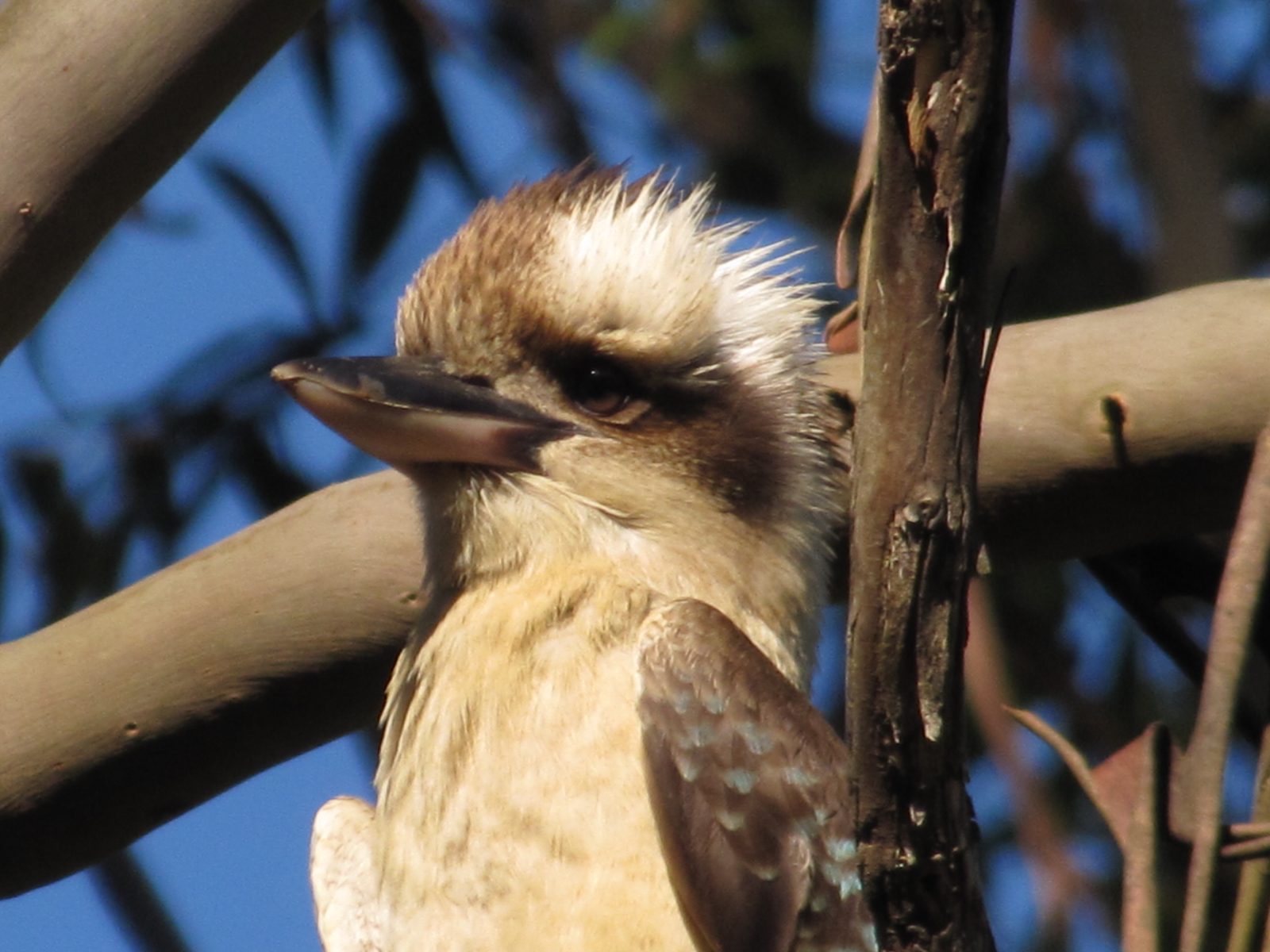
On my writing blog, I recently wrote about the wonderful sounds in the morning when lingering in bed. This article is something of a homage to the calls of birds which can be experienced early in the morning. I am particularly blessed because I live on the outskirts of a town of Murray Bridge in South Australia. I also have fond memories of camping years ago when the birdlife was up close and the dawn chorus was an interesting challenge when trying to identify birds, especially in unfamiliar areas.
Bird environment
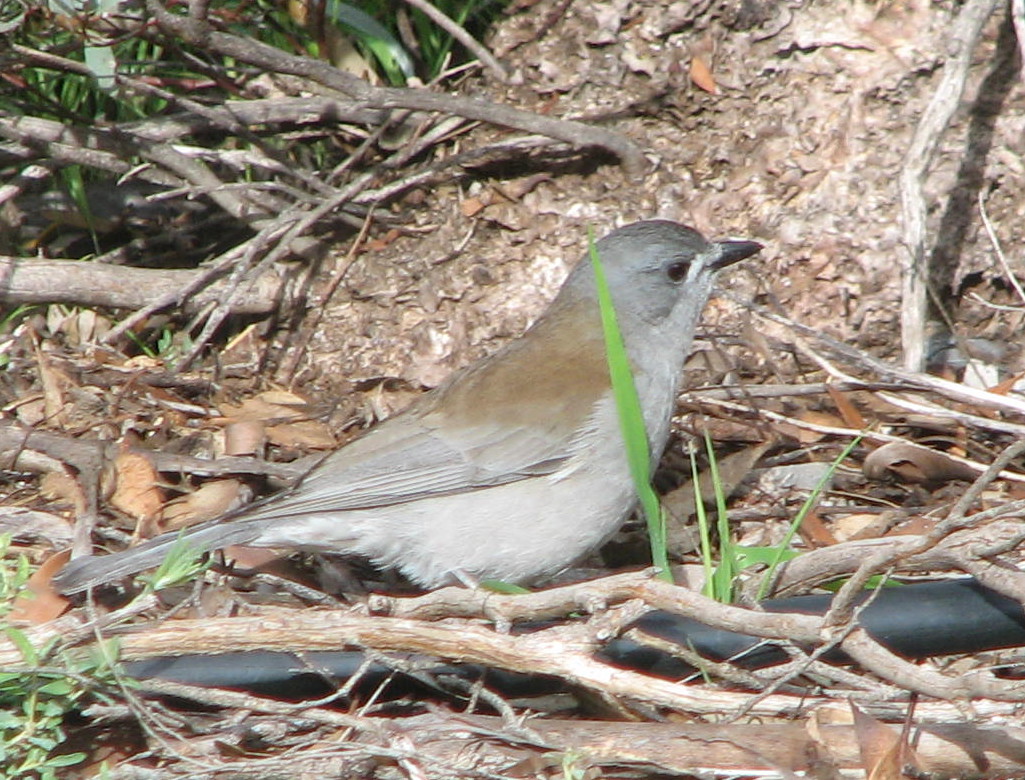
I live on a five-acre block of land which has many trees and shrubs and bushes. My surrounding environment is a good place for birds and I have recorded over 100 bird species in the 35 years I have lived here. Many times I have been alerted to something unusual in the garden just by a call which is different.
Bird calls
My advice would be to anyone interested in honing their birding skills is to learn the calls and songs of the common birds in your area. There are apps you can get for your phone which can help you in memorising and identifying birds and I strongly recommend that you get one. I use Morcomb’s Birds of Australia app on my Android phone. There is also an Apple version. This app not only gives the calls of all of our birds, but it also gives detailed notes on behaviour, nesting, distribution and much more information as well. The illustrations should also help in identifying the birds you are seeing.
Birds in Backyards
Birdlife Australia also has a portal called Birds in Backyards which includes a great deal of information to help identify out birds. It also includes MP3 files of bird calls.
Good birding – and happy listening.
Trevor
Birding is easy
It has a been a long time since I wrote a basic post about birding.
Some years ago I wrote a series of 21 articles called How to be a Birder.
This post is not an update on that series. This is just a heads-up to new readers of this site. I was encouraged to write this in response to an article I recently read here. That article is for American readers. What I have to say is largely for my Australian readers – but the same principles apply nearly worldwide.
Birding is really easy
Birding is quite easy. Just glance out of the window into your garden. Do you see any birds? Perhaps you can see a pigeon or a dove or possibly a sparrow. You’ve just become a birder. One of our common birds here in South Australia is a Crested Pigeon, shown below. (Okay – some of you will know it as a “Top Knot” Pigeon, but strictly speaking, that official name belongs to a bird found in the eastern parts of Australia.)
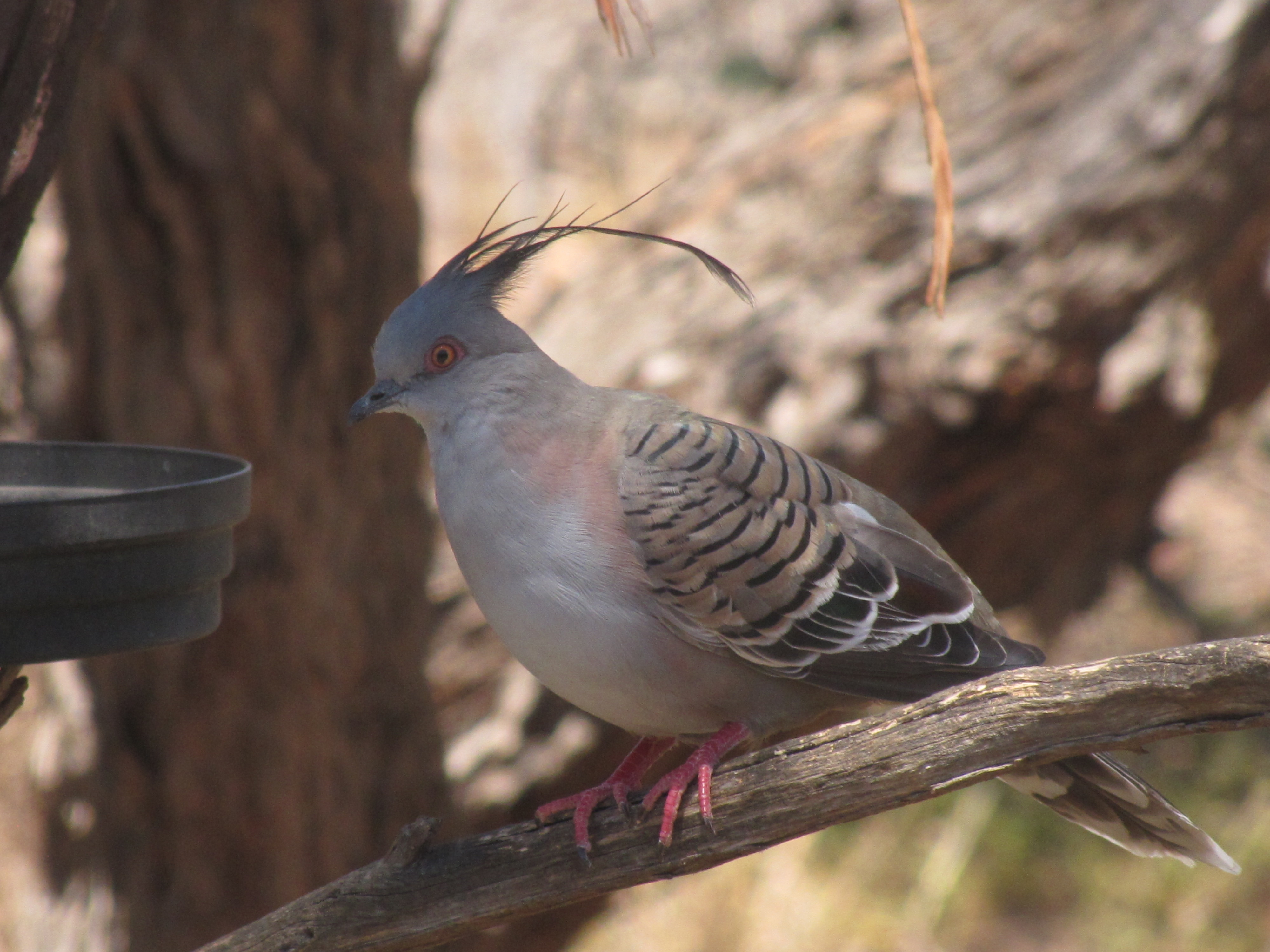
“Topsy” the Crested Pigeon
Binoculars and Bird Baths
I usually keep a cheap pair of binoculars handy where I can get to them quickly. We often spend a good part of the day in our sunroom which overlooks a part of the garden. A large picture window in this room gives us a great view of several bird baths. The binoculars give me a great view of any birds which come for a drink or a bath. Installing a bird bath in your garden, even a small garden, can help to bring the birds closer for you to watch – birds like the honeyeater in the next photo.
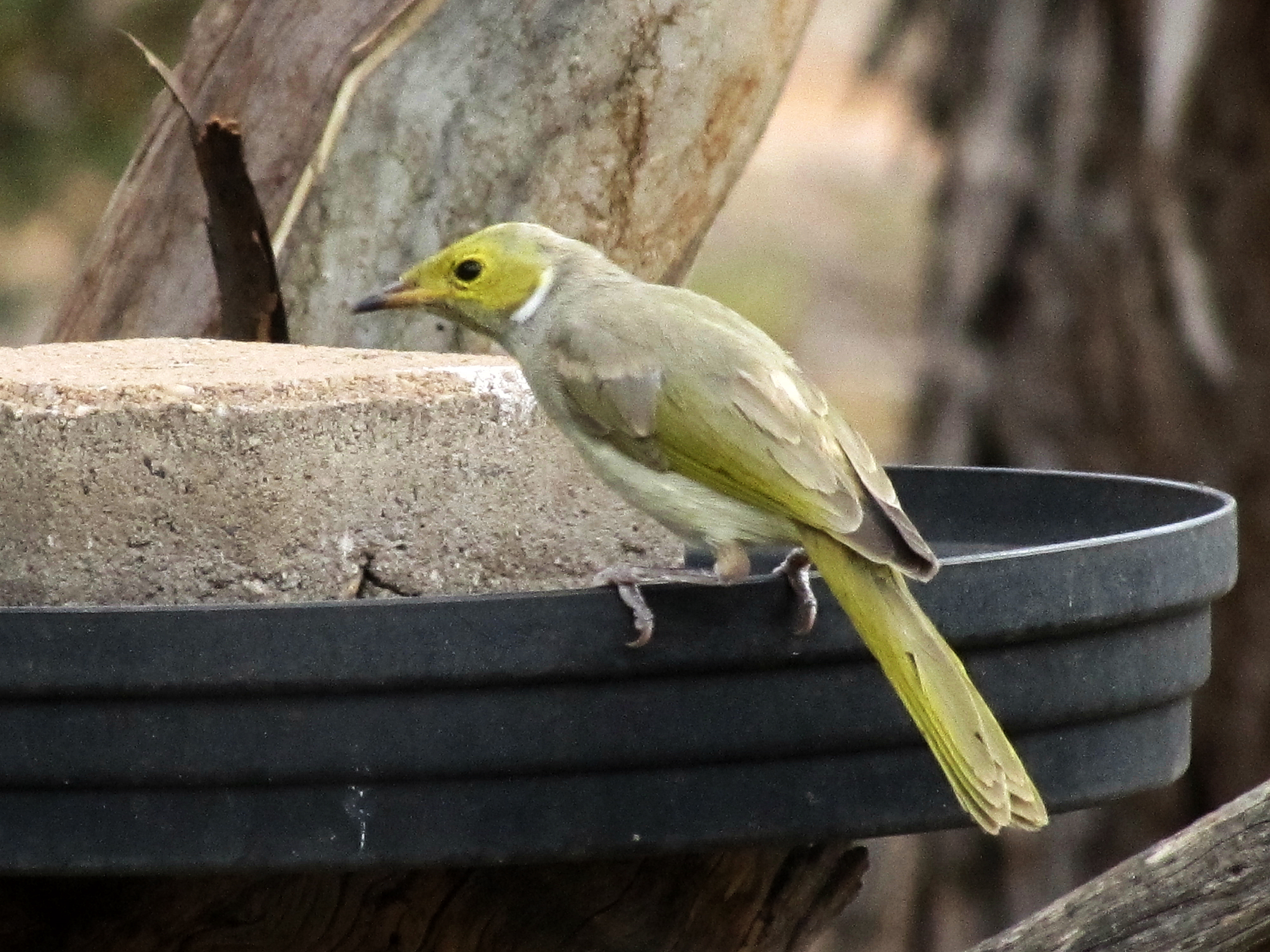
White-plumed Honeyeater
Into the garden
A short stroll out into the garden or even down the street can reveal plenty more birds. Keep a watch out for any movement in plants, bushes and up in the branches of any trees growing nearby. Pay special attention to any flowers you see – Australian honeyeaters and parrots love the flowers of both native Australian plants as well as exotic plants. The Noisy Miner shown in the photo below is sure enjoying a feed from a red hot poker flower.

Noisy Miner
Go for a picnic
Another good way to become a birder and to begin enjoying our birds is to go for a picnic. This could be to a local park, a nearby river, lake or beach or to your nearest botanic gardens. In these places, you are sure to find a good variety of birds, especially if there is a water feature or natural body of water. Becuase such places often have crowds of people, many of the birds will have become quite accustomed to humans and you will be able to get up quite close. Near and in the water you will find ducks, geese, herons, egrets, grebes, coots, moorhens, cormorants and many more that I haven’t listed here.
Although it may be tempting and satisfying, please do not feed the birds. Human food, especially bread, is not suitable for Australian birds. In fact, it can kill them.
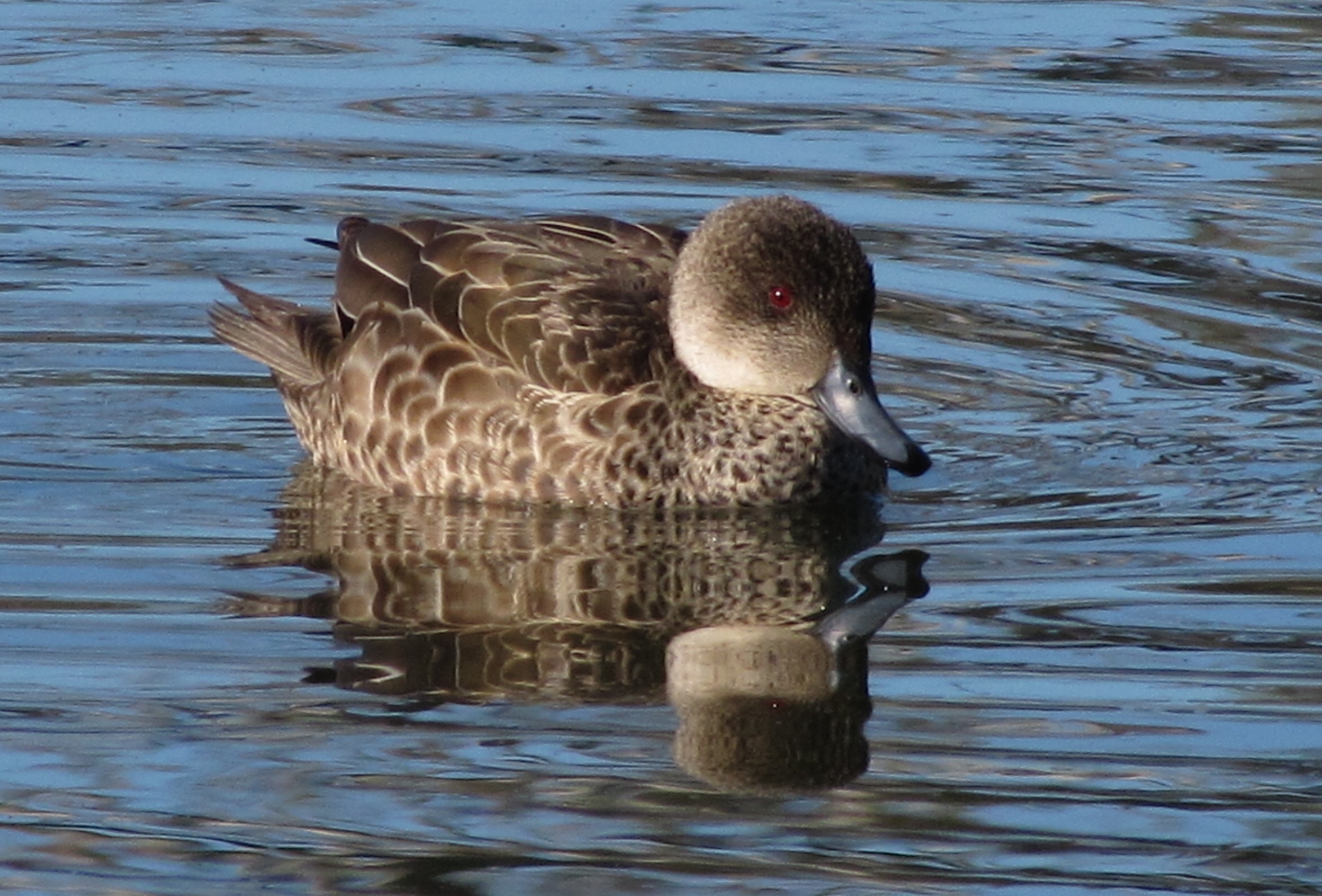
Grey Teal, Laratinga Wetlands, Mt Barker
Go hiking or camping
Australia has hundreds of National Parks and Reserves in every state. These locations are almost always excellent places to go hiking, having a barbecue or picnic or even camp overnight or for longer. Because these areas are usually natural bushland, the birding can also be wonderful, especially in spring here in Australia when many birds are nesting. Keep on the lookout for birds in the bushes and any vegetation, as well as higher up in the branches of the trees. The photo of a Galah shown below was taken at a wetland area near my home. The wetlands area is actually a sewage installation, beautifully landscaped with many bushes and trees.
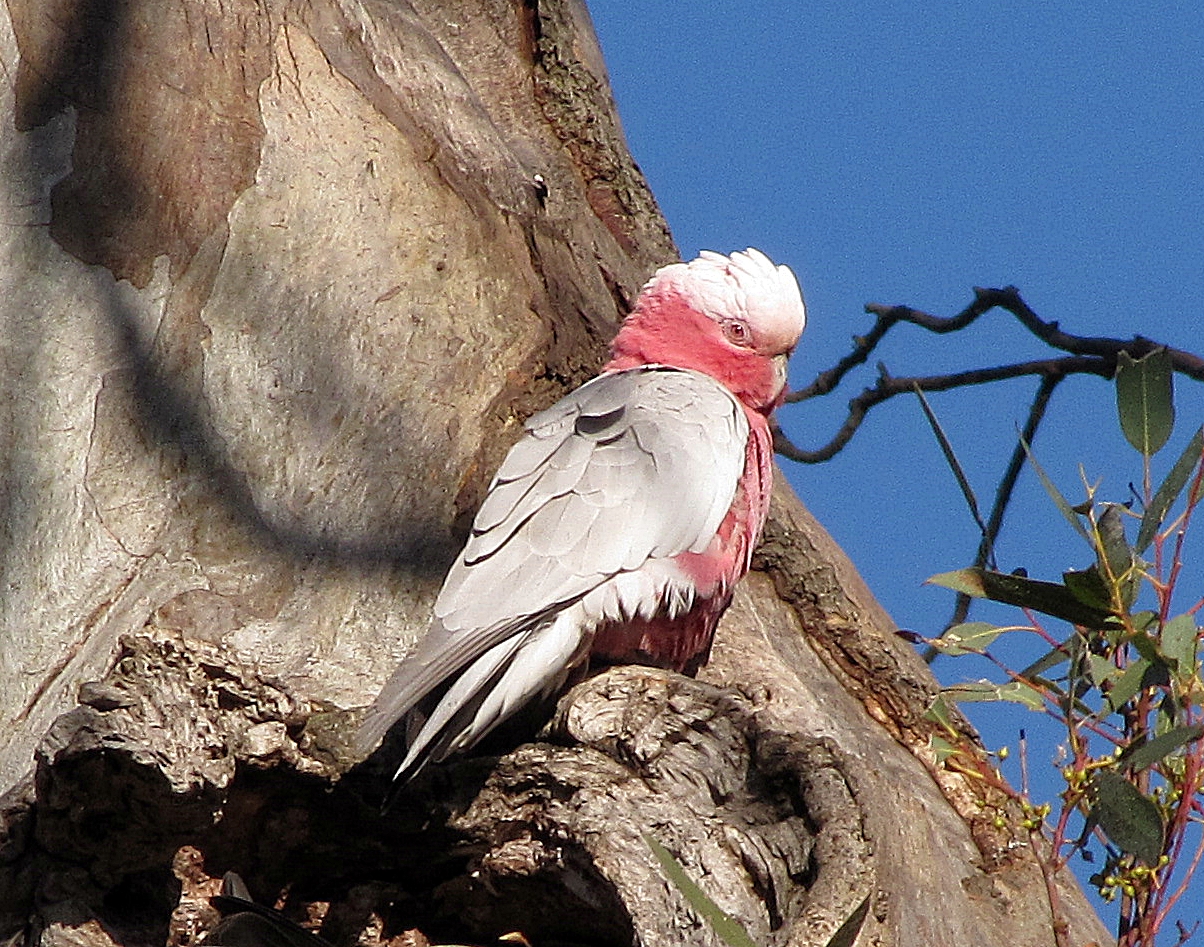
Female Galah, Laratinga Wetlands (the male is working the hollow below her)
Birding while travelling
Warning: keep your eyes on the road and on the traffic all around you!
Yes, I also watch out for the birds I see while travelling. We have relatives and friends in many parts of Australia and visiting them sometimes entails many hours – and sometimes days – of travelling our countryside. As we go along I keep my eyes on the traffic and road conditions, but over many years, I have also become adept at watching out for any birds on the side of the road or flying over the road. Birds of prey like eagles and hawks are common along our country highways, as are ravens, choughs, magpies and currawongs. Sometimes this can be frustrating when it comes to identifying them as we speed by in our car, only getting a brief glimpse of the bird.
From time to time, it is safe to stop and get a closer look at a bird, even getting a photo if I have the camera handy. A few years ago I was driving slowly in an Adelaide street after dropping off my wife at a hospital. I was able to stop safely and quickly and get the photo of a Sulphur-crested Cockatoo which I have shown below. There was a small flock of these lovely birds right there in a suburban street tree.
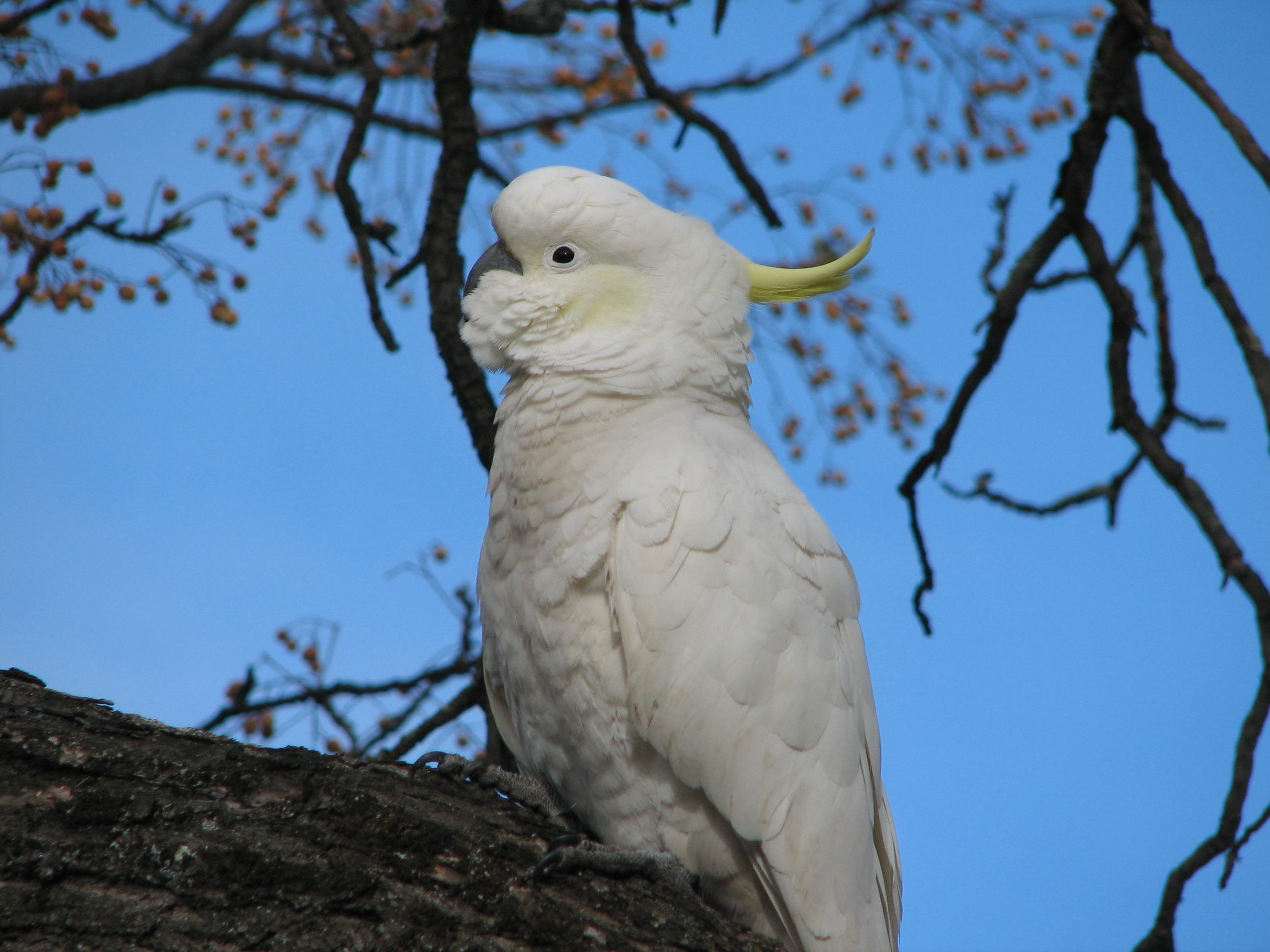
Sulphur-crested Cockatoo
Birding at night
For some people, this might be a little difficult, depending on the environment surrounding their home. It possibly wouldn’t work if you live in a high-rise apartment in the heart of a city. On the other hand, we live on the edge of a large country town with plenty of natural and planted scrub all around. We quite often switch off the television at night; there’s often nothing worth watching anyway.
The area around our home is often very quiet with very little traffic. On these occasions, we occasionally hear nocturnal birds such as owls, frogmouths or nightjars calling. The Southern Boobook Owl shown below was photographed in our garden some years ago.
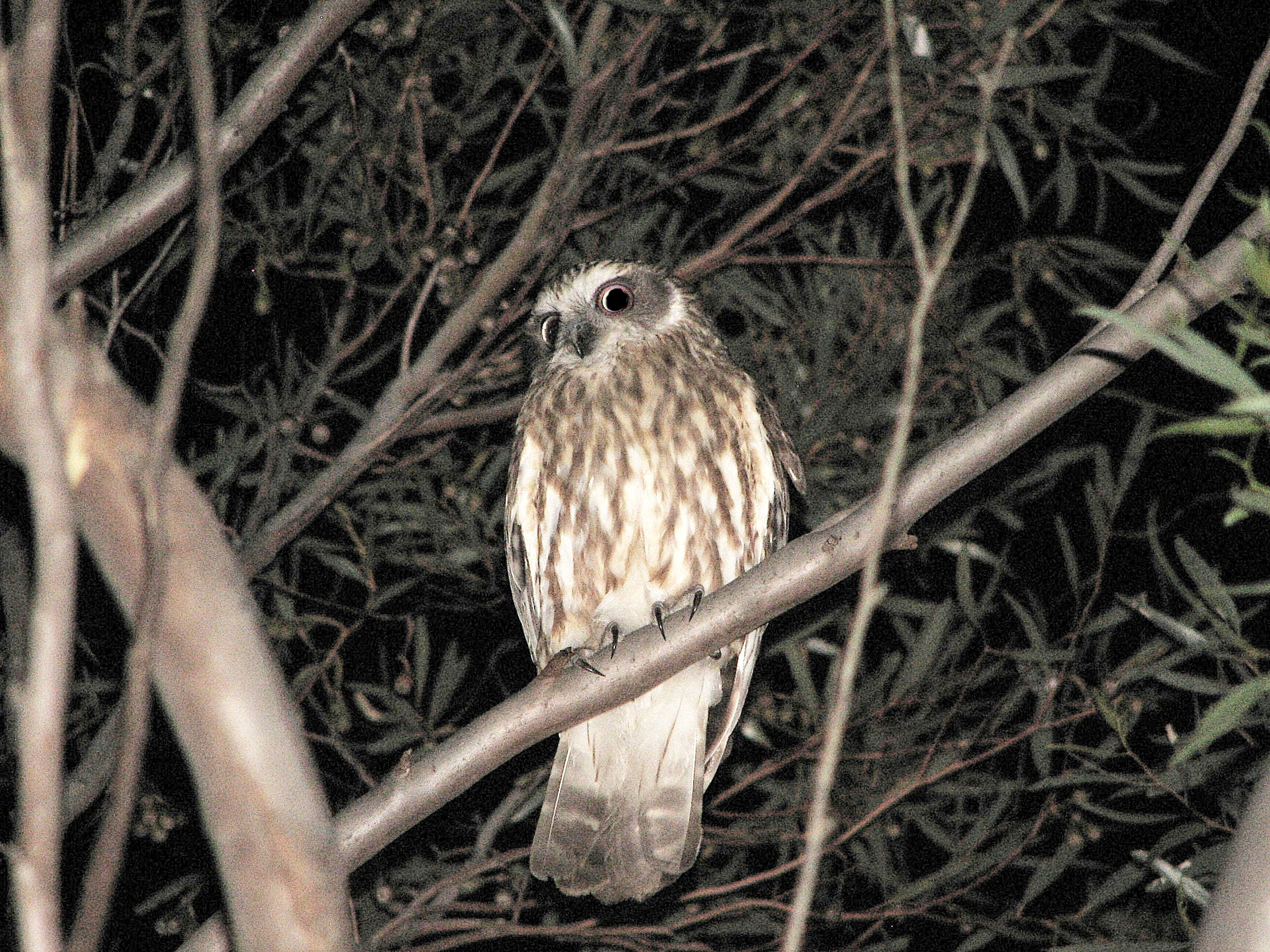
Southern Boobook Owl
Birding while commuting
One way of usefully using the time spent commuting is to do some casual birding from the bus, tram or train. I haven’t done this much in my life because I always drove a car to work. To illustrate my point, we recently did a bus tour of Morocco. Wonderful country. Along the way I was able to see quite a few birds while travelling along, even getting the occasional photo, such as the egret shown below, taken from the bus. On the other hand, travelling at 300 kph in the high-speed trains in Spain is just a little too fast to be watching out for any birds. Exhilarating, yes, but difficult.
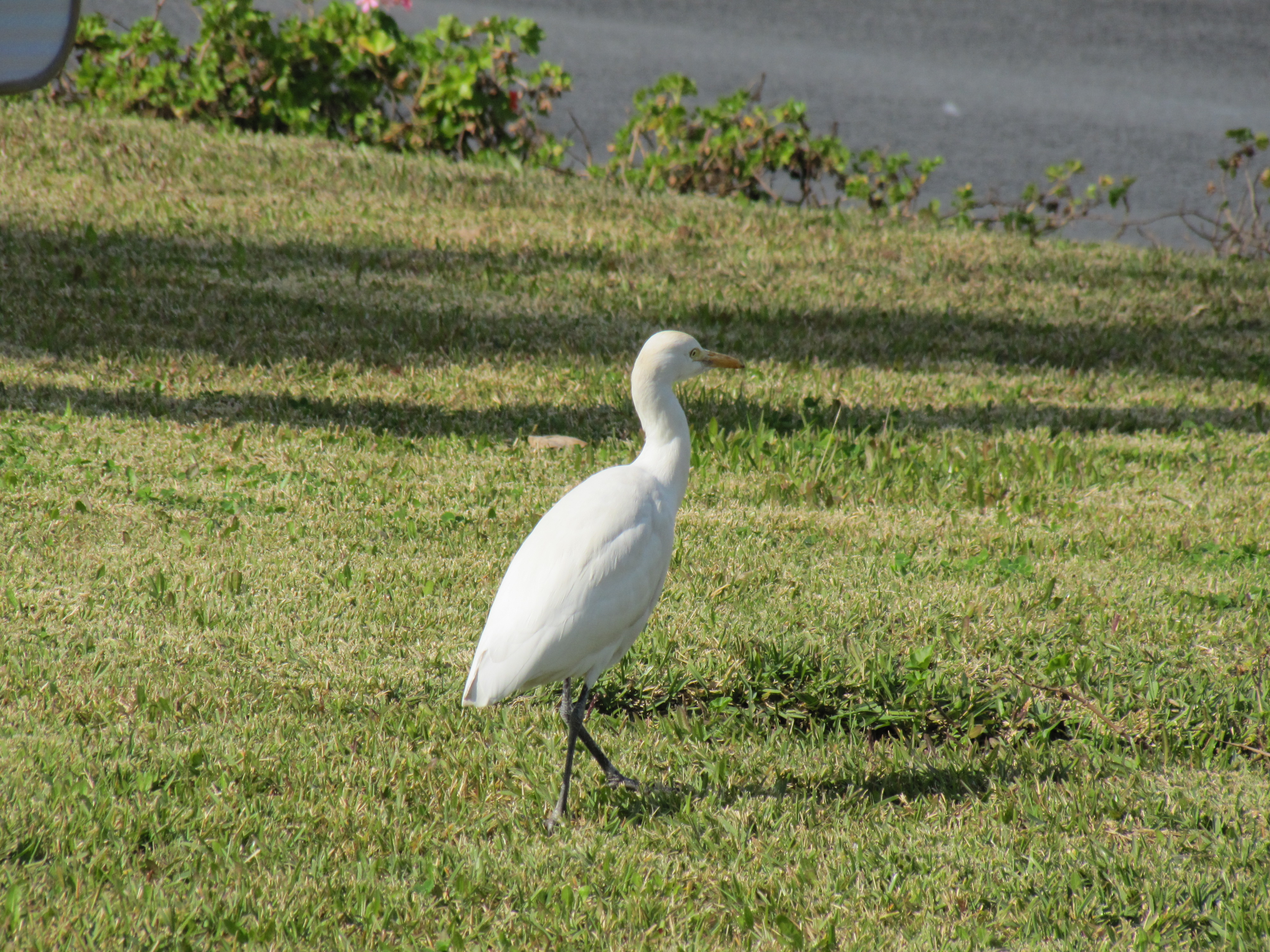
Little Egret, Morocco
More unusual birding places
In Bed: I like lingering in bed some mornings, trying to identify the bird calls outside without actually seeing them. This is particularly enjoyable when out bush camping, or in our caravan.
In church: I must confess that I have taken notice of birds while sitting in church. Our church has several windows which give me a good, but limited, view outside. Not getting distracted from the sermon can be a challenge.
At a funeral: Again, I confess to sometimes being distracted by birds at a funeral, especially during the committal if this is held outdoors. I refrain from taking my camera or binoculars on such occasions. The same applies to when I am in church.
In a plane: It is possible to see some high flying birds from planes, but I am talking about birds seen on the tarmac while waiting for the plane to leave, or while taxiing on the runway. I managed to see birds from the window of a plane in Adelaide, Kuala Lumpur, Dubai and Addis Ababa. Now if you add birds seen from the terminal while waiting for a flight, the list gets longer.
On a canoe, boat or ship: I have watched birds from my canoe on many occasions. I have also taken many photos from a friend’s boat on a nearby lake (see the pelican below). I even did some birding while travelling on a ship (ferry) from Morocco to Spain.
In hospital: Thankfully, I have only been in hospital on a handful of occasions. I have, however, visited people in hospital. Whenever there is a suitable window with a garden outside, there is always the potential to even be a birder while recuperating in bed.
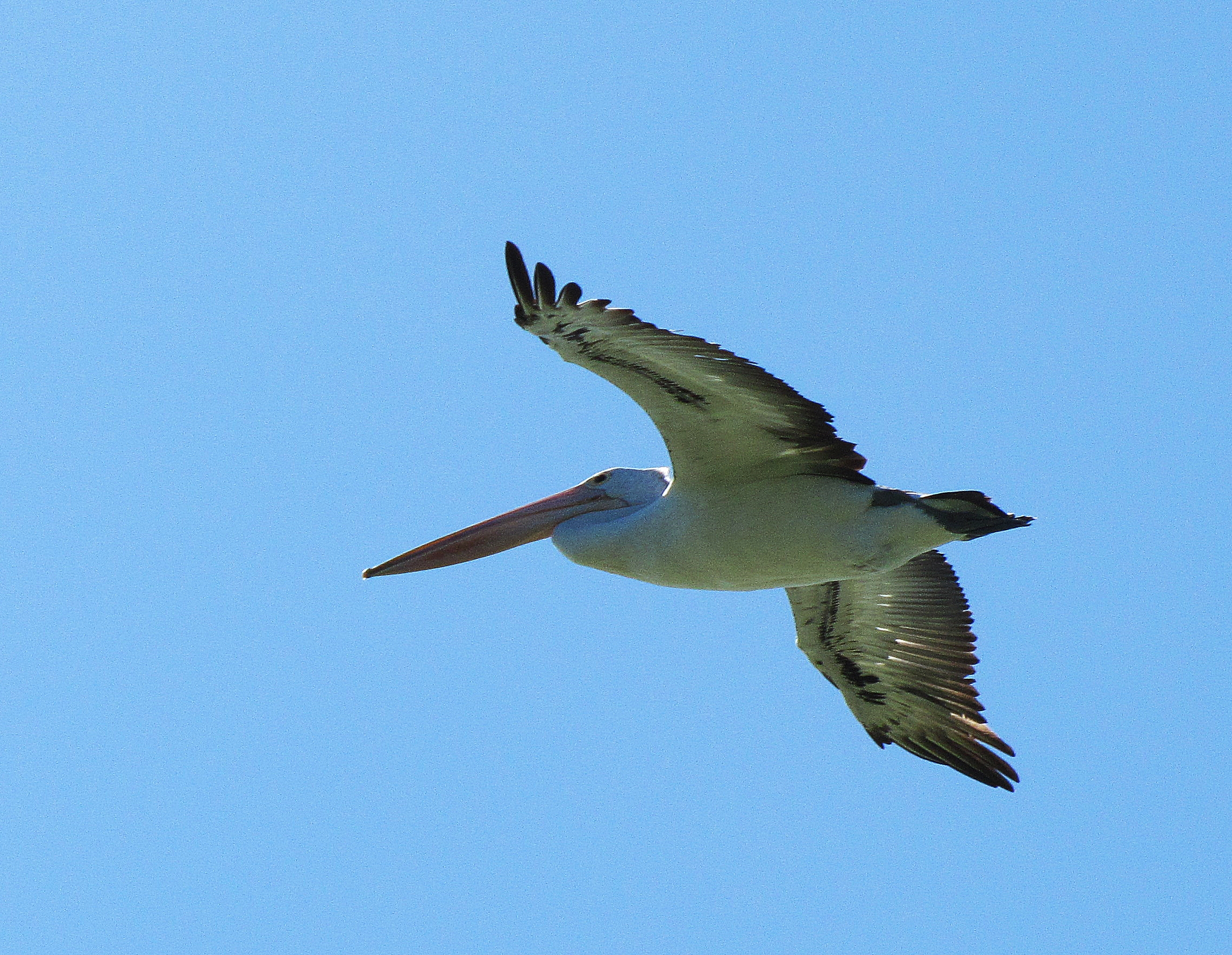
Pelican over Lake Alexandrina, South Australia
How about you?
- Over to my readers; where do you like to go birding?
- What unusual places have you been birding?
- Leave a comment or two; I would really appreciate that.
Good birding,
Trevor
Postscript: In a restaurant: we stayed in a beautiful riad in Marrakech, Morocco. Because it was open to the sky, the birds were free to fly into the restaurant area. The owners even put out seed to attract them. See the photos below.
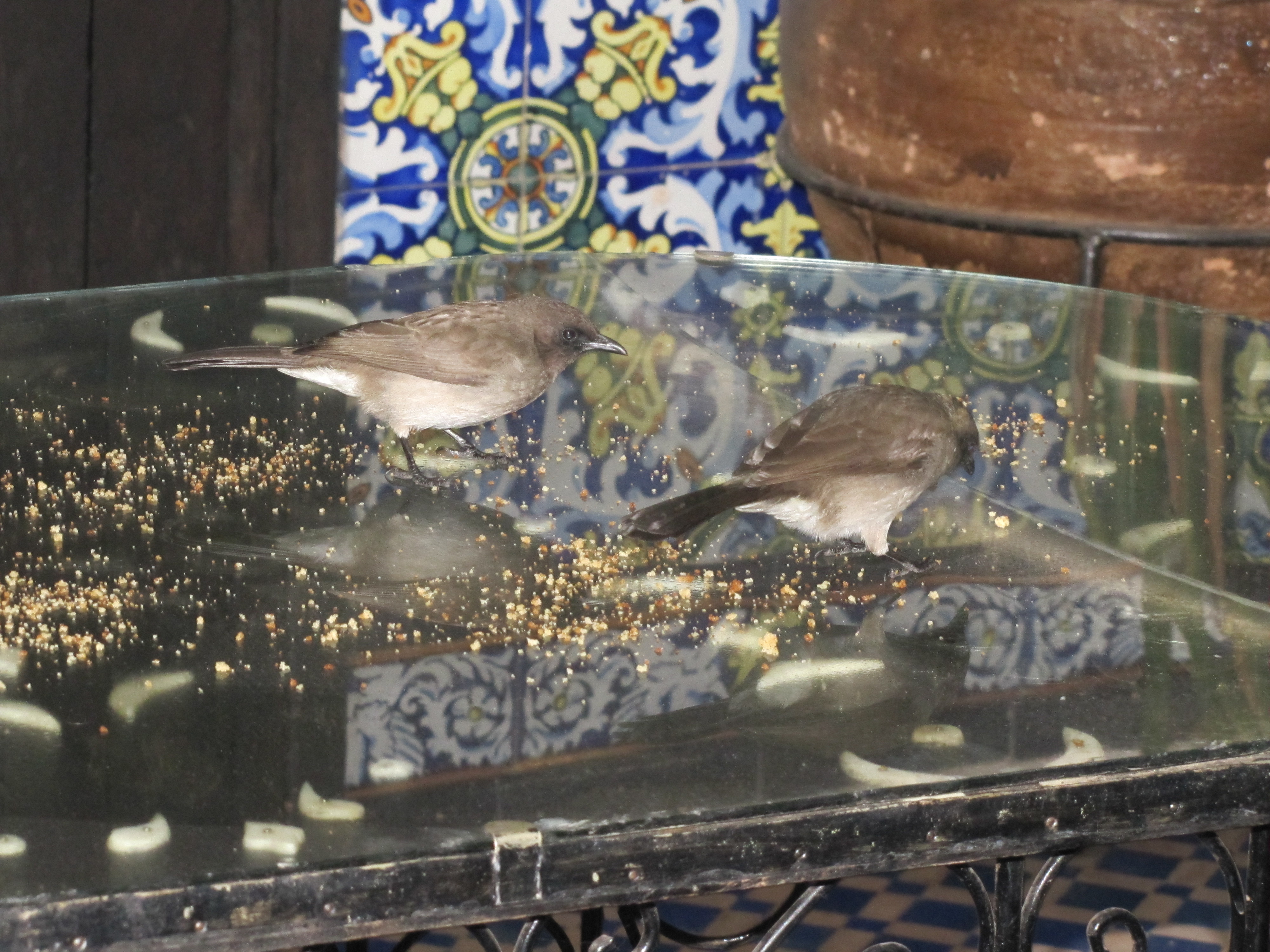
Common Bulbul in our riad in Marrakech

Common Bulbul in our riad in Marrakech

In our riad in Marrakech
Ethical birding
In all of my birding life I have largely gone out by myself, or just with my wife and very occasionally with family such as my grand-children. Consequently, I have not been a witness to bad or questionable behaviour on the part of other birders.
I also tend to go out bush in the farming land near where I live where not many birders tend to congregate. Actually – that alone could explain why I sometimes do not get very long lists of birds observed, which could mean that I am going to the wrong spots.
Anyhow… I have just read an article in the news letter published by Birds SA. This article appeared in the August 2014 issue which indicates that I am a little behind with my reading. The then president of the association, David Paton, write in his regular letter to members an interesting article about ethical birding which is worth quoting here:
Ethical bird watching
“While bird watching, we all need to behave in ways that minimise disturbing the birds. This is particularly true in the breeding season, and many birds have already started breeding [in South Australia].
Ethical bird watching begins by first obtaining permission to be on a property and complying with any instructions from the owner or land manager.
Once on the land and watching birds one should:
- move away from any nests that are found;
- refrain from playing recordings of bird calls to lure birds in;
- limit the use of flash when taking pictures;
- respond appropriately if the birds are giving distractive displays, by moving away and not returning to the same area;
- not remove vegetation for a better view or photograph;
- think about the consequences for the birds of passing on details of rarer species or species that are nesting.
All these actions are about protecting the habitats and welfare of individual birds.”
David Paton, President, Birds SA in the August 2014 newsletter.
The above list gives plenty of wise advice on treating our birds with respect, and ways of caring for them and our environment.

For people living in Adelaide and other parts of South Australia, can I encourage you to become members of Birds SA? I have been a member now for over 35 years – somewhere I have a certificate to prove it.
For your membership your receive regular newsletters, journals, electronic updates, access to their weekly birding excursions, access to their monthly meetings and their extensive library of bird books. The monthly meetings always have interesting speakers, though I sadly don’t get to all that many meetings because of living in the country.
You can access their website here.
Good birding.
Review: Field Guide to the Birds of Australia 8th edition
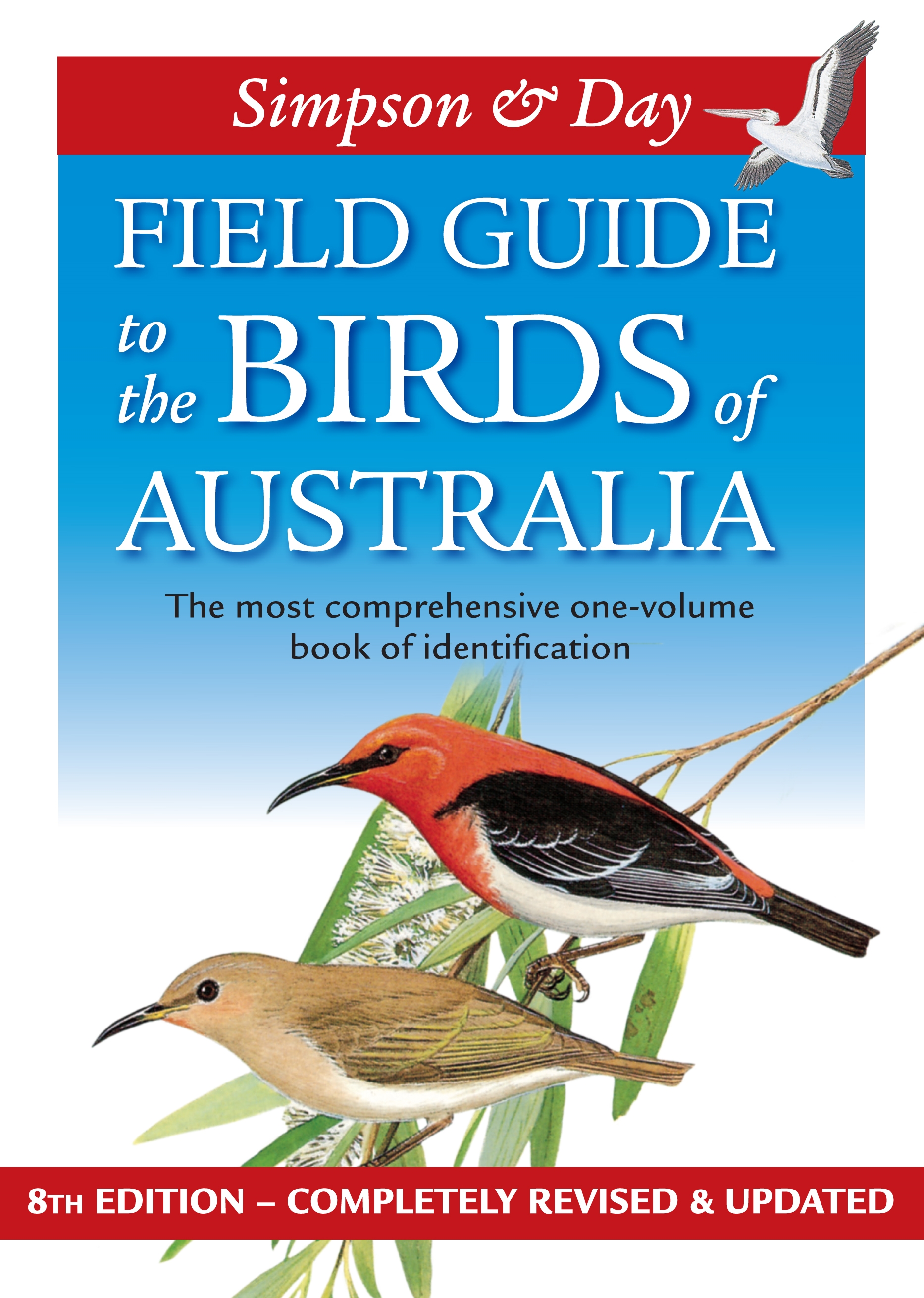
Field Guide to the birds of Australia 8th edition
Everyone interested in birds needs at least one field guide to help with the identification of the birds being seen.
I have several. Ten, in fact. Six of them are Australian field guides, plus I have one covering the birds of South East Asia, one of the Indian sub-continent and two for the British Isles and Europe.
Now I have another one! This field guide is being published TODAY.
Field Guide to the birds of Australia 8th edition
by Ken Simpson and Nicolas Day
(with Peter Trusler)
Ease of use
Many years ago I was given the first edition of this very popular field guide. It has remained largely on my bookshelf in my office, referred to from time to time but never taken out into the field. This was because of its bulky size and being in hardback couldn’t really be called a “field guide” as it was too big to carry around. Recent editions have been far more portable, and this new edition is excellent: convenient size, portable, and at 826 grams just the right weight.
Features:
There are many fine features in this edition. There are so many I can only highlight those I think are worth mentioning.
Colour plates:
There are 132 full page colour plates throughout which illustrate every bird found in Australia. The publisher’s use of the word “comprehensive” on the cover is no idle boast. Each colour plate shows about five or six different species, most shown in typical poses to help identification. Birds most often seen in flight, such as eagles and sea birds like terns, are also shown in flight. The colour rendition of each species appears very good in most cases, especially those I am very familiar with. One page I’d take exception to is the plate showing White-eyes and Silvereyes, as the birds I’ve seen in this group have far more vibrant colours. The ‘red’ robins suffer the same fate, along with some of the fairy-wrens. On the other hand, the rendition of the cuckoos, parrots doves and pigeons are very colourful and well done. The birds of prey (owls, hawks, eagles and kites) are brilliant.
Text pages:
Opposite each colour plate where the birds are illustrated is the text page. Each species has a short description of the bird, including sexual and race variations. The text also includes details of size, juvenile plumage, voice and preferred habitats. Breeding information is included in a separate section. The text is the part of this guide of which I am most critical. For my needs it is too short, too concise. In many cases I will need to go elsewhere in my library to find the information I need. For the casual bird watcher it is quite adequate. I concede that to expand this section to please me would probably add 20-30% more pages to the volume making it less portable in the field. The authors must have had some tough decisions to make along the way.
Next to the text they have included some 900 black and white sketches showing identification features hard to include in the text. This is an excellent feature. The text section is complete with a small map showing normal breeding and non-breeding distribution. Another excellent feature of the maps is to delineate the range of each race of the species, along with extra notes on some species where deemed necessary.
Breeding information:
A separate section details comprehensive breeding information. This includes a brief description of the nest, number and colour of eggs, incubation periods and what the hatchlings look like. It includes fledging periods and some notes about the care of the young until independence. Each species also has a bar graph showing typical breeding seasons.
Vagrant Species:
Special note must be made about the 21 pages of vagrant species included at the end of the colour plates. These pages show sightings of species not normally present in Australia (ie vagrants) but which have been officially accepted on to the Australian list of birds. Some have only been seen the once, others on only a handful of occasions.
Other features: these are too many to review here. All I can do is add a list:
- A water resistant cover – useful on wet days in the field.
- Help for beginners on how to observe a bird.
- Where birds live – a useful, informative section on variations in habitats.
- Australian island territories checklists
- Hints for birdwatchers
- An extensive glossary of words used by birders.
- A list of bird-watching organisations.
- Core library – an extensive list of publications the authors suggest for keen birders to build up their own reference library.
Conclusion:
We are so blessed here in Australia with so many excellent birding field guides. Each has strengths and weaknesses, so the choice of which to buy becomes an agonising one. I have no hesitation in recommending this new edition because of the comprehensive coverage of Australian birds in a compact, easy to use volume. An truly incredible amount of information has been packed into its 381 pages. The publisher claims to have sold over 500,000 copies in earlier editions. This new, completely revised 8th edition will continue that trend and sell many more copies in the future.
While I would like more information in the text this is just a personal need; not everyone needs the detail I require. For the vast majority of people with a passing interest in our birds, this is an ideal guide to have on the bookshelf or in the car or rucksack when travelling. At a RRP of $39.95 it is also very affordable.
Disclosure: The publicist of Penguin Books Australia kindly sent me a review copy a few weeks ago. Thanks Leisel.
References:
- Simpson, Ken, and Day, Nicholas, 2010, Field guide to the birds of Australia 8th edition. Viking (Penguin Books), Camberwell, Victoria.
- Penguin Books Australia – click here to visit their web site. Click here to read an extract.

A page from the field guide