A busy pair of Galahs
No Comments »28th November, 2020; Category: Baby birds, Bird Behaviour, Cockatoos and Corellas, Garden birds, Parrots and Lorikeets
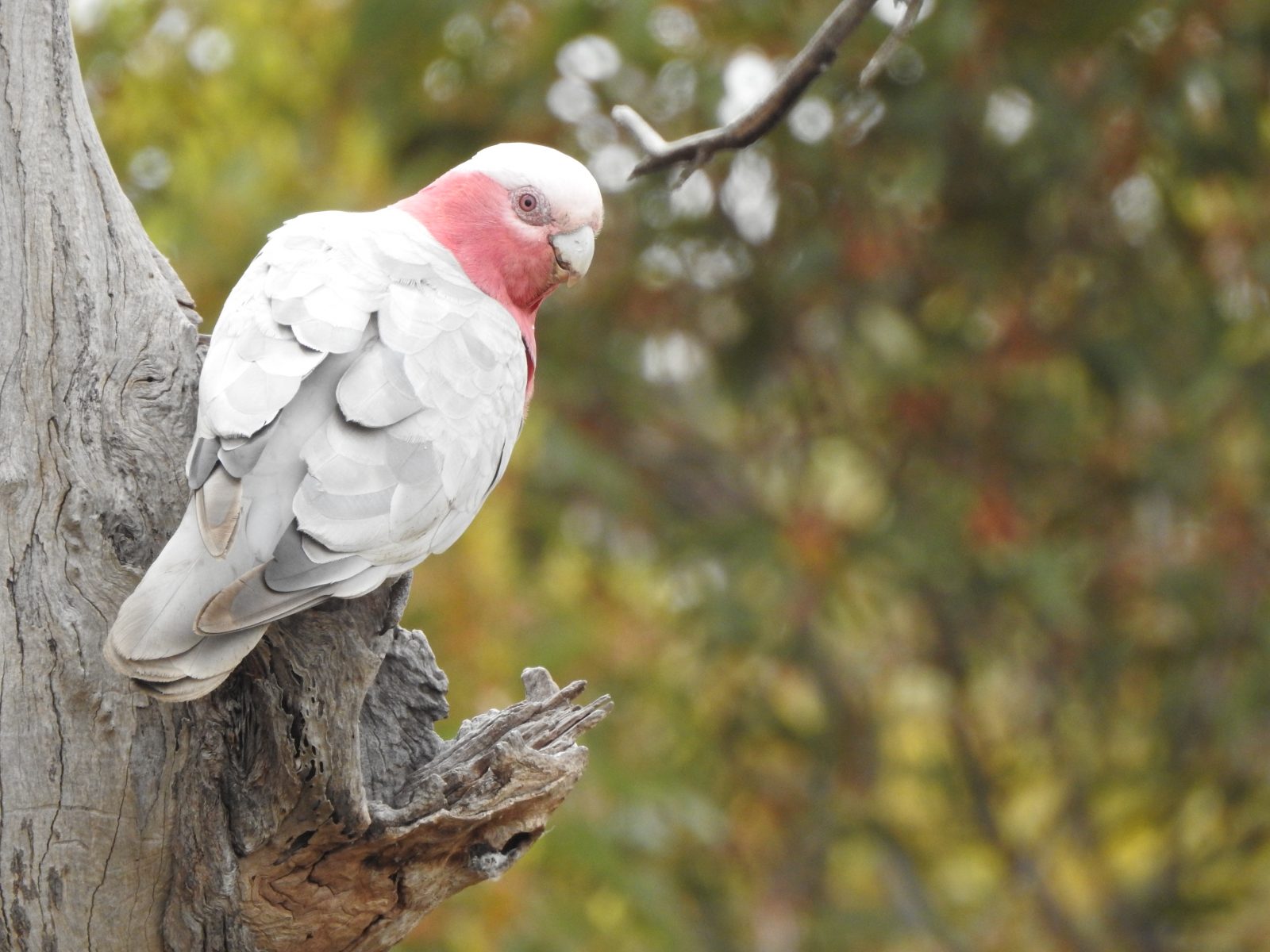
Resident nesting Galahs
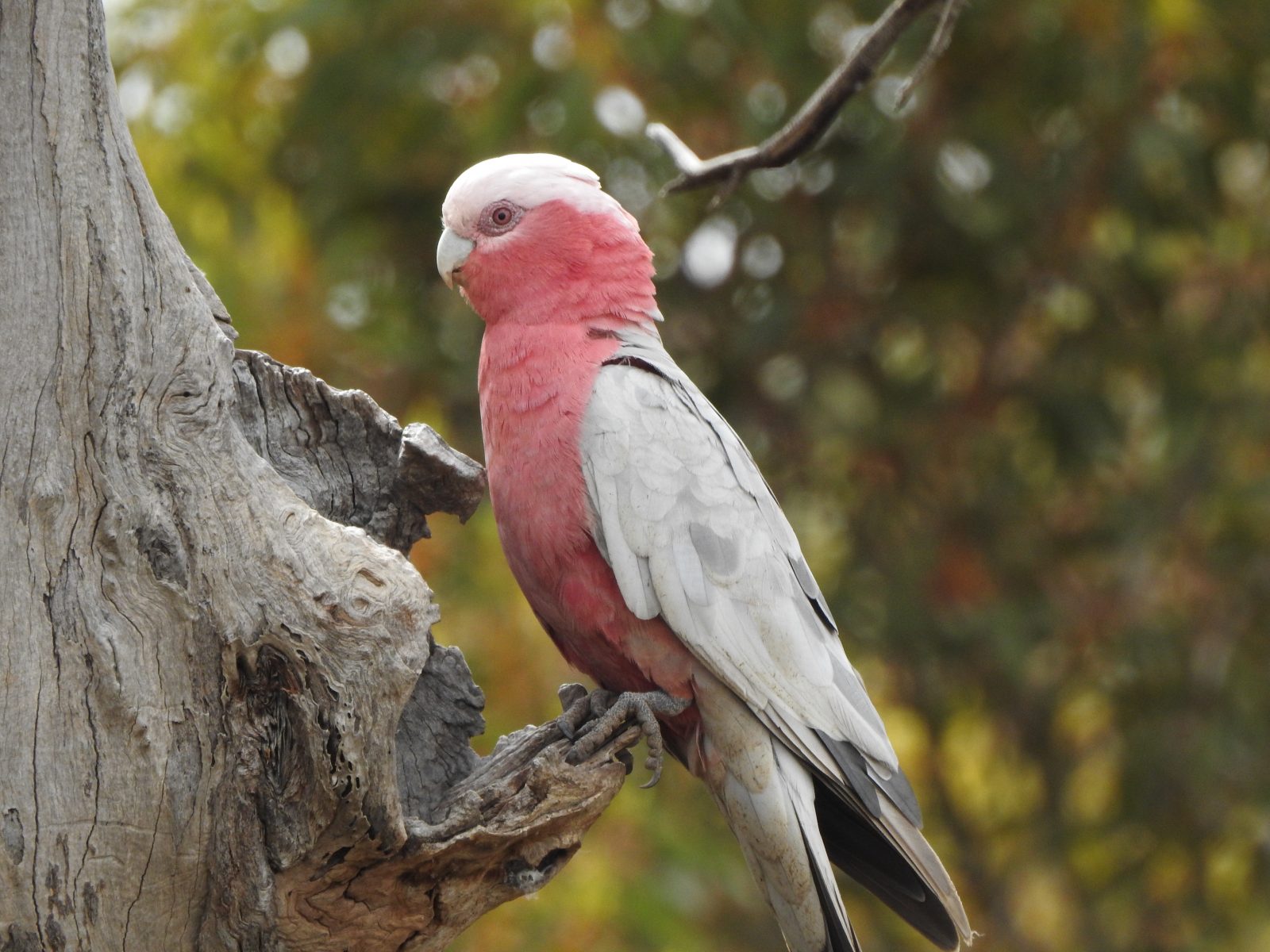
I live on the edge of the rural city of Murray Bridge which is about an hour’s drive from Adelaide, South Australia. We are blessed to have a variety of parrots, cockatoos and lorikeets in the region. One of the common birds in this family is the Galah. I am sure that if I took a census of this species over a whole year, there would be very few days pass without seeing at least a handful of these lovely parrots either resting in the trees in my garden, or flying overhead. On occasions, I have even seen flocks of many dozens through to many hundreds. They are a very common species in this area.
Easy birding
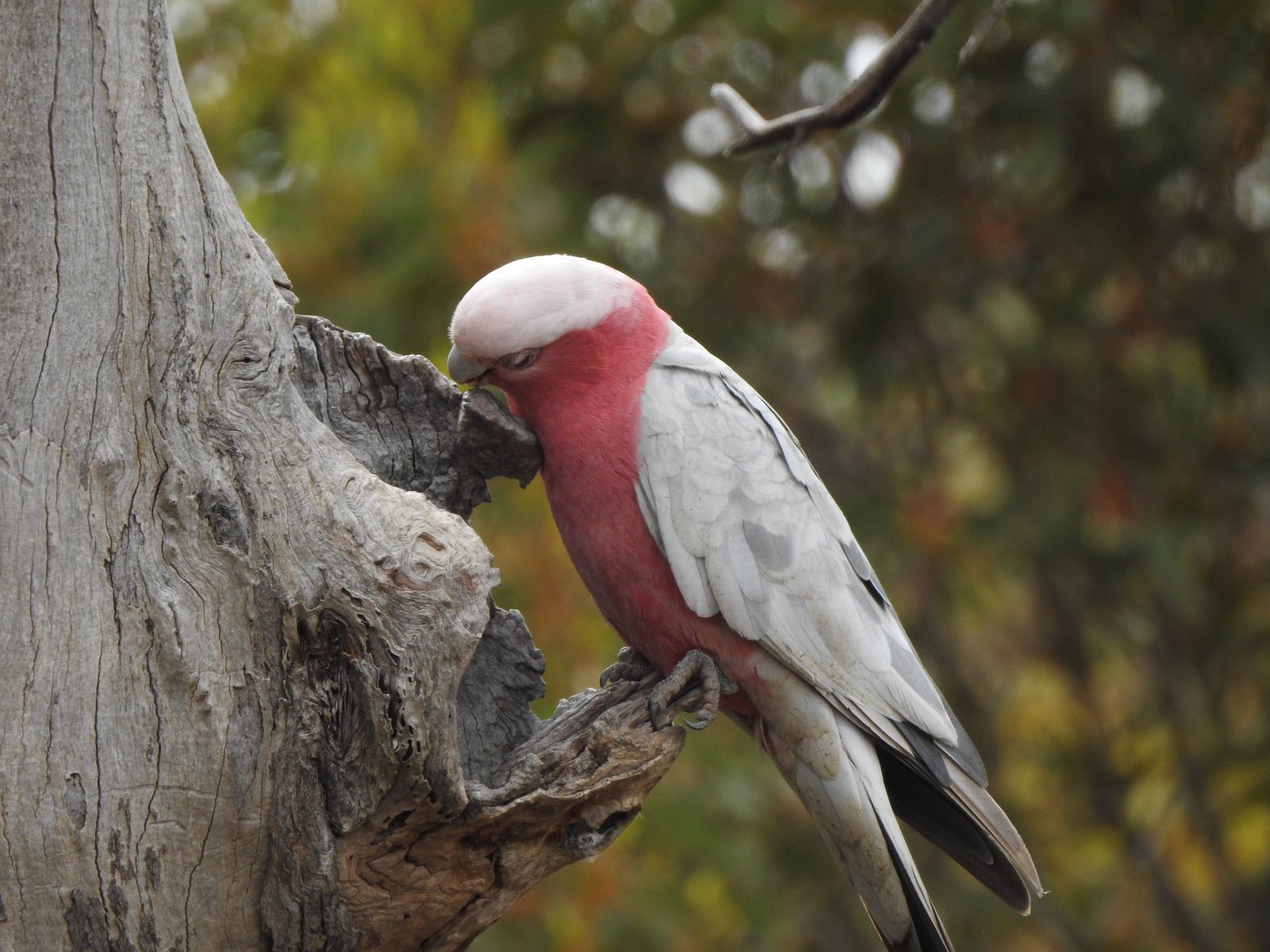
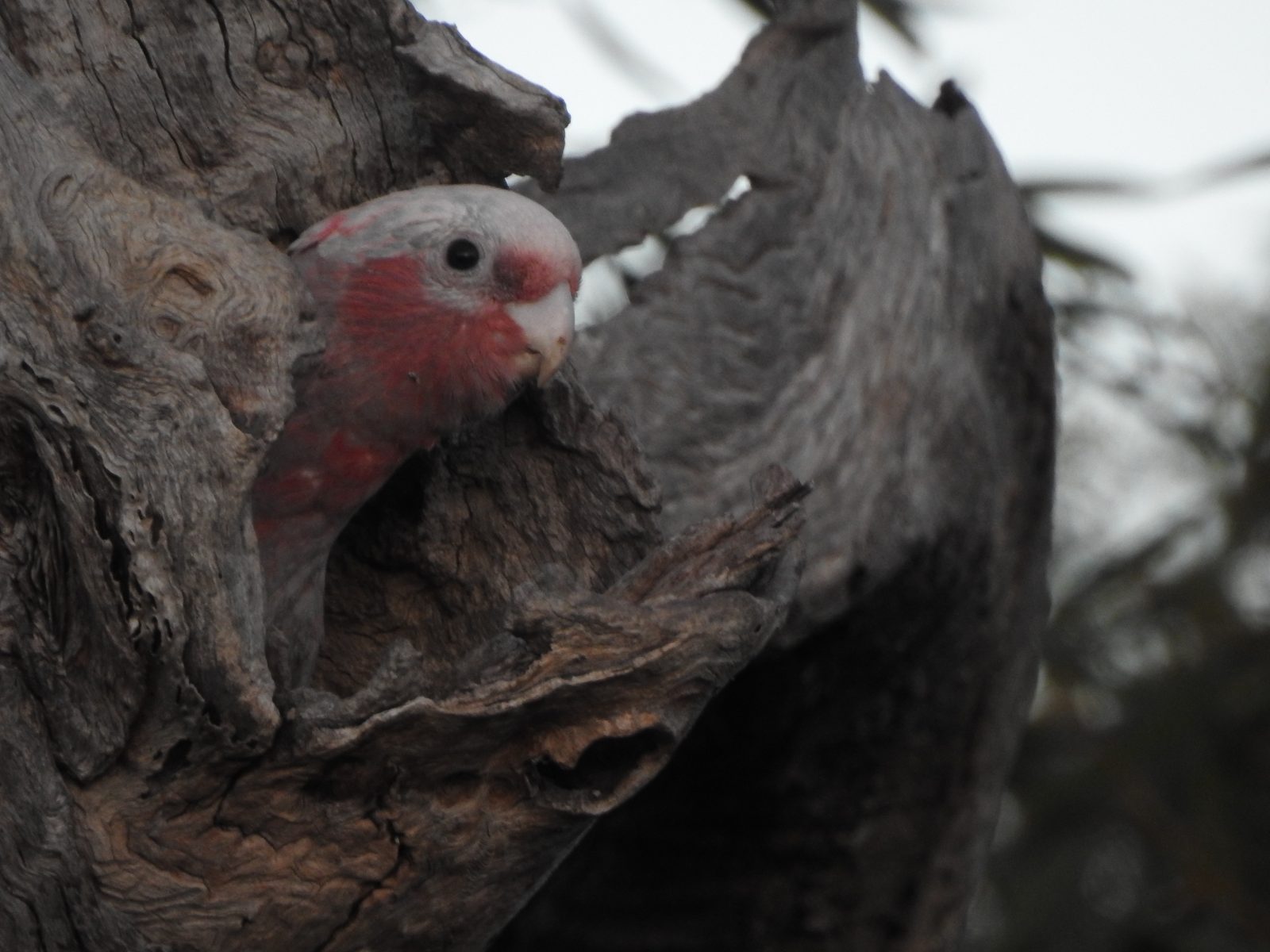
The photos shown in today’s post were all taken in my garden and all within a few minutes of each other. This hollow is in an old-growth mallee tree within about twenty metres of my back veranda. I have a comfortable chair located there and I enjoy sitting there reading – or just watching the birds all around. It is very relaxing and quite lovely that the local, resident birds just go about their activities while totally ignoring me. It also makes photography easy.
Nesting attempts
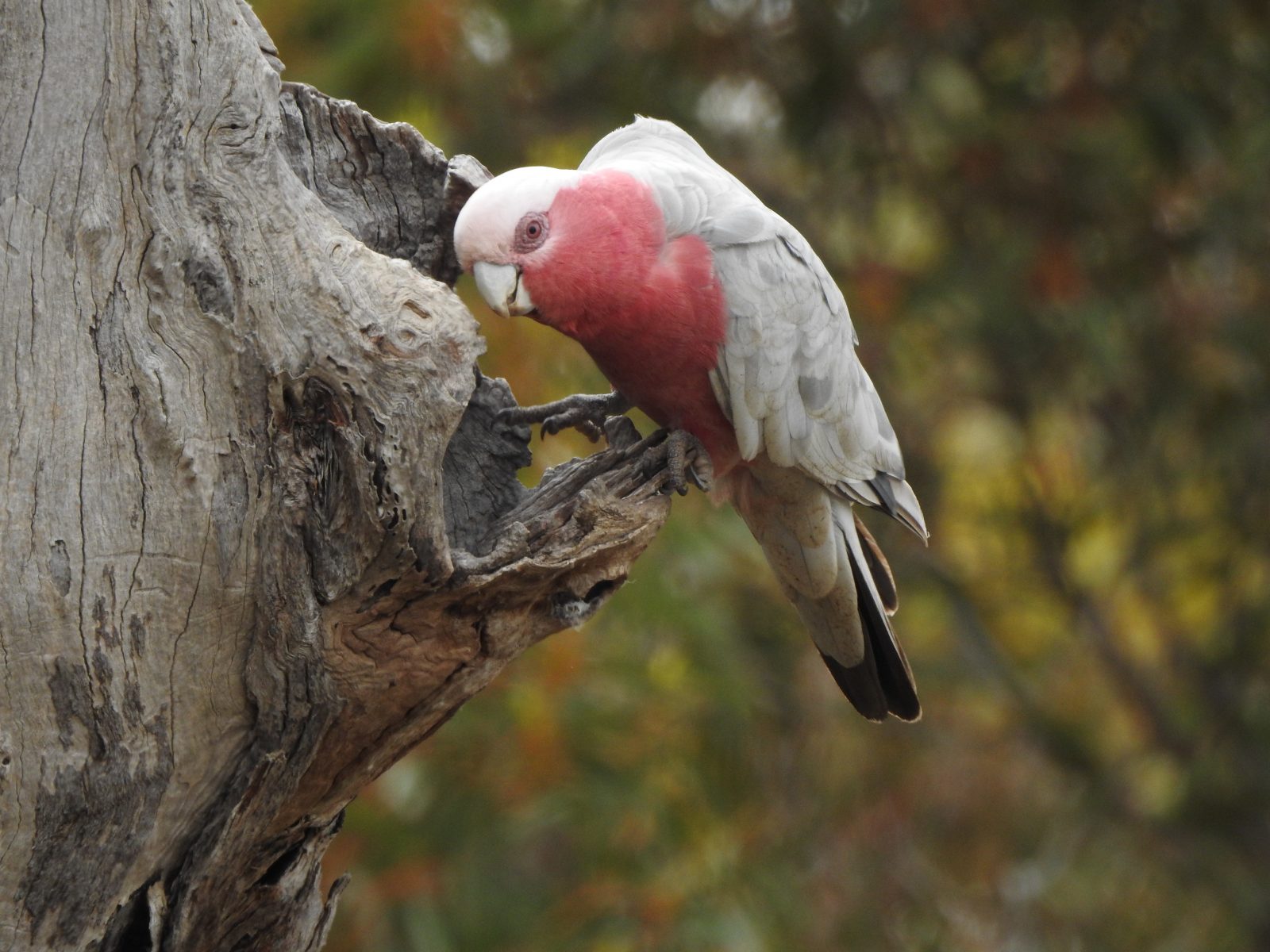
A pair of Galahs have been working at this hollow for some years. Then, about four years ago they started putting fresh eucalypt leaves in the hollow. I eagerly anticipated a nesting attempt but they abandoned their quest. About once or twice a day they would sit at the opening of the hollow and screech loudly into the hollow – then fly away.
Strange, I thought.
An interloper takes over
A few days later I discovered the reason why they hadn’t successfully nested in the hollow. I saw a Brush-tailed Possum coming out of the hollow. It had evicted the Galahs from their home. After some months I guess that the possum had moved on elsewhere. In fact, I haven’t seen one or heard one on the roof for several years now. So the Galahs returned to their home.
Success at last
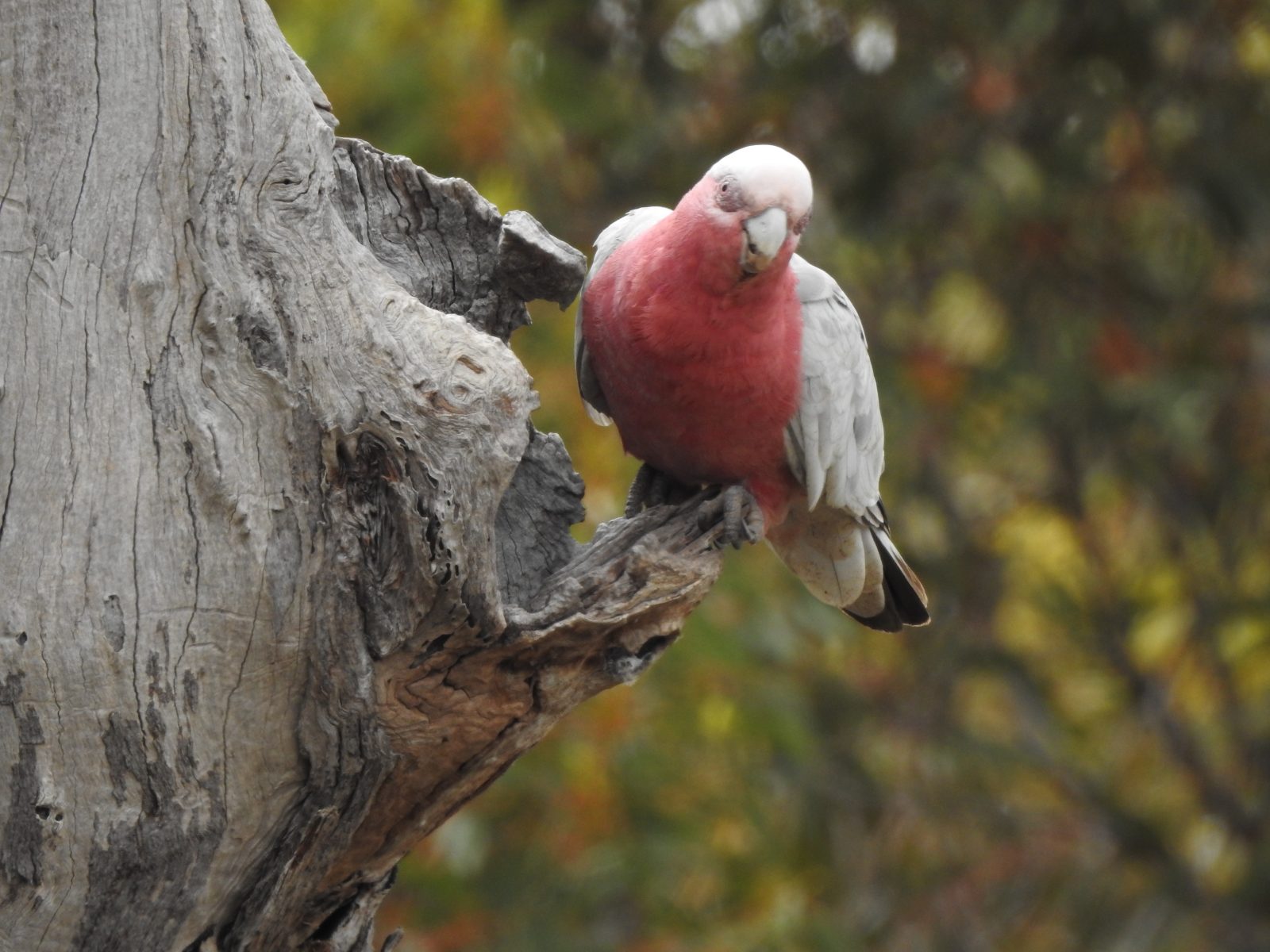
During late winter last year they again started working on the hollow. During the next month or so they successfully laid eggs and raised their chicks which later fledged. This year they have again been successful. I didn’t manage to get a photo of this year’s chicks because they flew off before I could get a shot. Instead, I have included below a photo of one of the chicks from last year’s brood.
A few days after the two chicks fledged, they were precariously hanging on to the branches of the trees nearby, along with about a dozen other chicks from other parents. Most of them were calling to be fed, and as the parents came in to feed them I had a very noisy Galah nursery in my garden.
Being watched by Little Ravens
They are watching me
Ever had the feeling that someone is watching you?
I guess that feeling is common to most people. Have you ever had the feeling that an animal or bird is watching you? That is a very common feeling, I’d say. Dogs, in particular, have an uncanny way of watching people eat, for example. They always seem to know when there is food around.
Ravens nesting
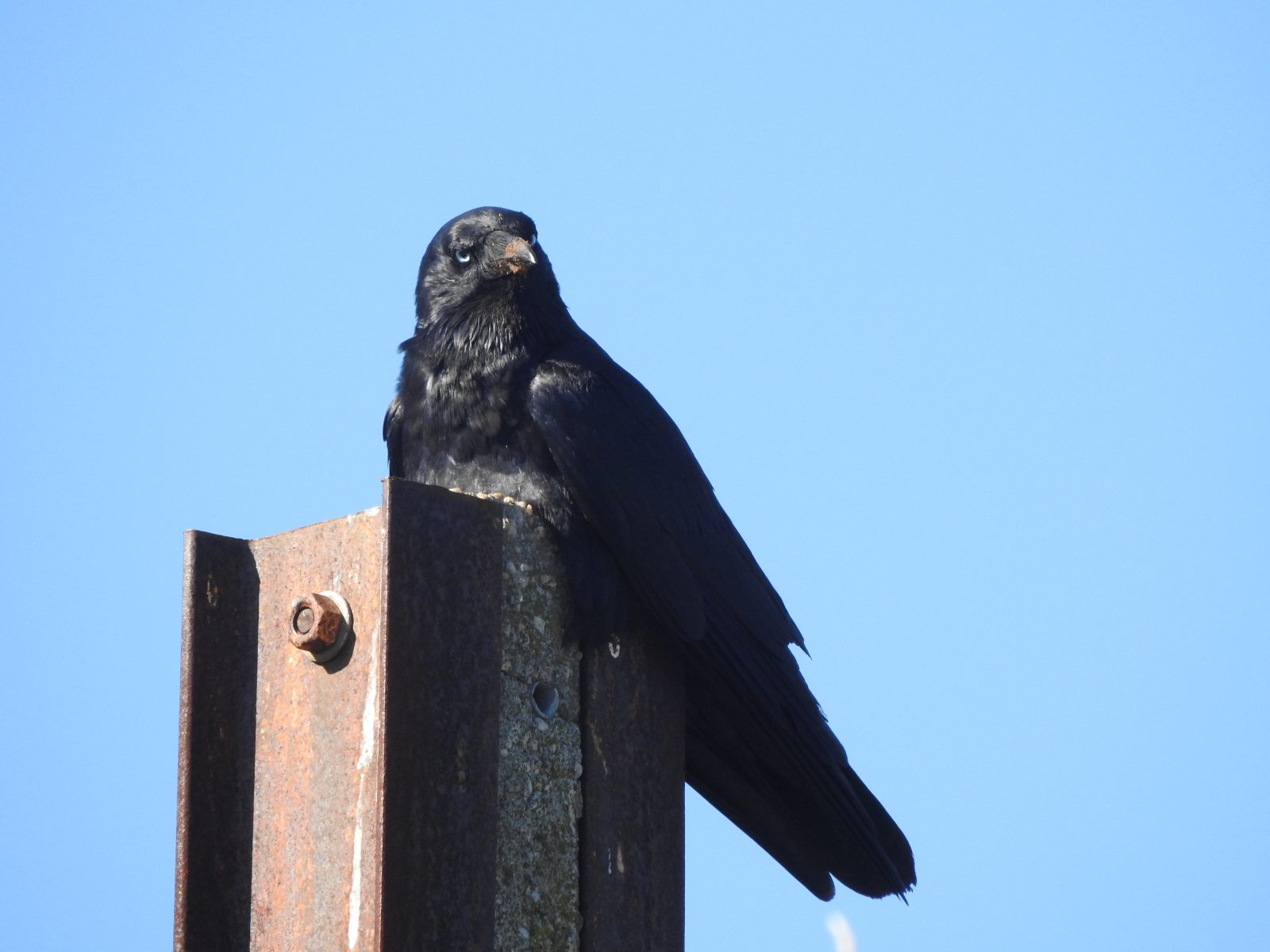
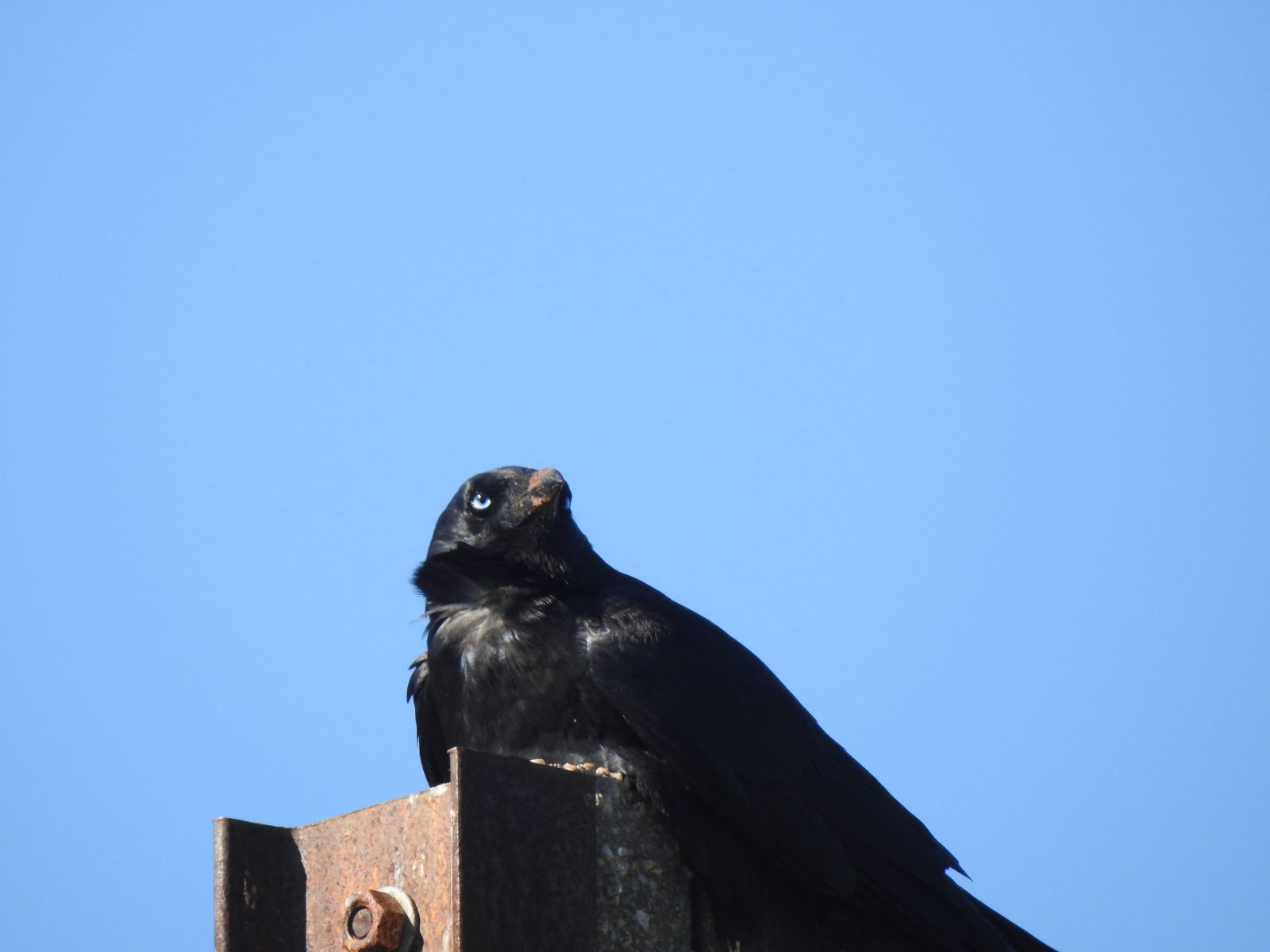
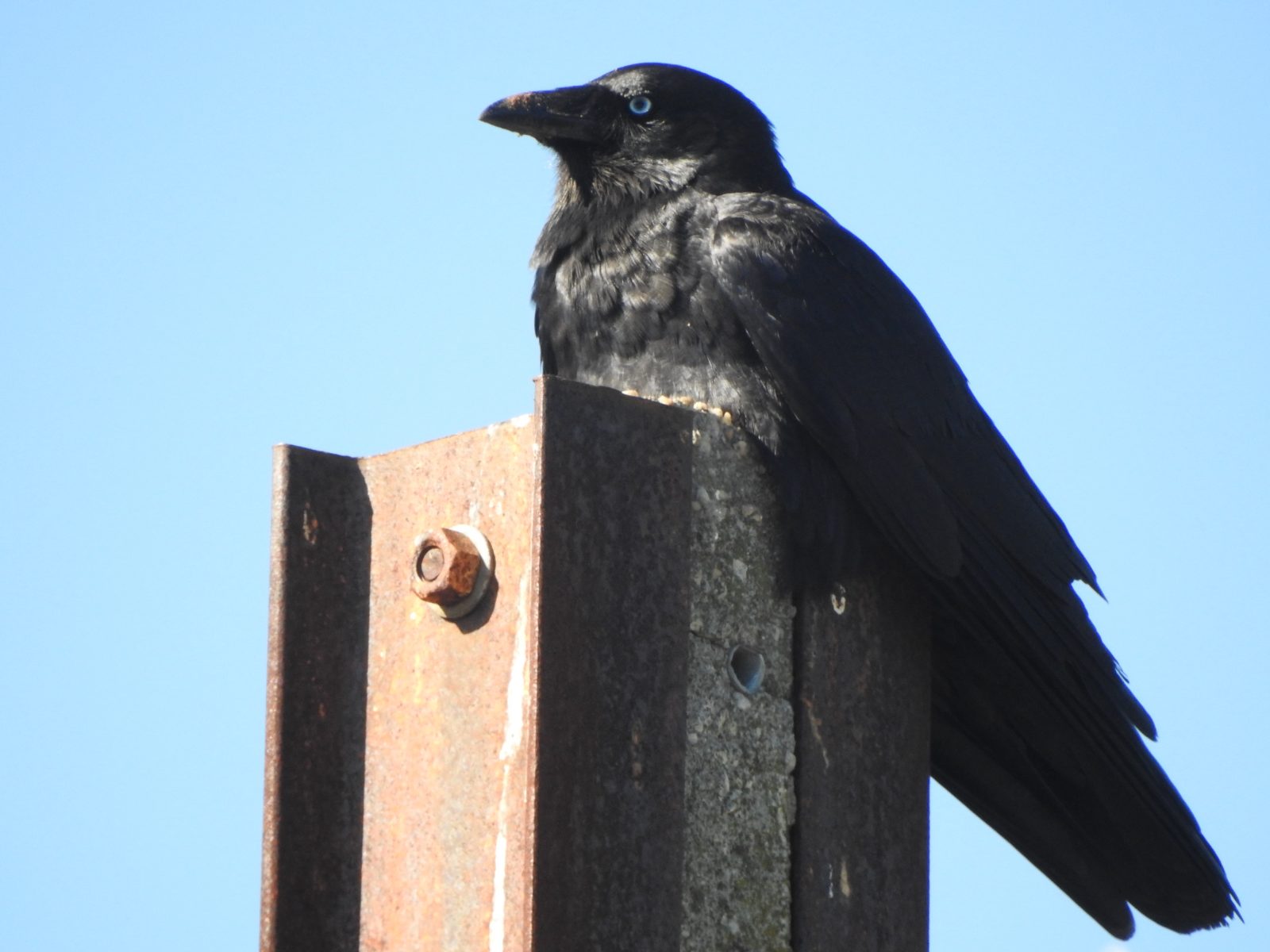
Last month I was aware that the resident Little Ravens in my garden and five-acre block have been nesting. I observed them carrying sticks to a tall tree near my driveway, a spot which gives them a good lookout over the surrounding land. I had just taken some photos of the flowers of some native Australian plants in my garden when I spotted the Little Raven shown in today’s photos (above and below).
Keeping an eye on me
The photos almost look like the raven is watching me carefully, making sure that I go nowhere near the nest. Over the few weeks, before these photos were taken, I walked past the nest tree many times. At no point did the ravens call out a warning, or swoop me or anything. I just went about my business, and they continued with their nest building.
I have been away from home travelling for the last two weeks so I don’t know whether their eggs have hatched. I will still be away for a while so I expect to get home to find several young ravens begging for food.
Good birding,
Trevor
Further reading:
It’s Magpie Swooping season again
2 Comments »25th September, 2019; Category: Bird Behaviour, Birds in the News, Hints, Magpies and Currawongs, Nests
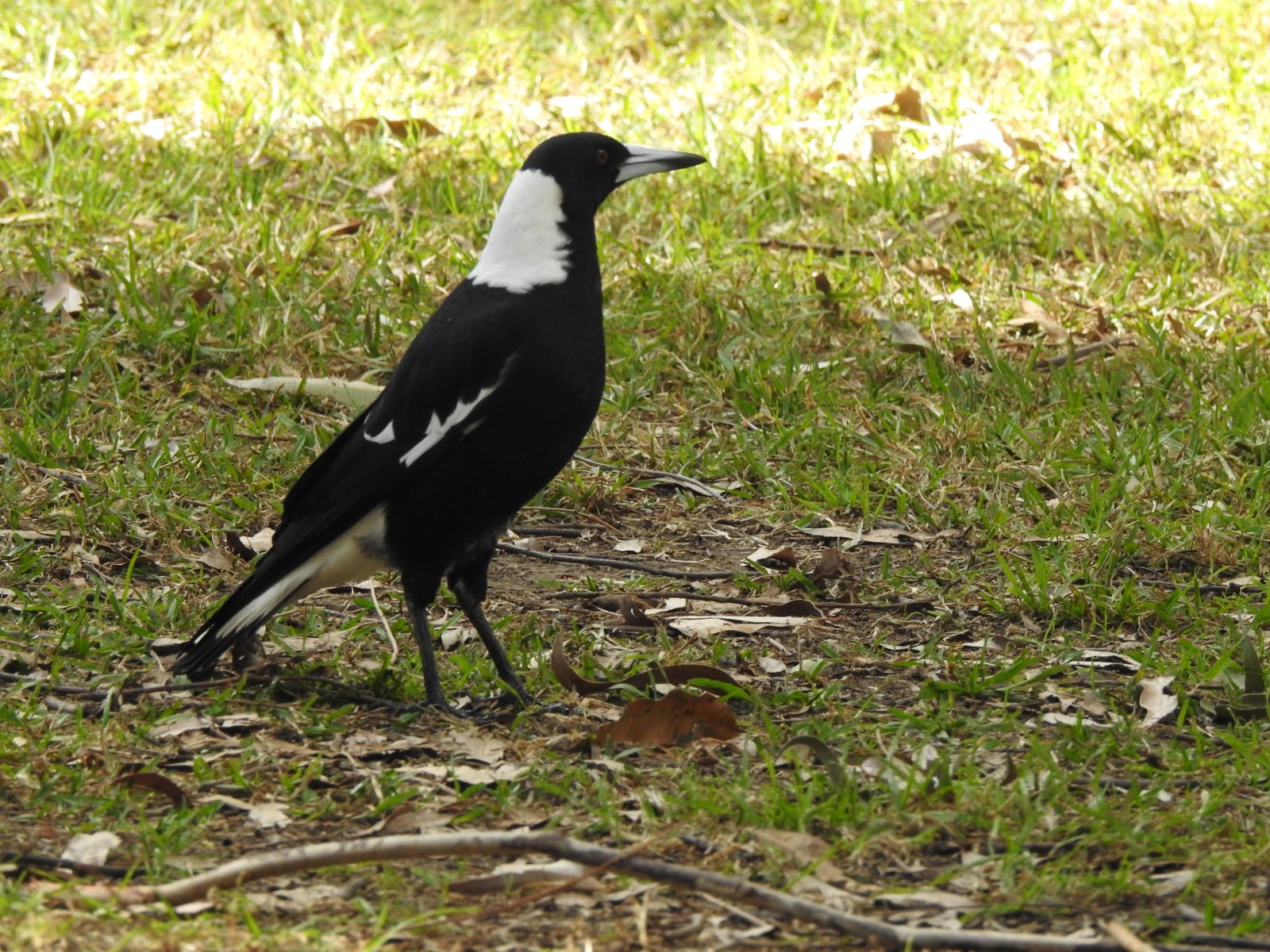
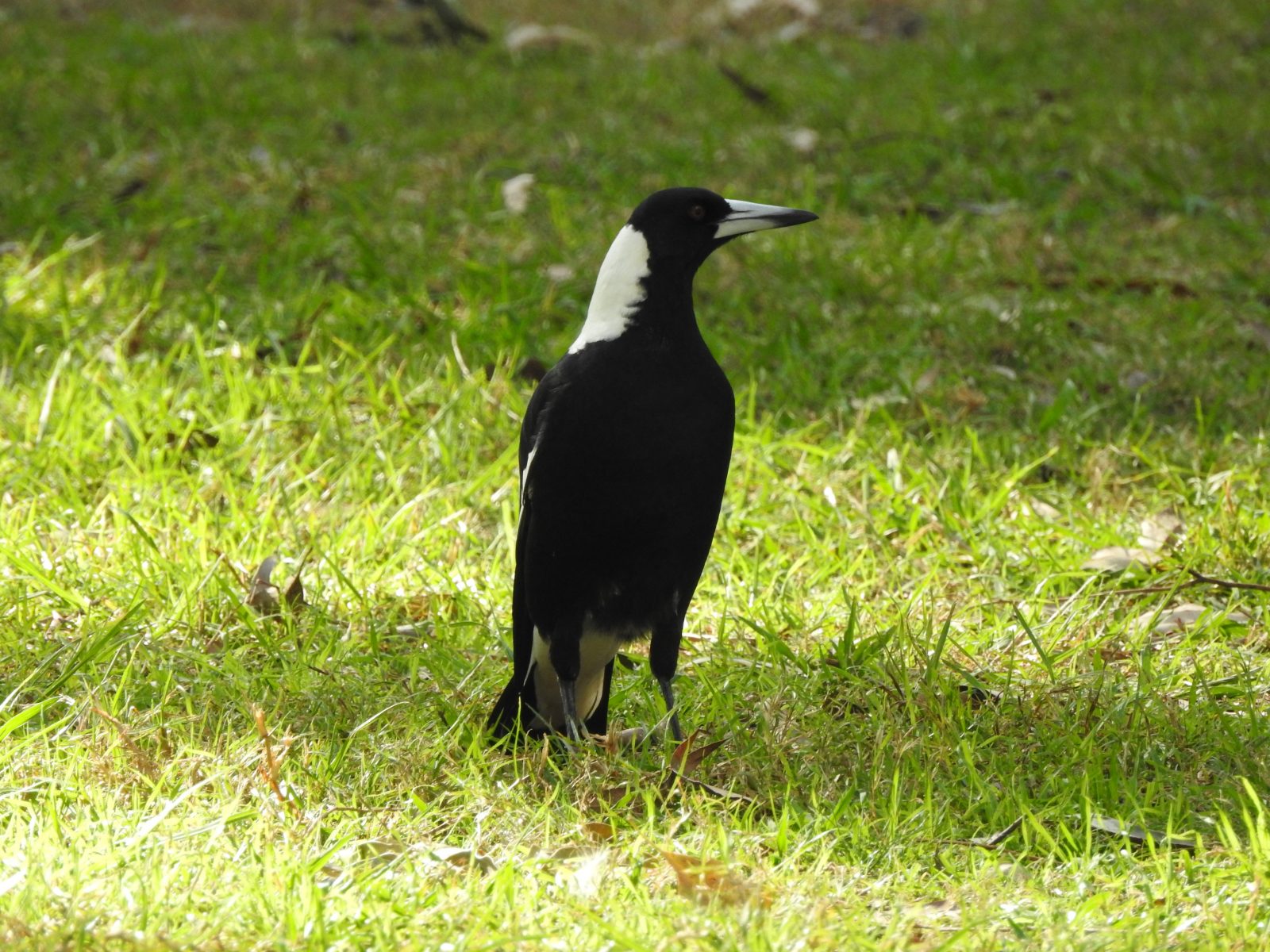
It is magpie swooping season again throughout Australia where Australian Magpies are found. That’s pretty much everywhere in Australia. This species is usually quite happy to co-exist with humans and will go about its life quite independently of us. They are relatively common in urban areas and very common in rural and farming environments.
Aggressive birds
Some individual Australian Magpies, however, have a very aggressive behaviour towards people during the nesting season, swooping them if they come anywhere near to their nest. This is particularly troublesome to young children who are sometimes terrified by a swooping bird. The elderly are also vulnerable as this story relates. Sadly, the elderly man who fell from his bicycle trying to get away from a swooping magpie severely injured his head when he hit a fence. He later died in hospital.
While this incident had a tragic outcome, this is not normal. Certainly, many people are terrorised by nesting magpies. Some have incurred serious injuries as a result, including eye injuries. My own sister-in-law suffered serious cuts to her scalp during a magpie attack when she was quite young. I also seem to remember a newspaper report of a cyclist who, in attempting to avoid being swooped actually rode into the path of a car and was injured by the car but not the bird.
Over the years I have written quite a few articles addressing this issue. I have listed some of them below. Some of these articles give advice on how to avoid getting swooped.
Further reading:
The Problem of Swooping Magpies
Do Blackbirds Swoop? Dealing with Aggressive Birds
Pesky Plovers – dealing with swooping birds
I invite readers to add their comments on how they deal with swooping birds. Or, you can comment on experiences with pesky birds.
Good birding – and stay safe.
Trevor
Annoying Noisy Miners
No Comments »21st September, 2019; Category: Bird Behaviour, Garden birds, Honeyeaters, National Parks
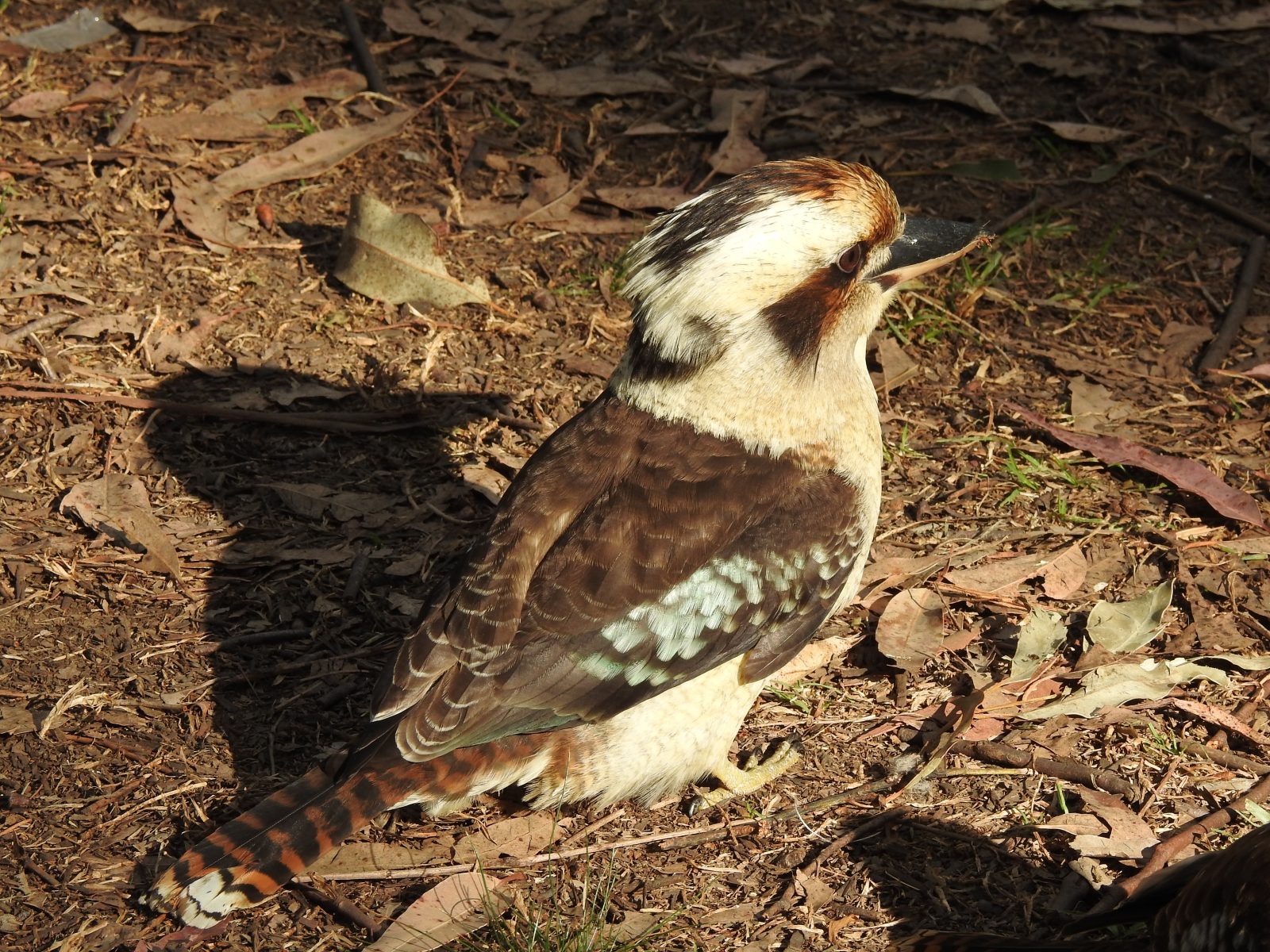
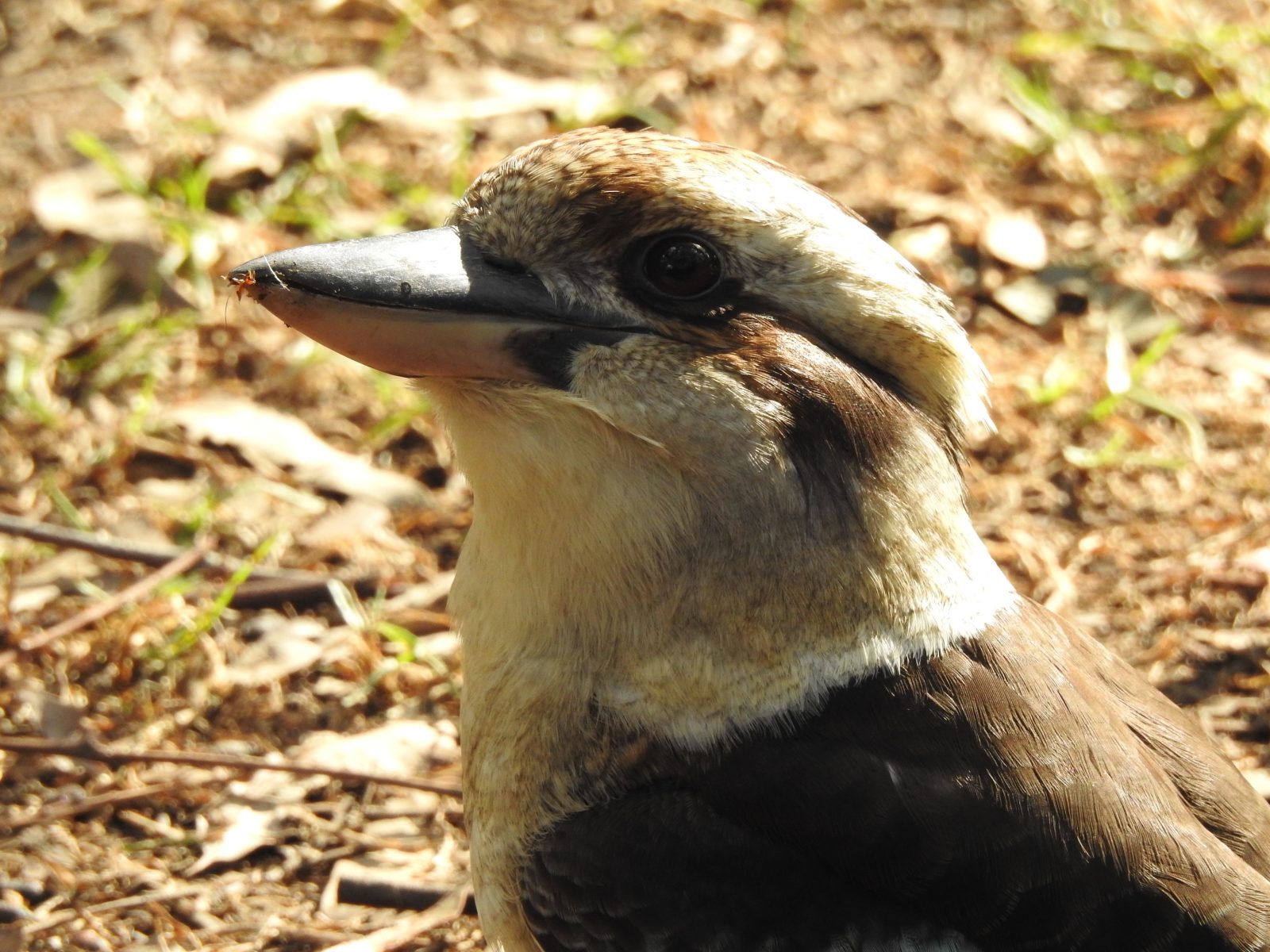
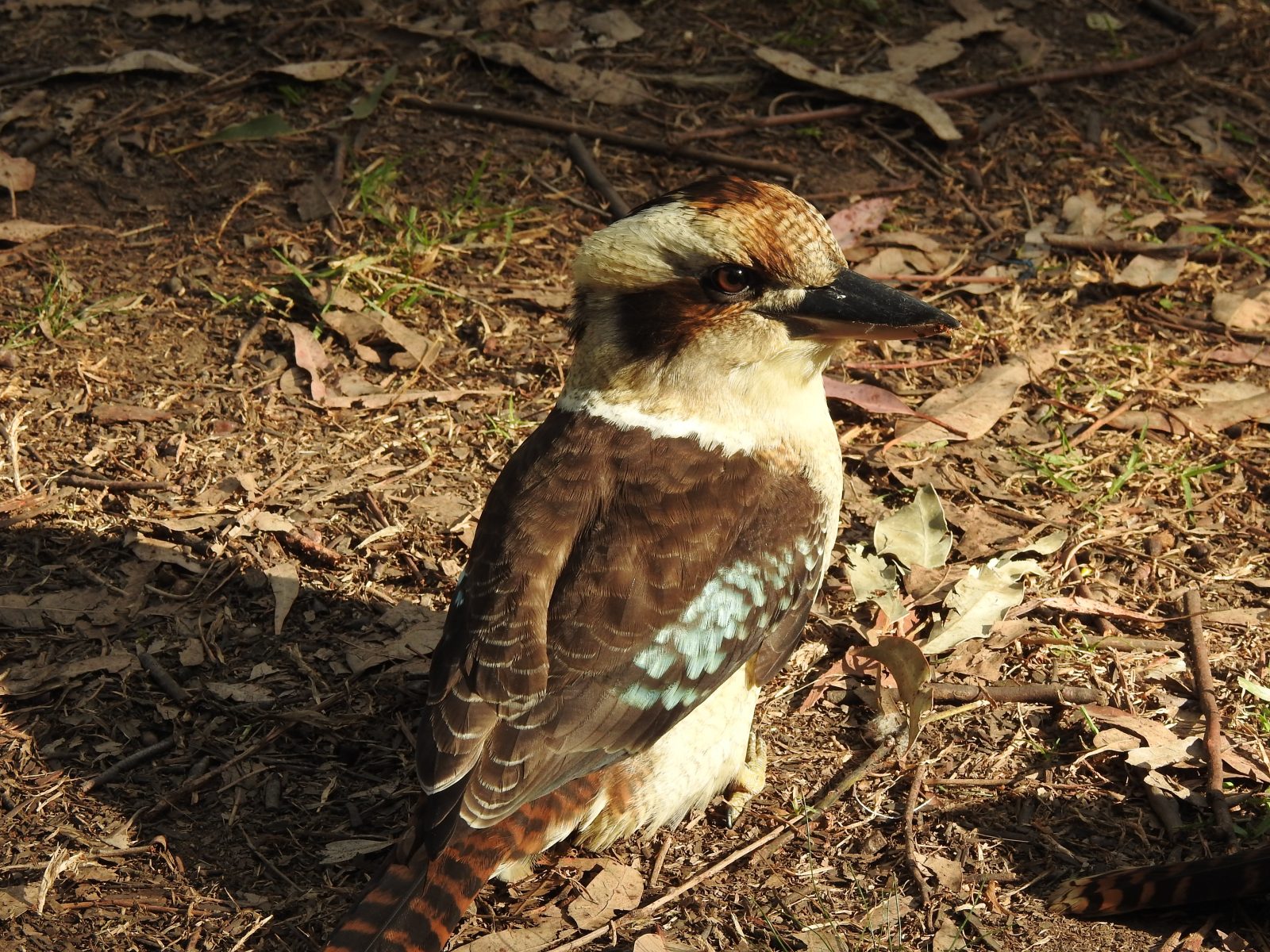
In my last post, I showed photos of some Laughing Kookaburras in the Lane Cove National Park in Sydney. This park is only a short distance from my son’s home, so over the years, I have visited it often. On this occasion, the kookaburras allowed me to come very close to where they were investigating something on the ground. I couldn’t determine what they were so interested in because I was enjoying photographing the birds from a close distance.
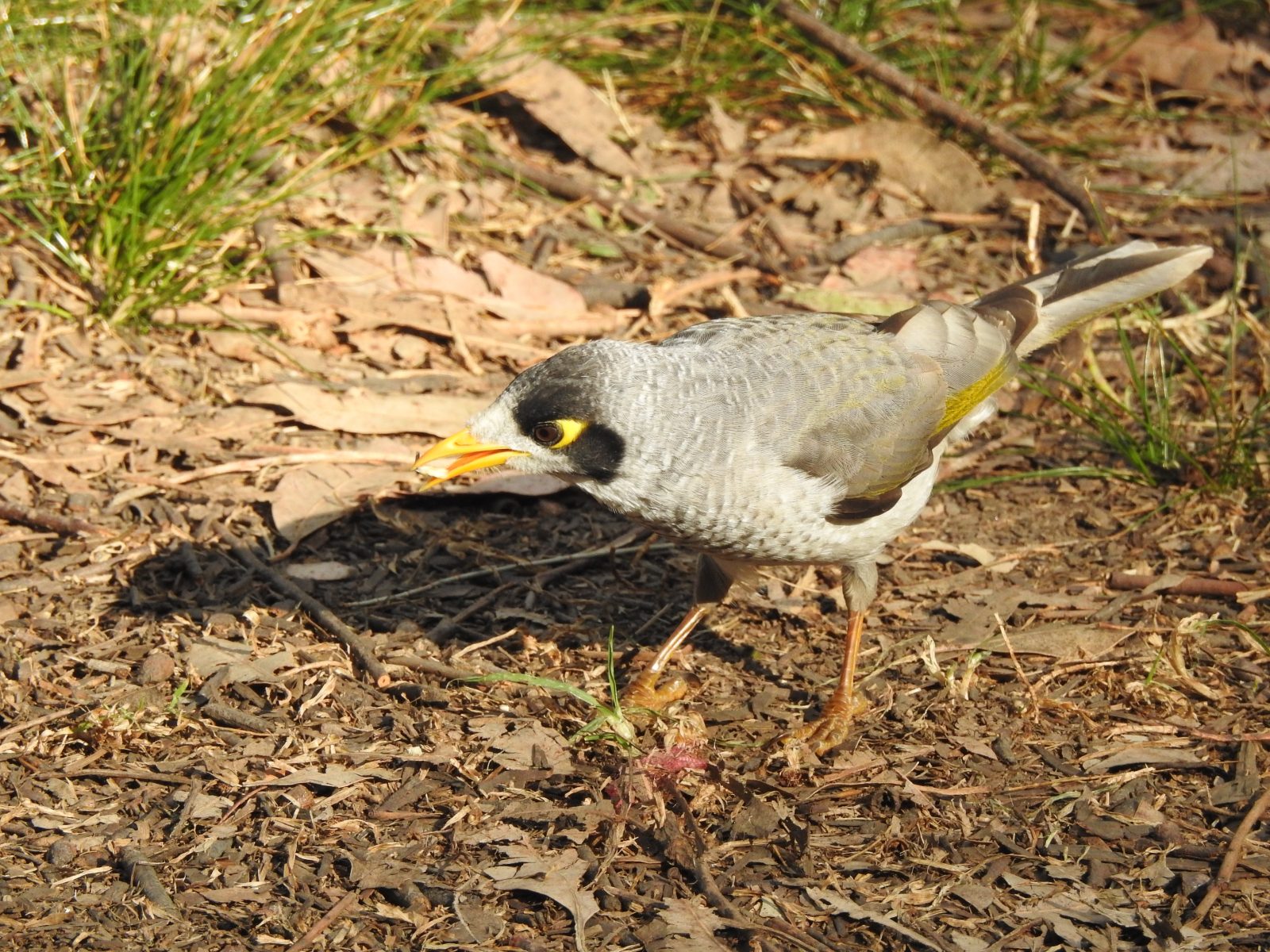
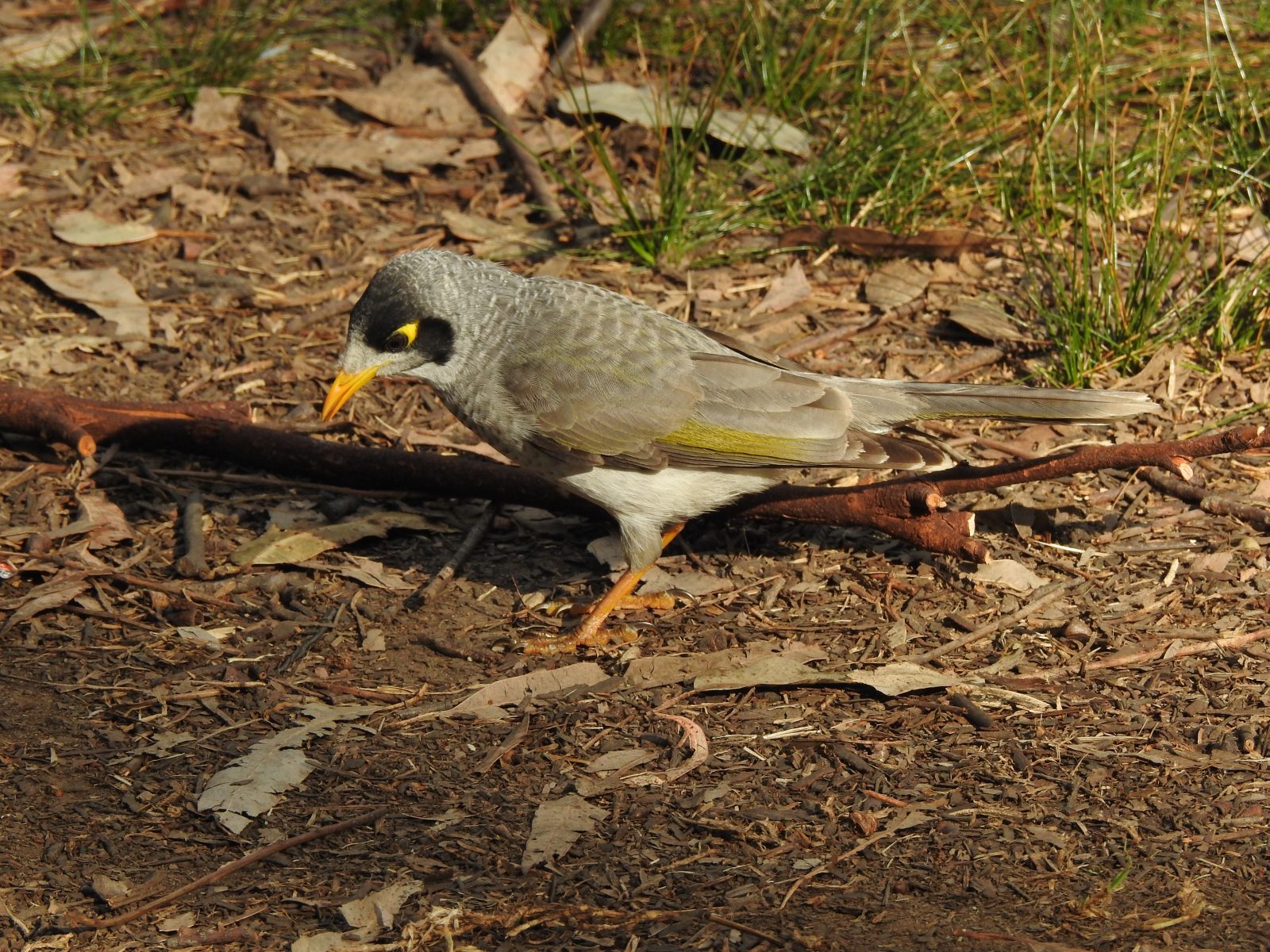
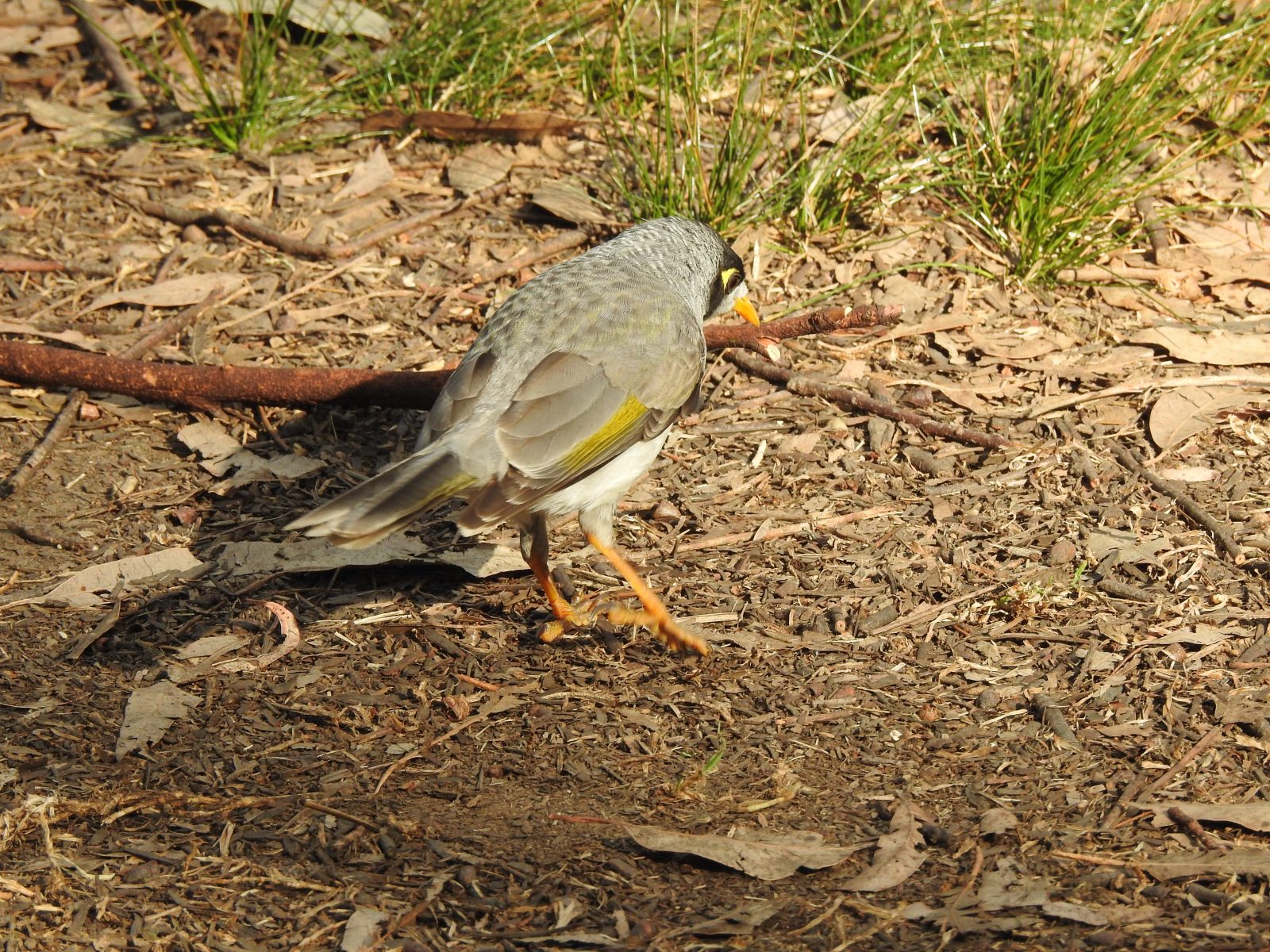
A Noisy Miner also joined in the quest for something to eat. They may have spotted some picnic leftovers and were looking for more. Just like the kookaburras, I was able to get close up photos of the miners in their natural environment without disturbing them in any way.
On other visits to this park, the Noisy Miners can be rather annoying. Just like the kookaburras, they are very bold and will come up to humans and even snatch food from the picnic tables when it is left uncovered or unattended. There are plenty of signs in this park warning people not to feed the birds, but that still doesn’t stop the birds snatching human food for themselves.
The Noisy Miner is one of many species of native Australian honeyeaters. It is not to be confused with the very similar Yellow-throated Miner. Their distribution overlaps in parts of Australia. There is yet another species – the Black-eared Miner but that species is endangered and is only found in a few small isolated populations.
The Noisy Miner is an aggressive species and has adapted well to urban environments and introduced plant species. It acts aggressively towards many of our smaller bird species such as finches and wrens, chasing them away from parks and gardens, taking their food and nesting spots. Some people also find that their raucous calling can be annoying at times.
Kookaburras up close
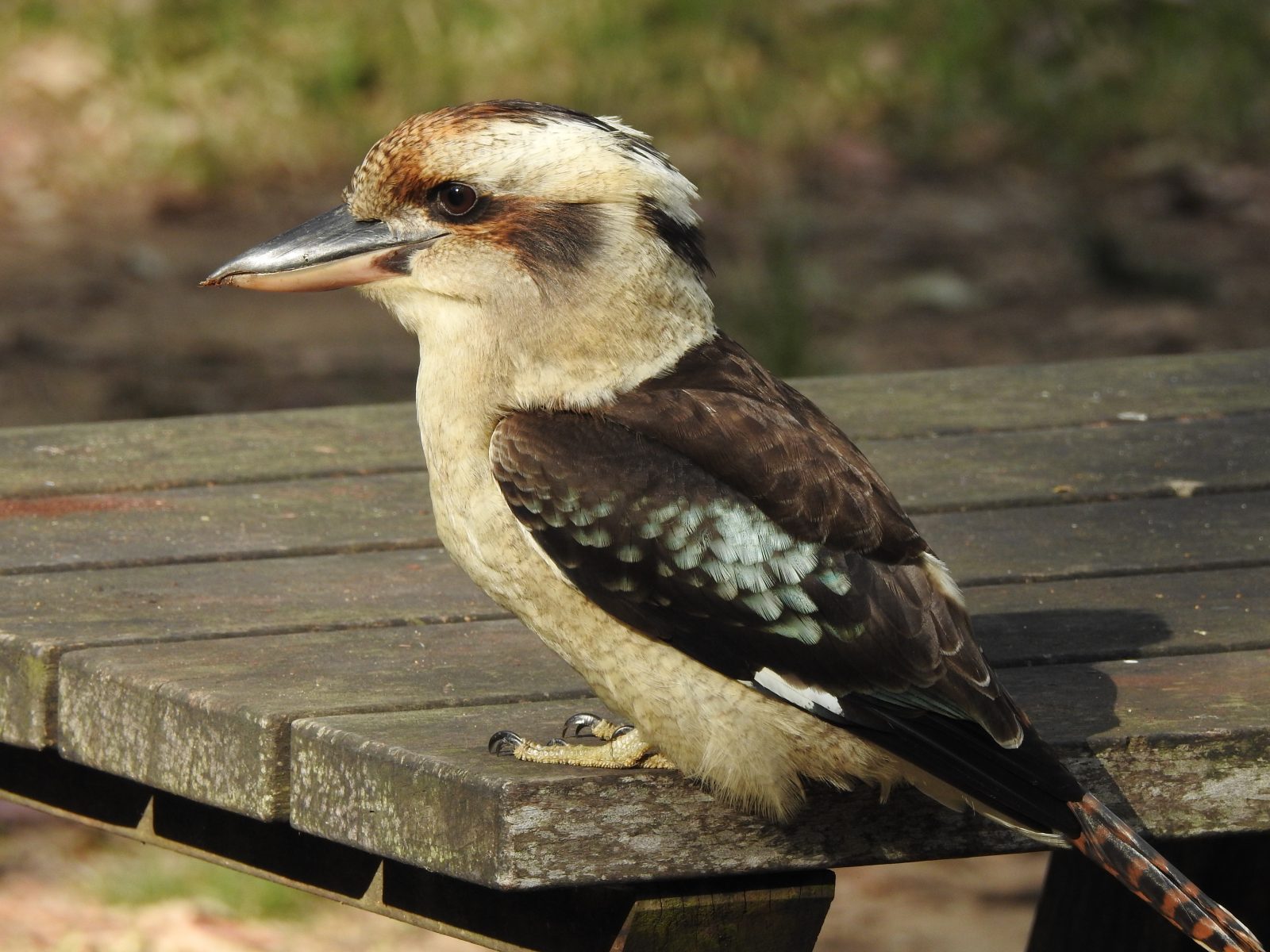
On many other occasions, I have written about my visits to Lane Cove National Park. This beautiful park is close to the Chatswood CBD just a short distance north of the Sydney Harbour Bridge. My son and his family live just a few minutes’ drive from the park, so I have taken many opportunities to visit and take photos of the birdlife, the flora and other interesting sights along the Lane Cove River which flows through the park.
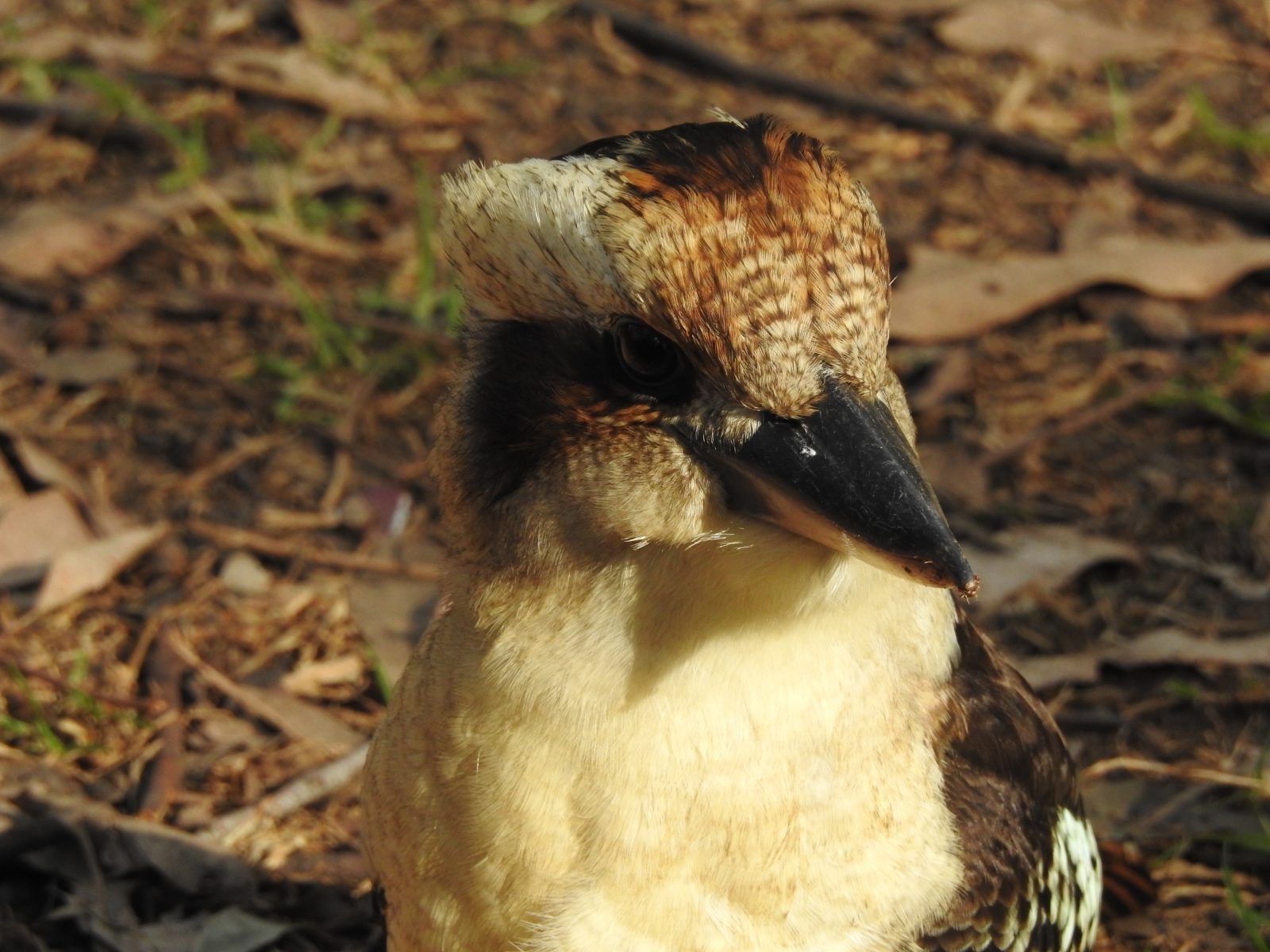
On a visit earlier this year, I spent most of one day exploring the park and taking photos of anything that took my attention. At one point I lingered near a picnic table. There are many such tables in the park for the convenience of visitors. Two Laughing Kookaburras were attracted to something on the ground but I couldn’t work out exactly what they were so interested in – perhaps it was a beetle or some other insect. Or the remnants of a picnicker’s lunch.
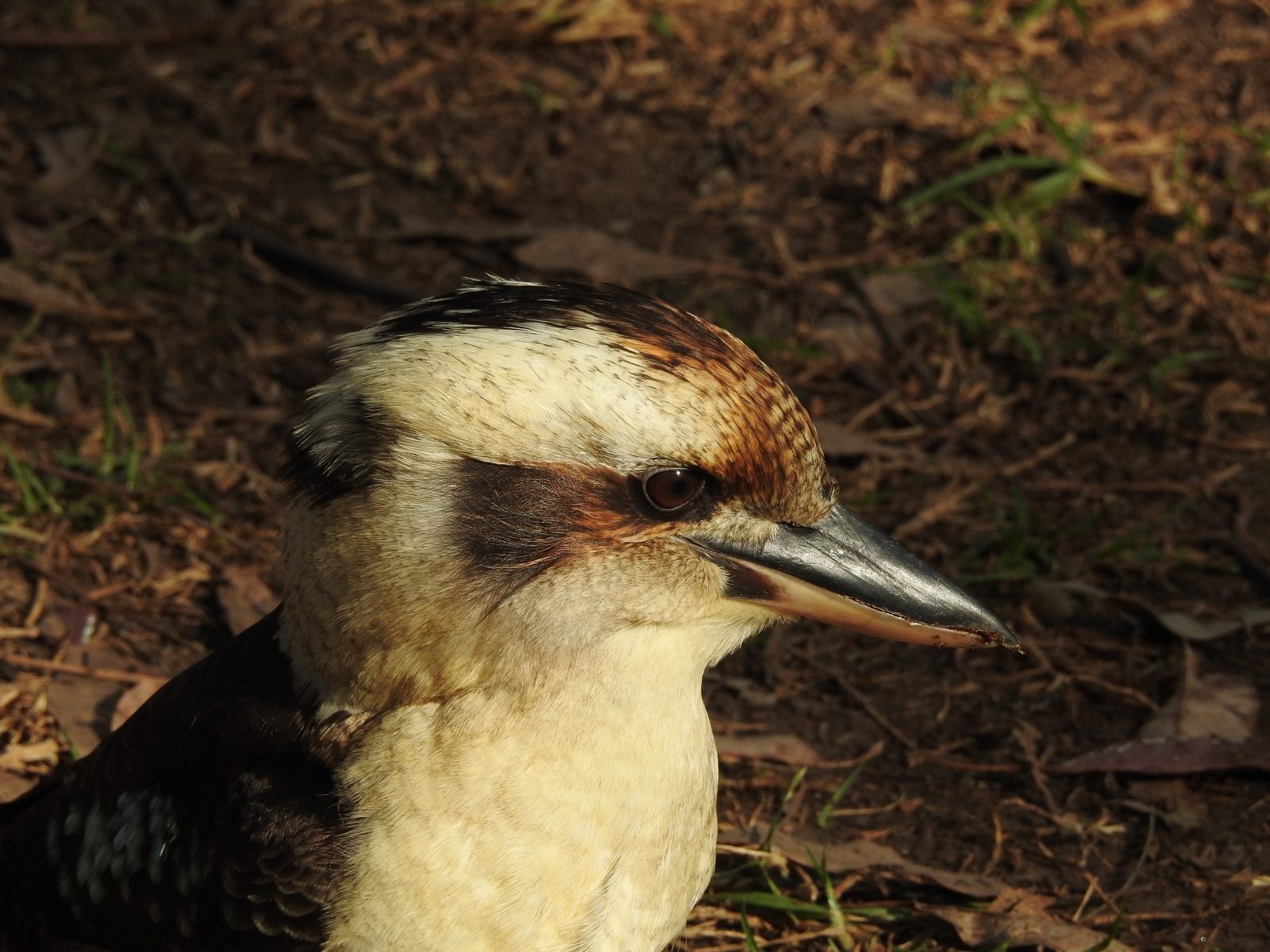
The two kookaburras kept squabbling over whatever had attracted their attention and consequently I was able to take quite a few closeup photos as shown in today’s post. I was able to get to within a metre or two of the birds so I really didn’t need the wonderful zoom facilities of my camera.
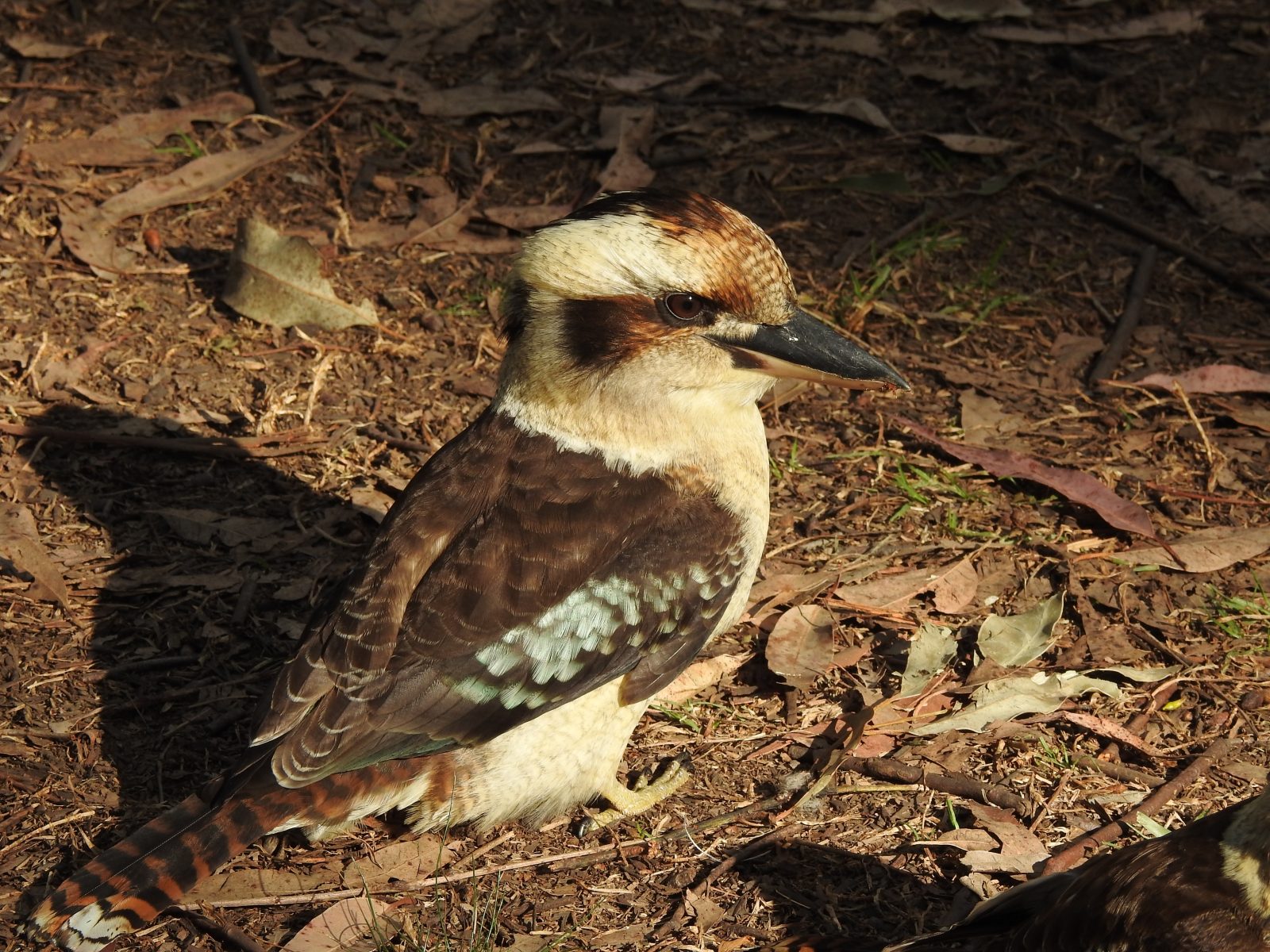
I kept on shooting until they decided to fly off. Visitors need to watch carefully for the kookaburras in this park, especially if they have food on their table or barbecue. On one occasion a kookaburra snatched part of a sandwich from alongside my wife while we were eating lunch.
On another occasion, my grandchildren were stunned when a kookaburra snatched a cooked sausage right off of the hot plate of a barbecue. They certainly are both opportunistic and cheeky.
Please leave any comments about your encounters with kookaburras or close encounters with other bird species.
Happy birding,
Trevor