Another species at the birdbath
No Comments »2nd December, 2020; Category: Bird baths, Bush birds, Garden birds, Parrots and Lorikeets
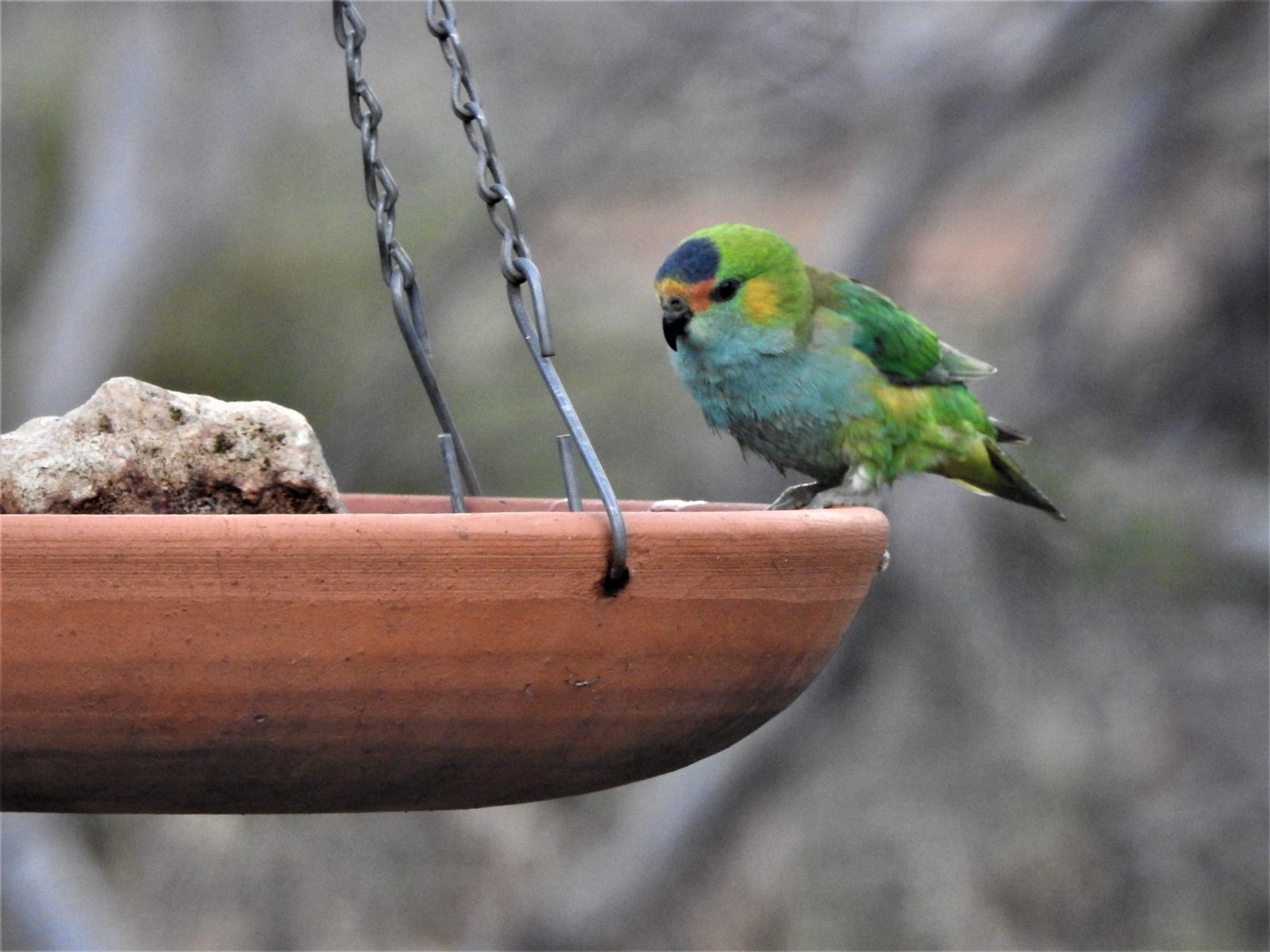
A birdbath delight
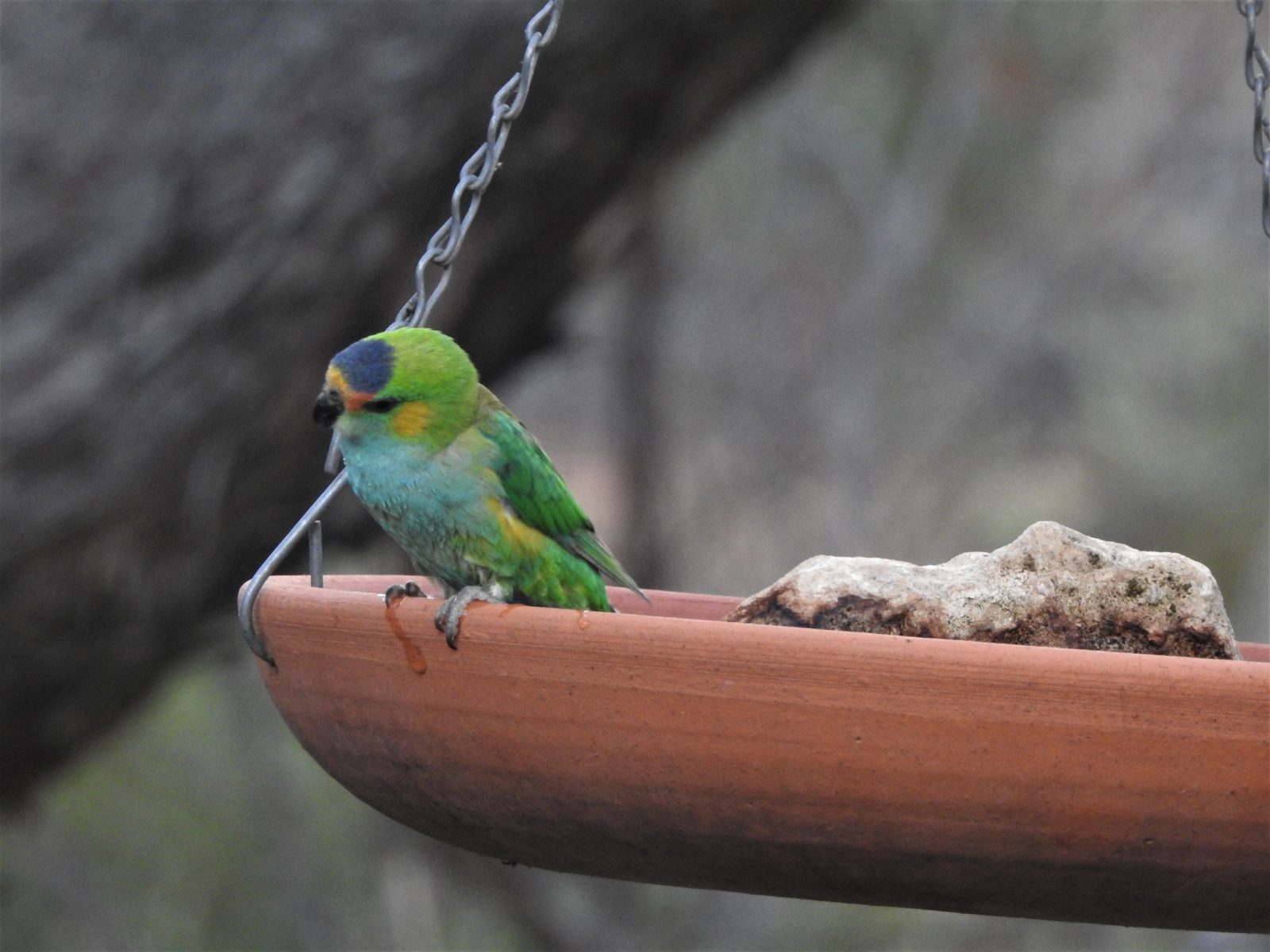
Earlier this week I glanced out of my sunroom window to check whether there were any birds at my birdbaths. I currently have three birdbaths just outside the room, one on the ground, one on a pedestal at about 60cm and one hanging from a tree branch at a height of about 1.5 metres. I was delighted to see a small flock of Purple-crowned Lorikeets having a drink and dipping into the water for a bath. I have just checked my list of species to have visited the birdbaths. This was bird species number 36, in addition to the three reptiles and two mammal species.
After a moment or two, I counted up to seven individuals in or near the birdbaths. Soon they were joined by several House Sparrows and three or four New Holland Honeyeaters. There was a sudden screeching and a flurry of wings as a Collared Sparrowhawk swooped in to break up the party. I didn’t see if it caught anything for its supper.
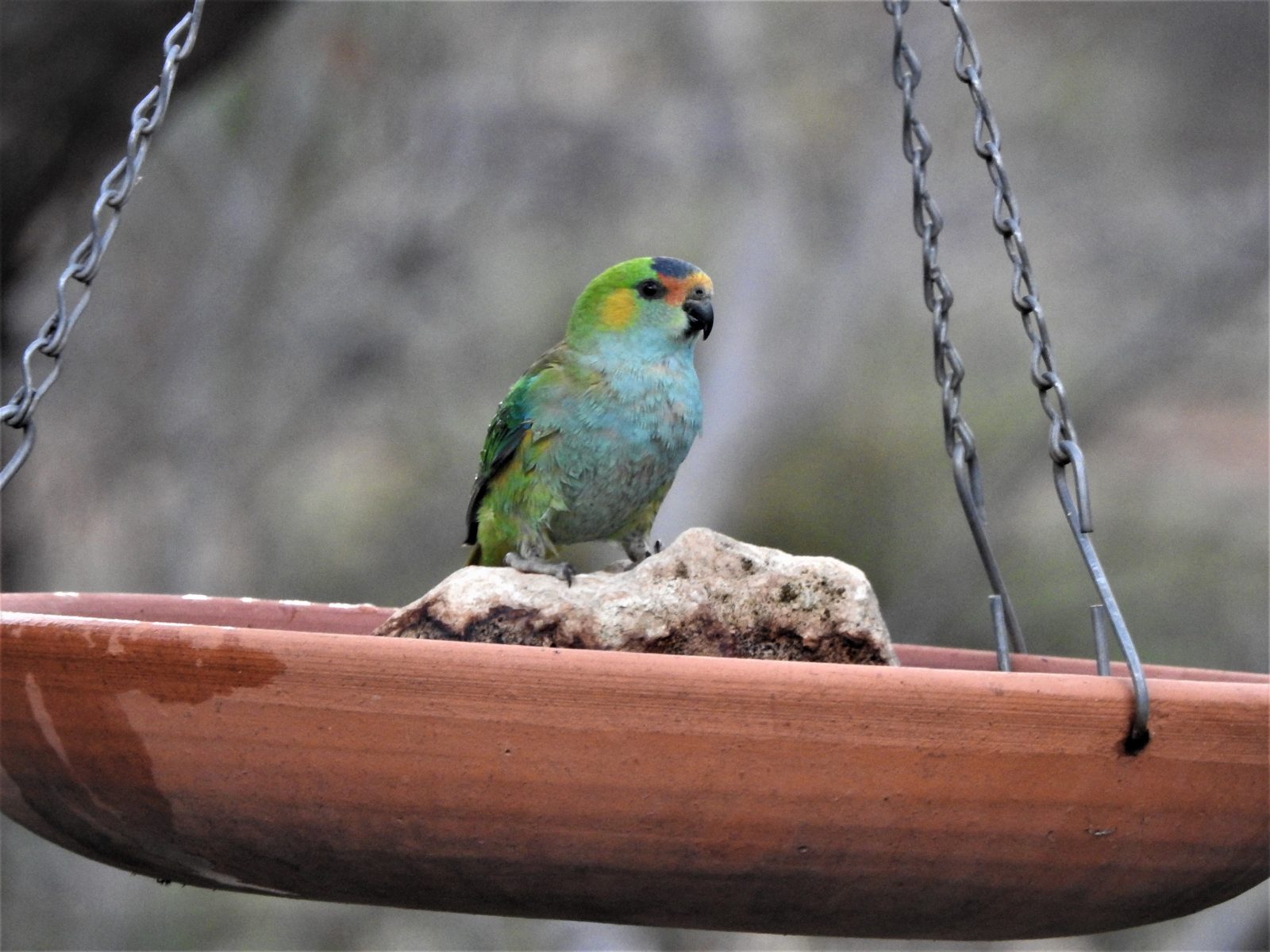
Common species
The Purple-crowned Lorikeet is a common bird in the Murray Bridge district of South Australia where I live. On most occasions, however, I hear them go screeching overhead at speed and rarely get good views of them like in today’s photos. Sometimes I am lucky enough to see them reasonably close when they land to feed on the blossoms of one of the mallee trees on my land. That is when my binoculars help out, as well as the 83x zoom on my camera.
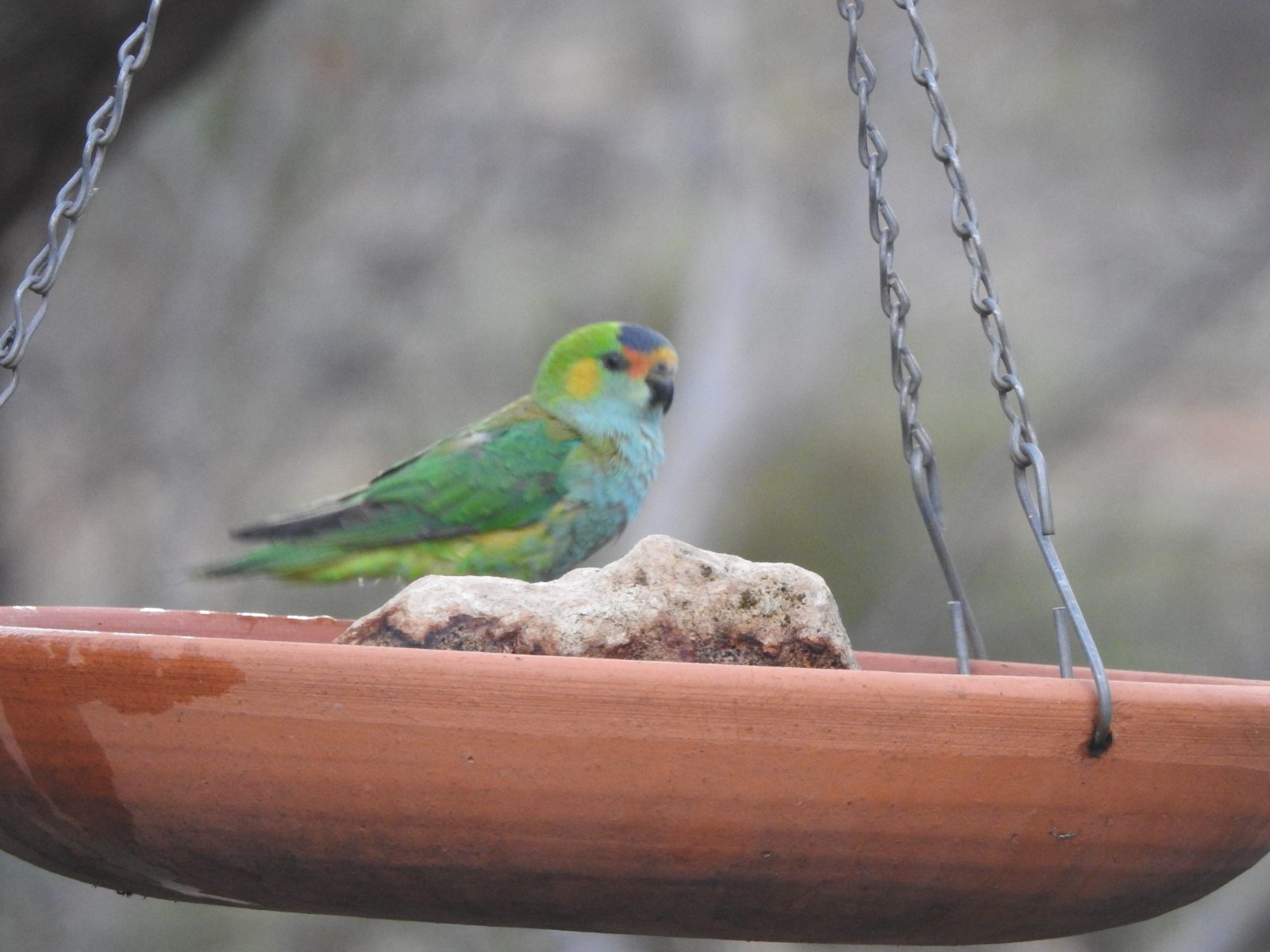
Other lorikeet species
There are two other lorikeet species which visit my garden or the trees on my 5-acre block. They include the very common Rainbow Lorikeet and the dainty, much smaller, Musk Lorikeet.
I am so pleased to have the delight of regularly seeing all three of these colourful parrots right where I live.
A raft of rosellas
No Comments »31st August, 2019; Category: Bird baths, Bird Behaviour, Garden birds, Parrots and Lorikeets
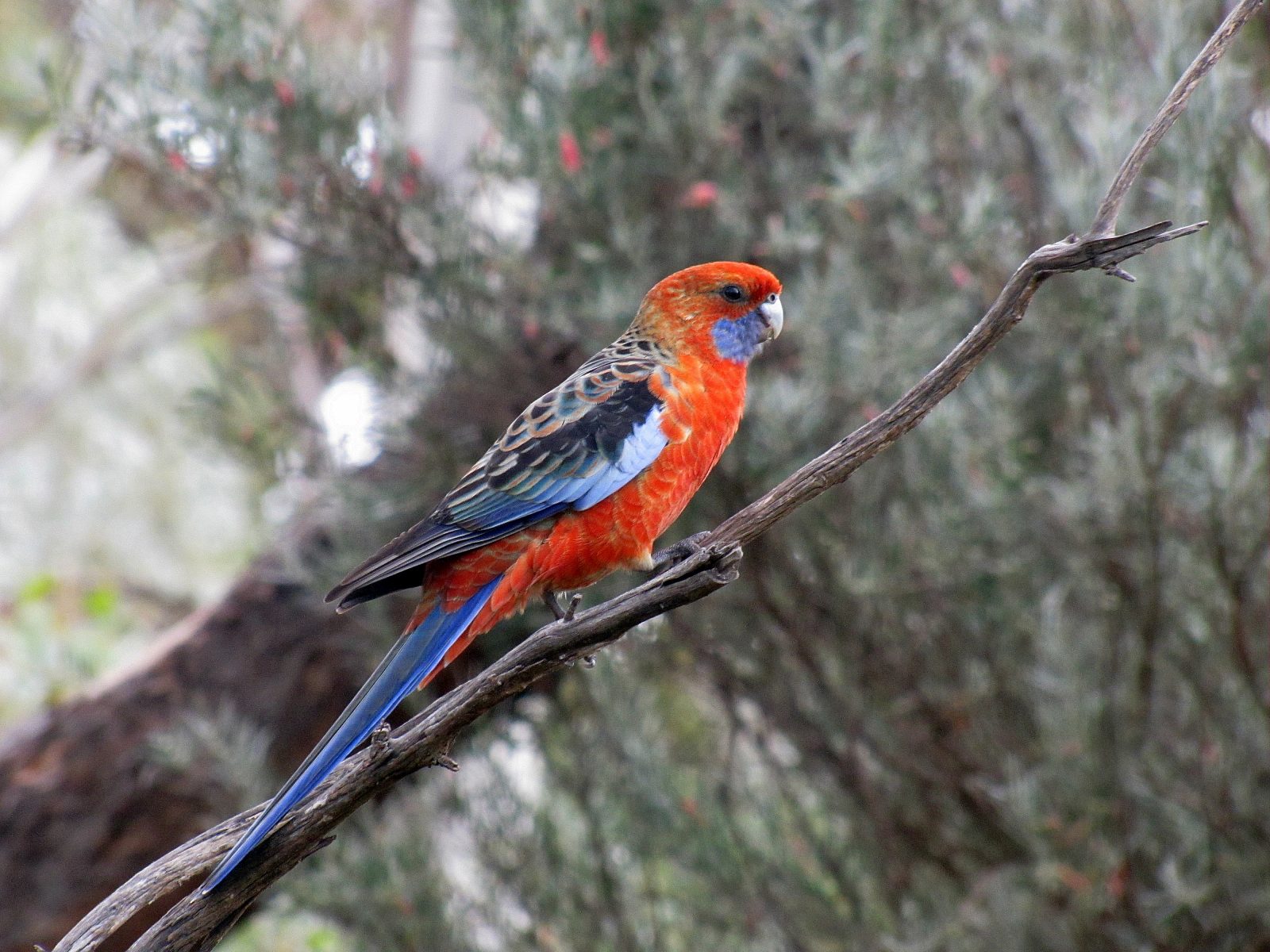
Earlier this week I spotted several birds coming in to land on the swimming pool cover in my garden. I keep the cover on the pool during the winter months to stop twigs from nearby trees falling into the water. The cover also stops excessive evaporation of the water.
During recent months, however, the winter rains have been quite good here where I live in Murray Bridge, South Australia. Other regions have been in serious drought conditions. Whenever it rains, small, shallow puddles of water gather on top of the pool cover. These pools are very inviting to the local birds and any others passing by.
When I stealthily crept closer to the pool I discovered three Adelaide Rosellas had landed on the pool cover and they were having a lovely time splashing around in the shallow pools of water. I crept quietly back into the house to get my camera, but by the time I came out again they were ready to leave. I didn’t get a chance to take some photos.
When I first moved to my home on the western edge of town over 30 years ago, I never recorded Adelaide Rosellas in my garden. Over the last ten to 15 years, their visits have become more and more frequent. Sometimes several months go by without sighting them, and then I will see some several months in a row. I guess you could say that their visits are somewhat sporadic. I certainly cannot call them a resident species like the Mallee Ringnecks which are always around somewhere on my five-acre block.
The Adelaide Rosella is a sub-species of the Crimson Rosella, common here in the southern parts of South Australia, as well as throughout the eastern states. I have also seen the Yellow Rosella nearby, another sub-species.
Because I didn’t get a chance to get a photo of the three visitors this week, I have used a photo of one taken some years ago (see above).
The beautiful Crested Pigeon
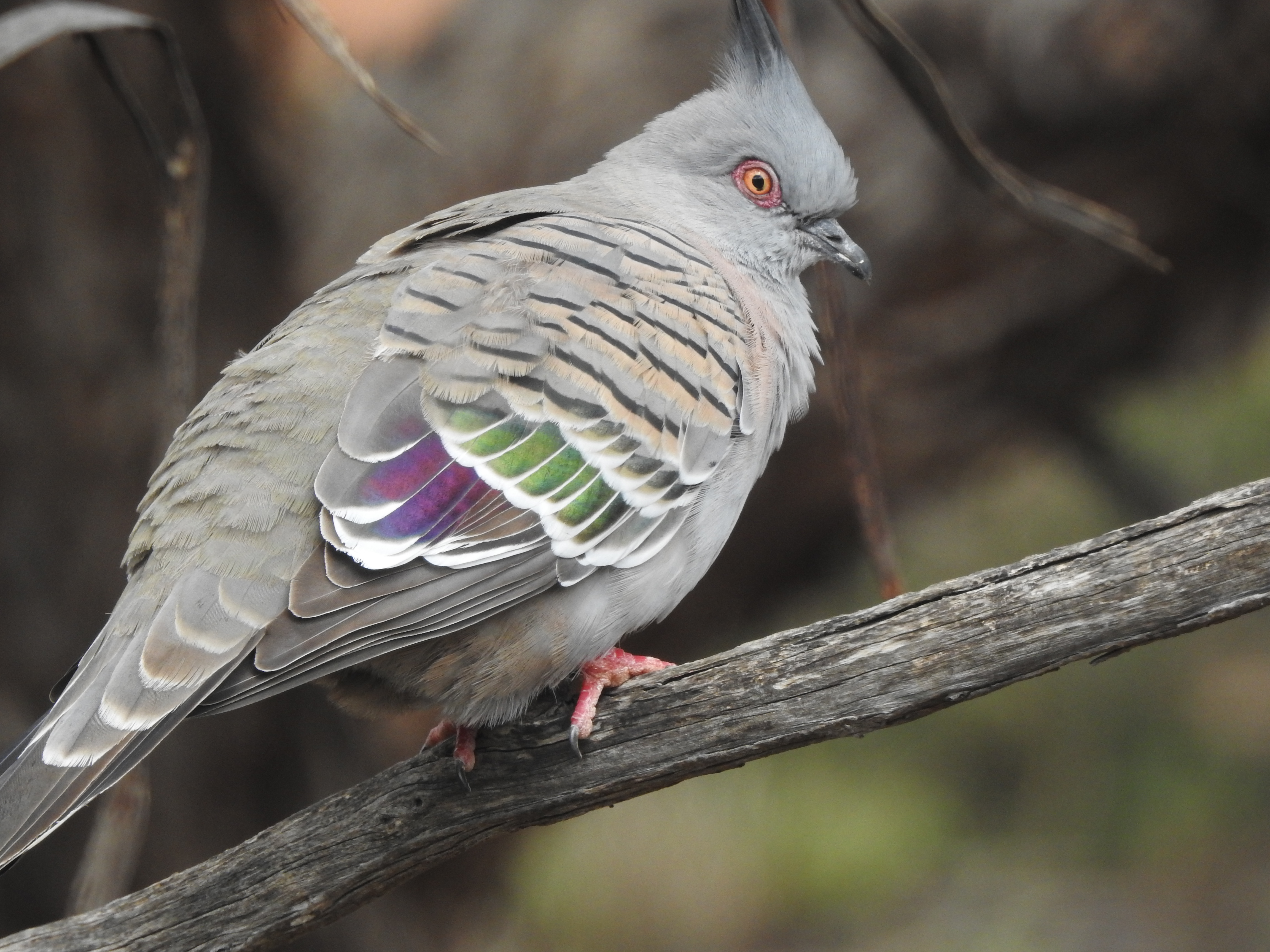
Crested Pigeon
A few weeks ago I was sitting at the table in my sunroom reading the daily paper. I was suddenly distracted by some birds at my bird baths just outside the window. This is a favourite place of mine to sit because I have an uninterrupted view of several bird baths strategically placed in my garden. During the warmer weather, there is often a steady stream of birds coming to drink and bathe in the water. Sometimes, the bird baths need daily replenishment. Many of the photos featured on this site have been taken of birds at the birdbath.
Once I saw that the bird was a Crested Pigeon sitting quietly on a branch near the top bird bath, I went to get my camera. It stayed there on the birdbath for a few moments, and then it moved to a nearby branch. It was then that its wing feathers caught the rays of the sun and showed up the brilliant iridescent colours (see the photos above and below). On most occasions, this species appears to be a dull grey with only a few white and black markings. In certain angles of the sunlight, the colours show up beautifully. When I zoomed in to take close-up photos, the beauty shows up even more – as seen in today’s selection of photos.
I have often written about the Crested Pigeon on this site, and I have shared many photos of them over the years. To read these articles and see the photos use the search button at the top of the page or click here.
The individual in today’s photos stayed around for about five minutes, enabling me to take plenty of shots in various poses. Bird photography can sometimes be a little frustrating because the subjects have a tendency to up and fly off – just when the camera has focussed on the bird. When they do pose nicely it is a wonderful bonus.
Enjoy.
Crested Pigeon
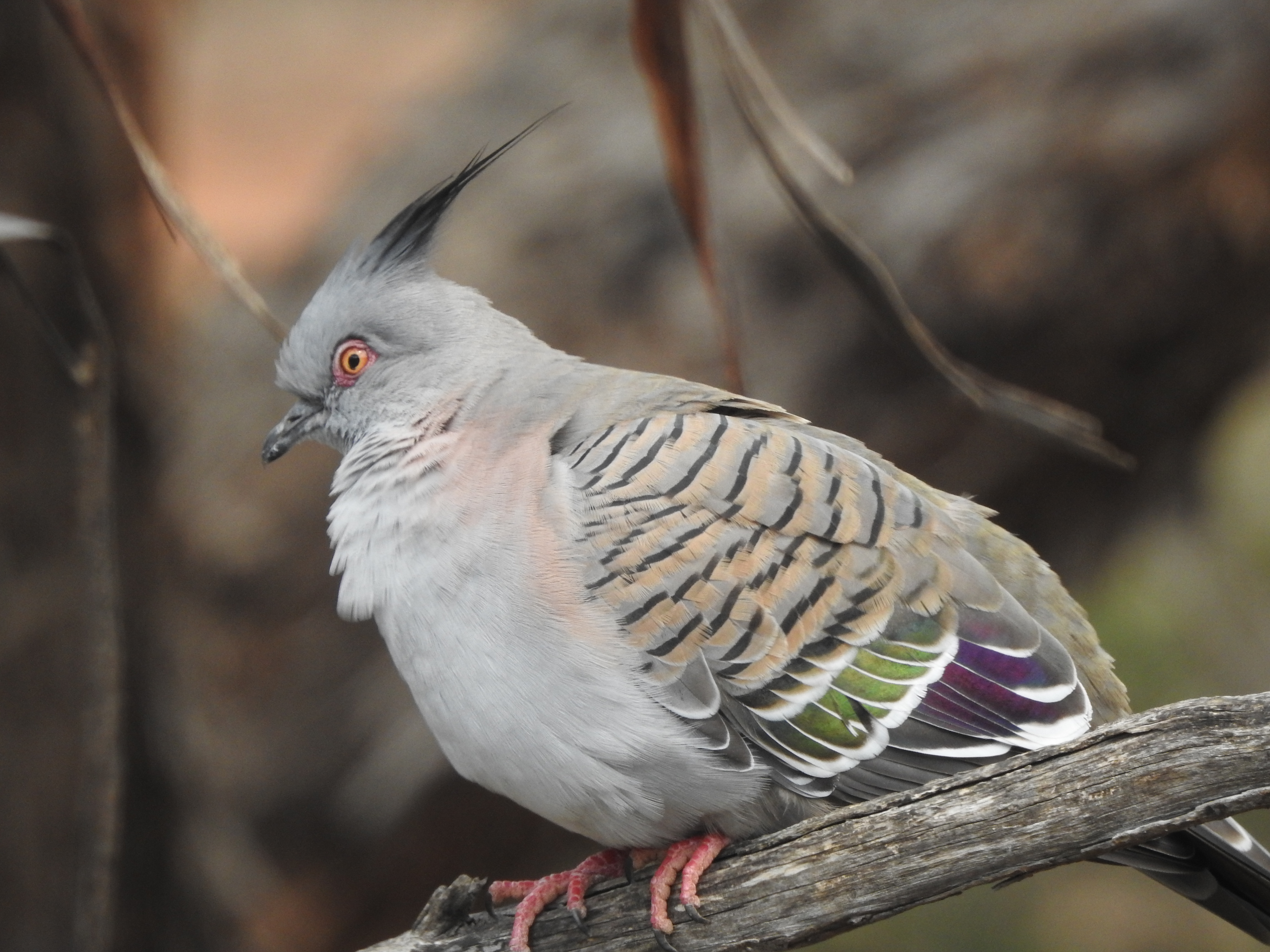
Crested Pigeon
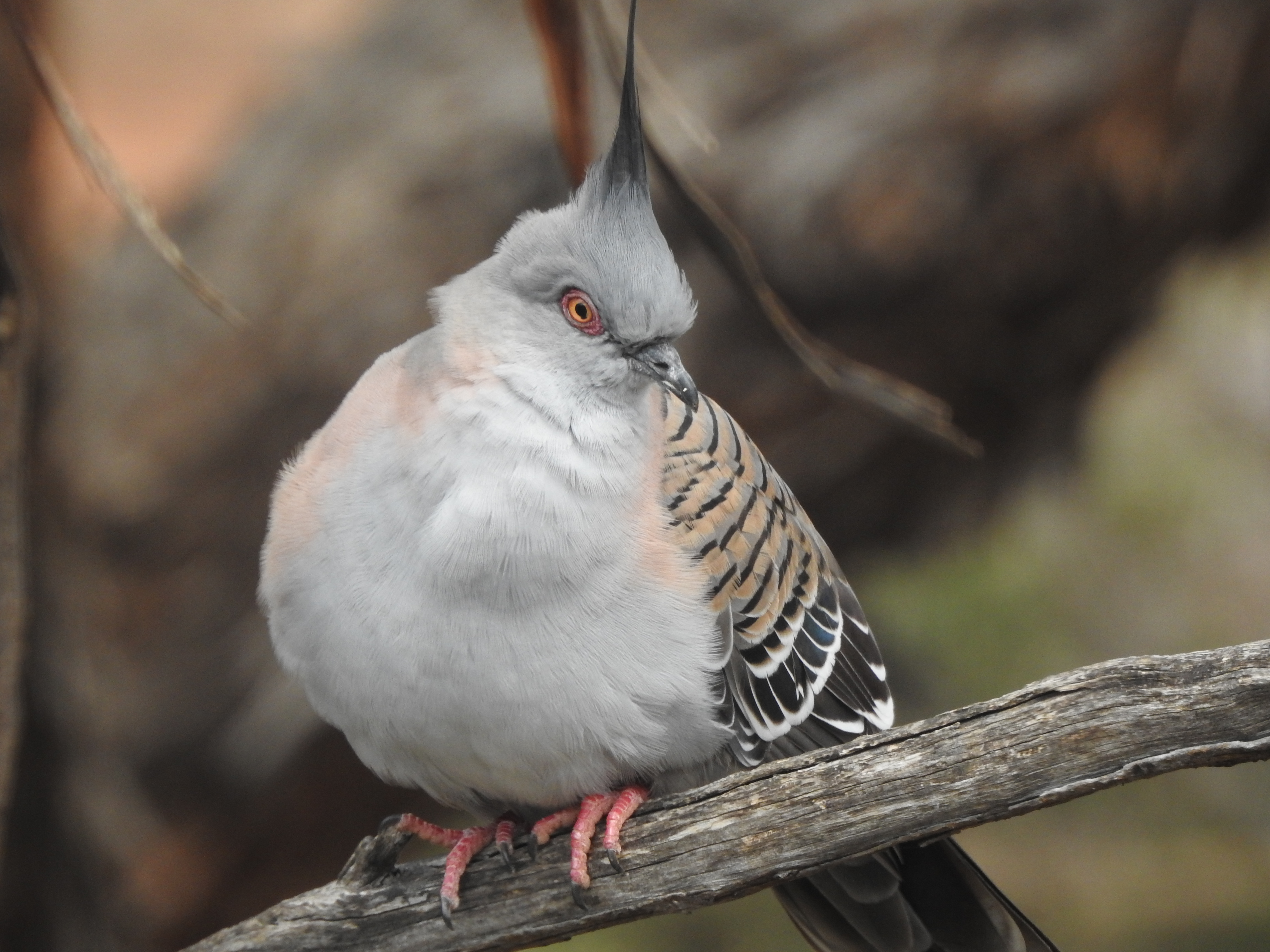
Crested Pigeon
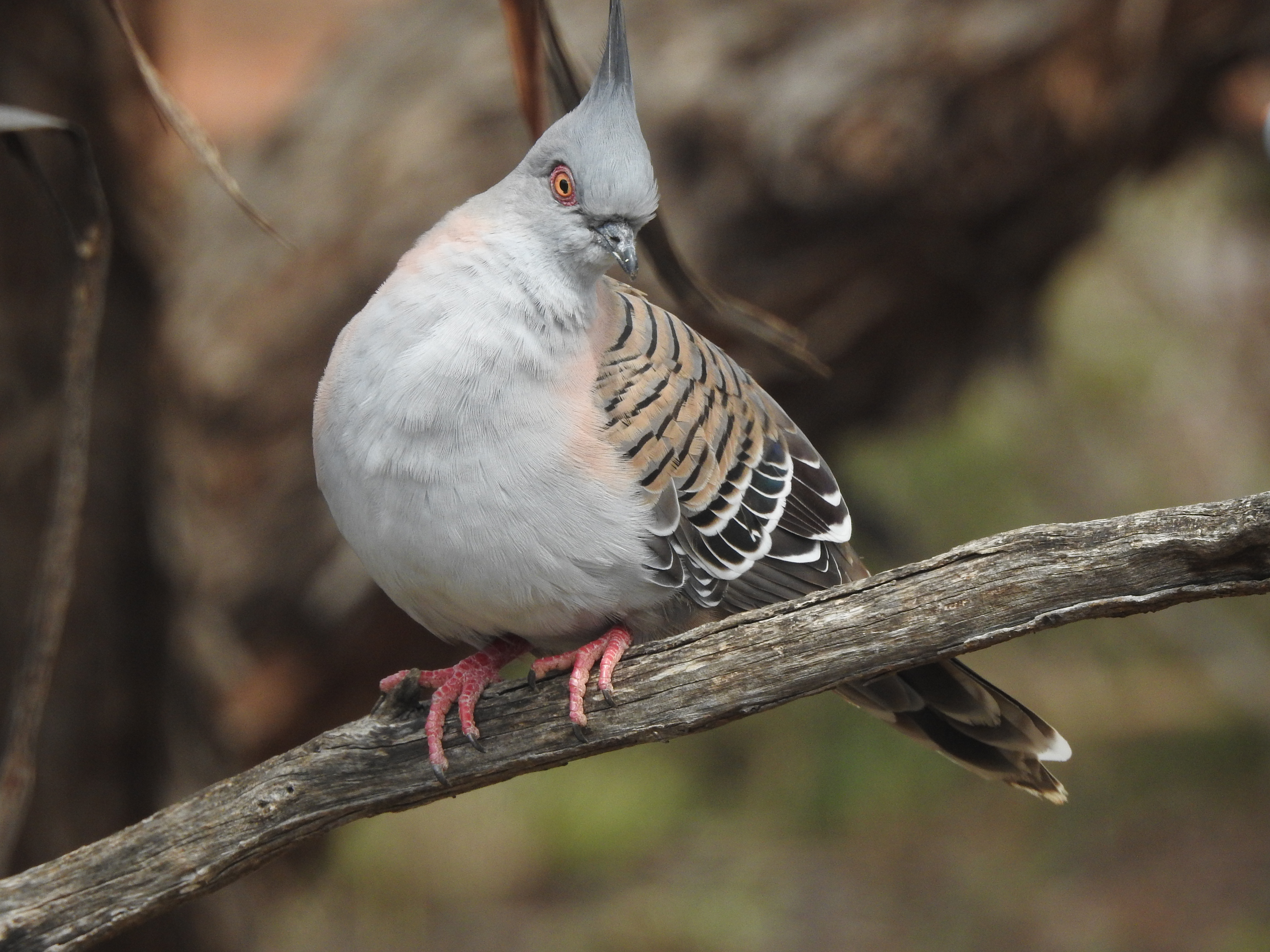
Crested Pigeon
New Holland Honeyeater posing
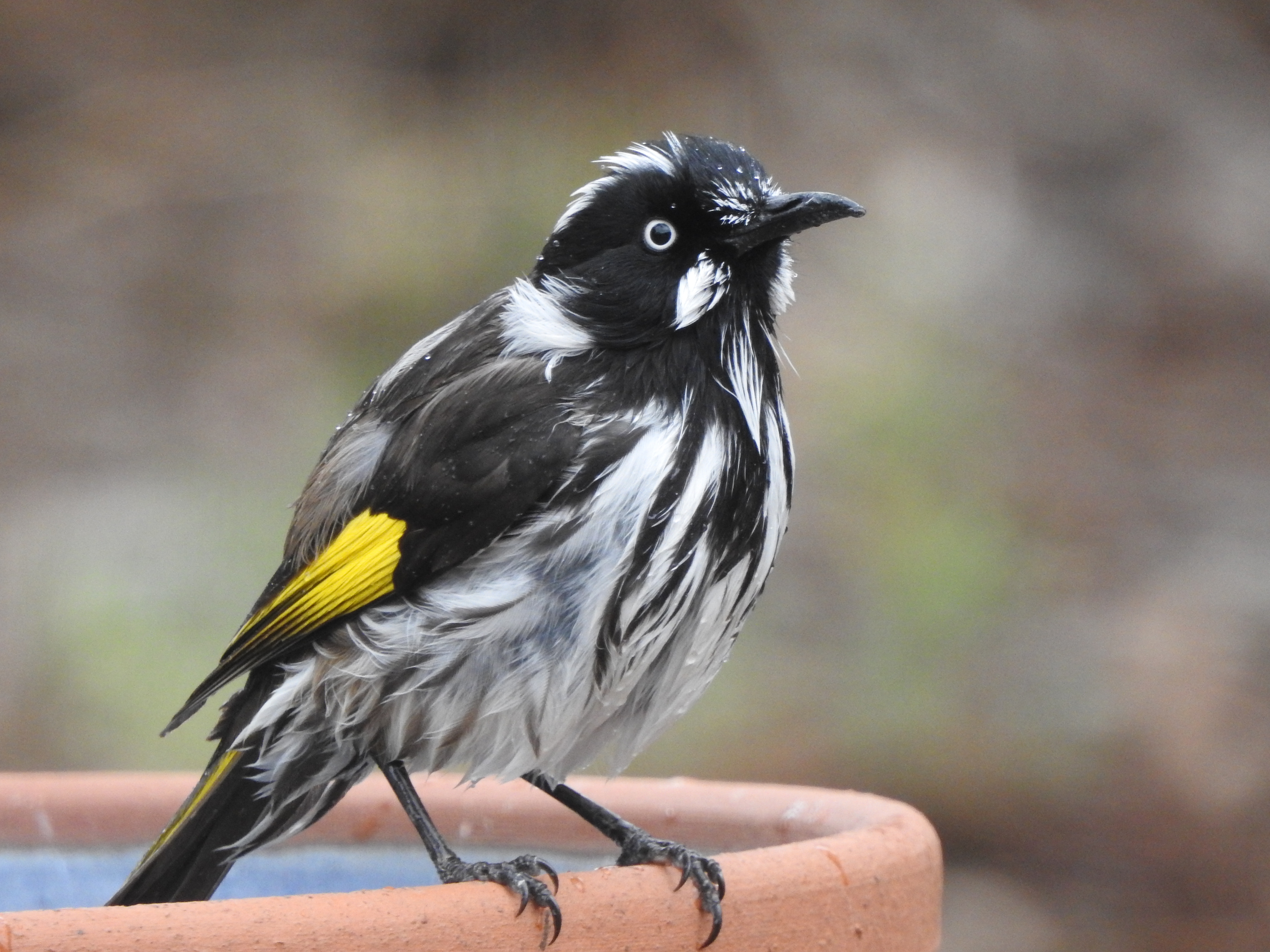
New Holland Honeyeater
During the warmer months of the year, there is a constant stream of birds coming to my birdbaths for a drink. On hot days many of them will also come for a dip in the water. What always amuses me, however, is the number of birds which also come for a dip in the water on freezing cold days.
Some of the birds which regularly visit my birdbaths include 8 different species of honeyeaters, 3 kinds of parrots, Australian Magpies, Little Ravens, Grey Currawongs, White-browed Babblers, Superb Fairy-wrens, House Sparrows, Diamond Finches, Common Starlings, Grey Shrike-thrush, as well as at least 3 kinds of pigeons and doves and many other species. Over the years I have written articles and shown photos of most of these species. To find those articles just go to the search box above right or the Categories list on the right-hand side-bar. Or you could check out the archives section.
It is now winter here in Murray Bridge, South Australia, where I live. Over recent days we have had some very frosty mornings and cold nights. The water in the birdbaths is very cold and may even freeze on a night like tonight with the temperature due to go down to minus 1 degrees Celsius (30 degrees F). The birds will still be happy to have a drink during the day and even a short splash in the very cold water. I don’t think that I will be joining them in a hurry. They can enjoy it all to themselves.
Recently I took a series of photos (above and below) of a solitary New Holland Honeyeater enjoying the water. The individual was quite unhurried seeing it had the water all to itself. This is unusual because normally there would be anything up to a dozen birds or more, all splashing away happily and creating quite a noisy party with all of their excited calls.
Good birding,
Trevor
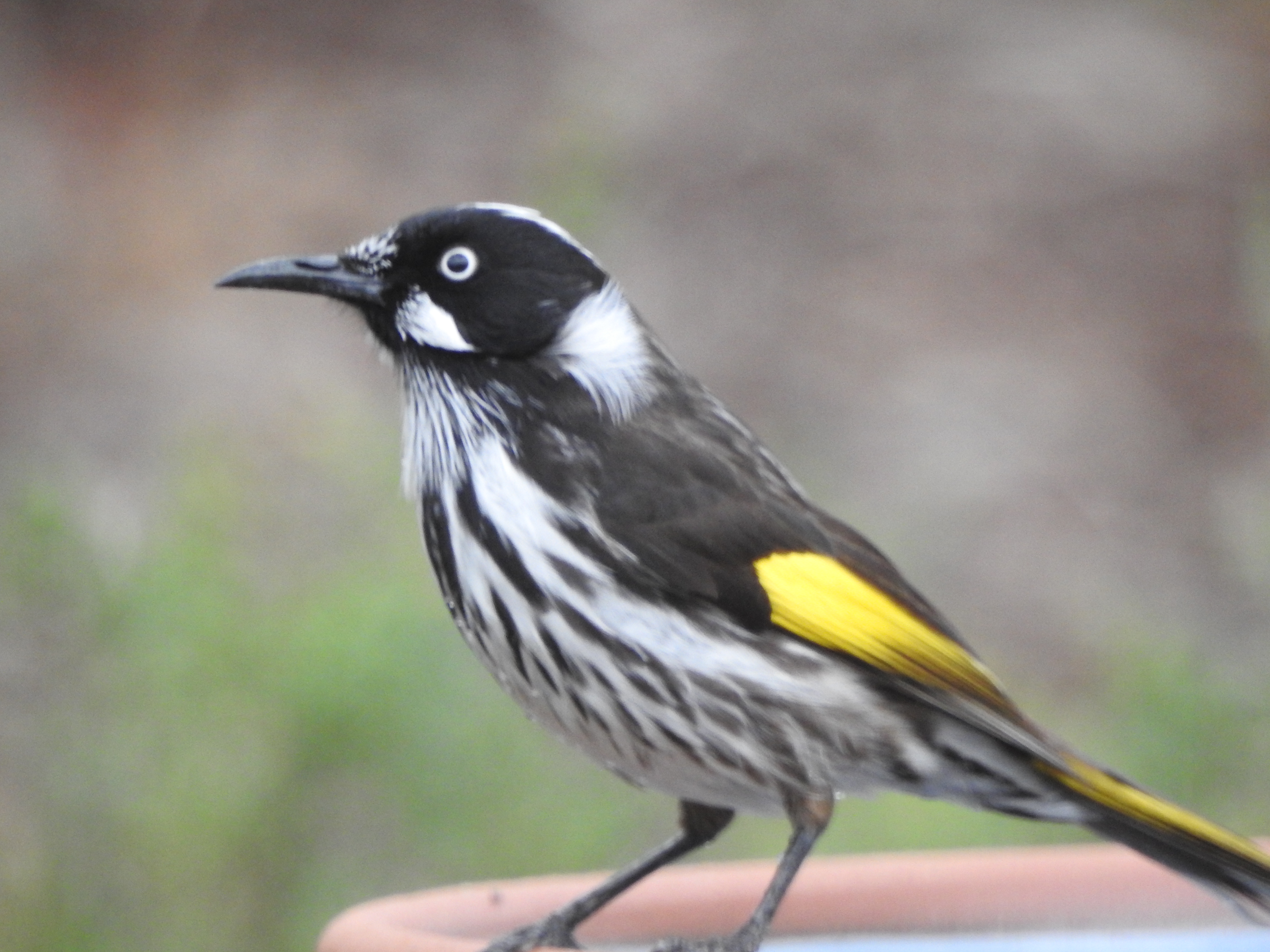
New Holland Honeyeater
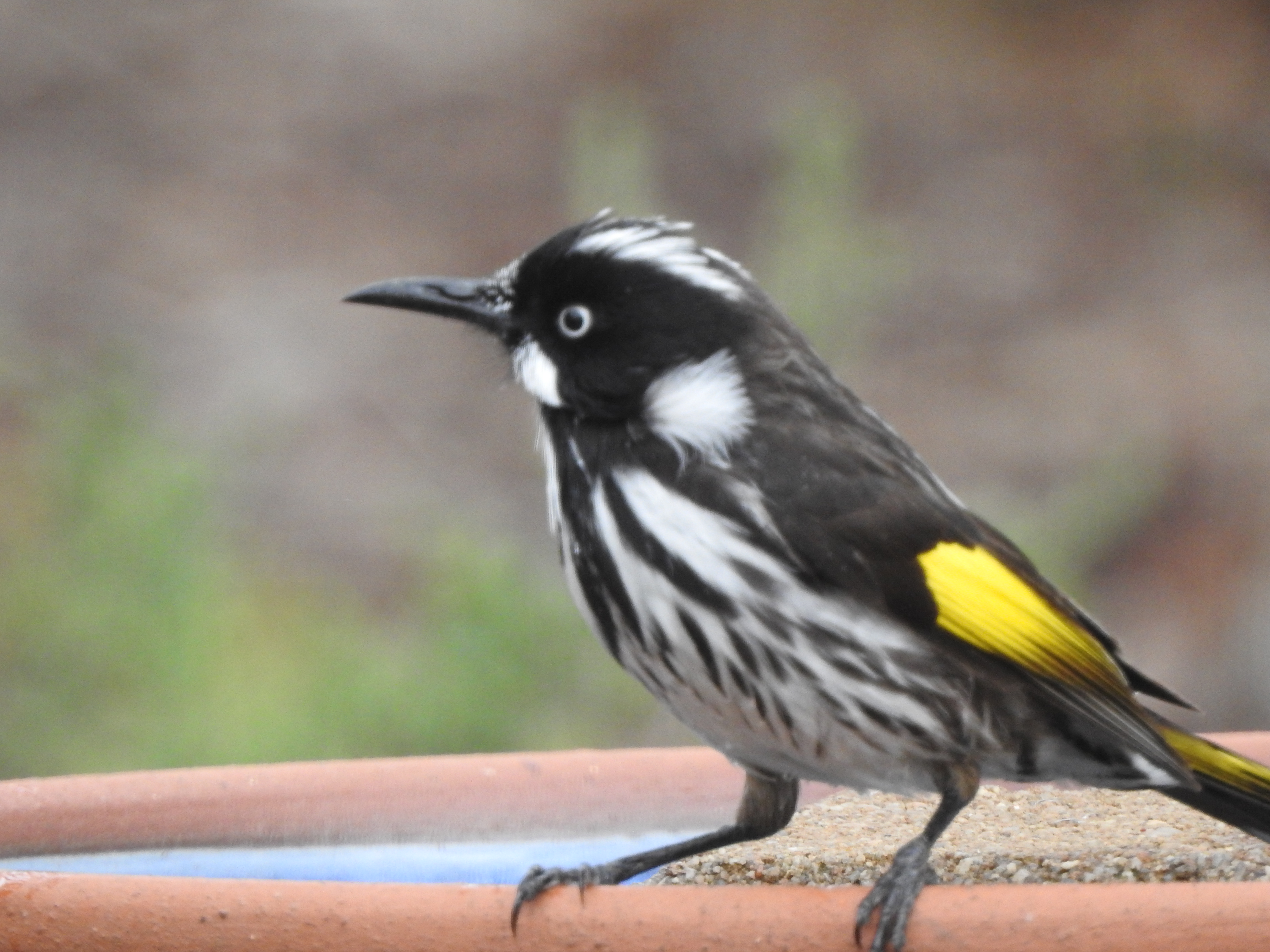
New Holland Honeyeater
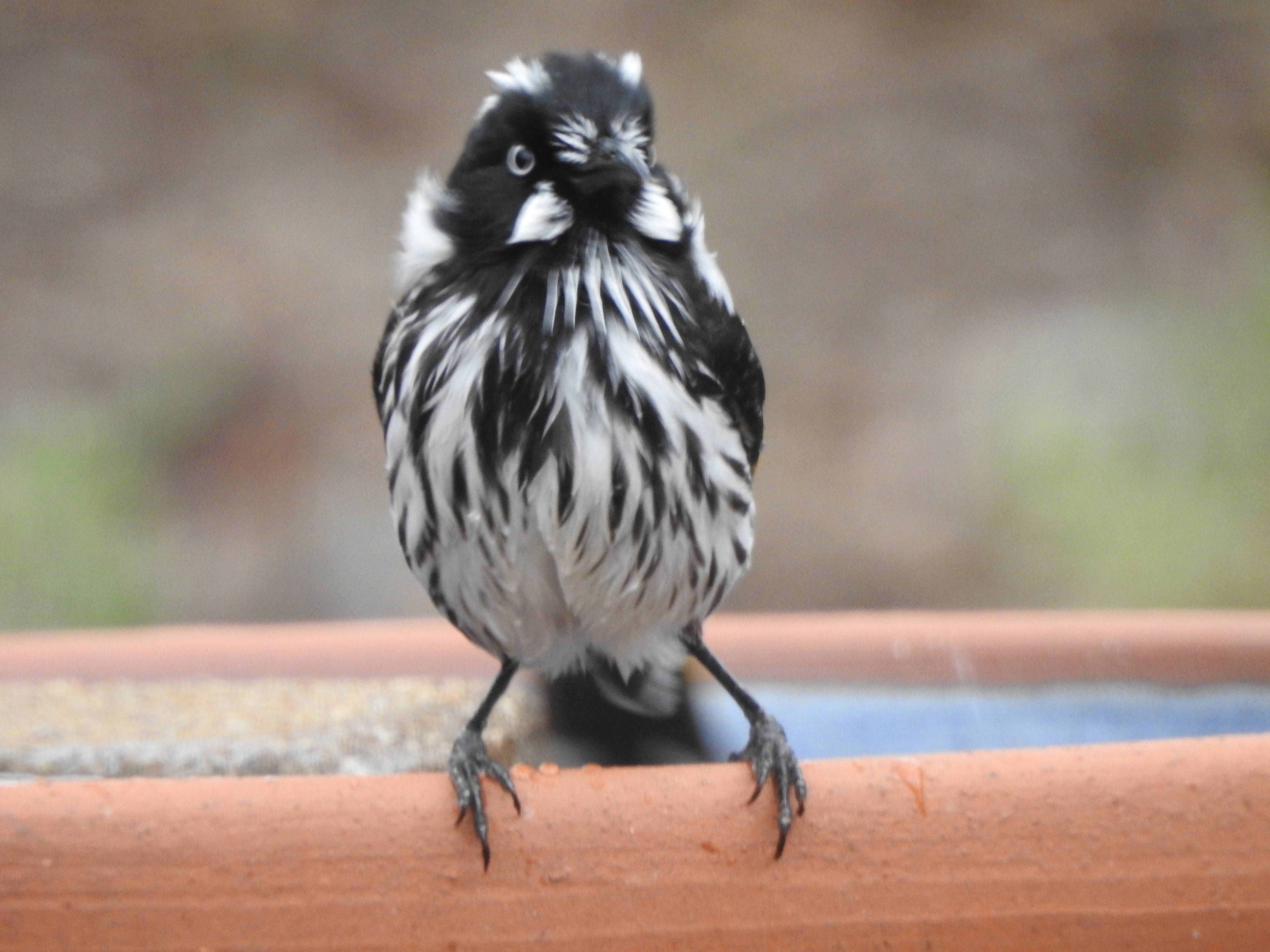
New Holland Honeyeater
World Environment Day
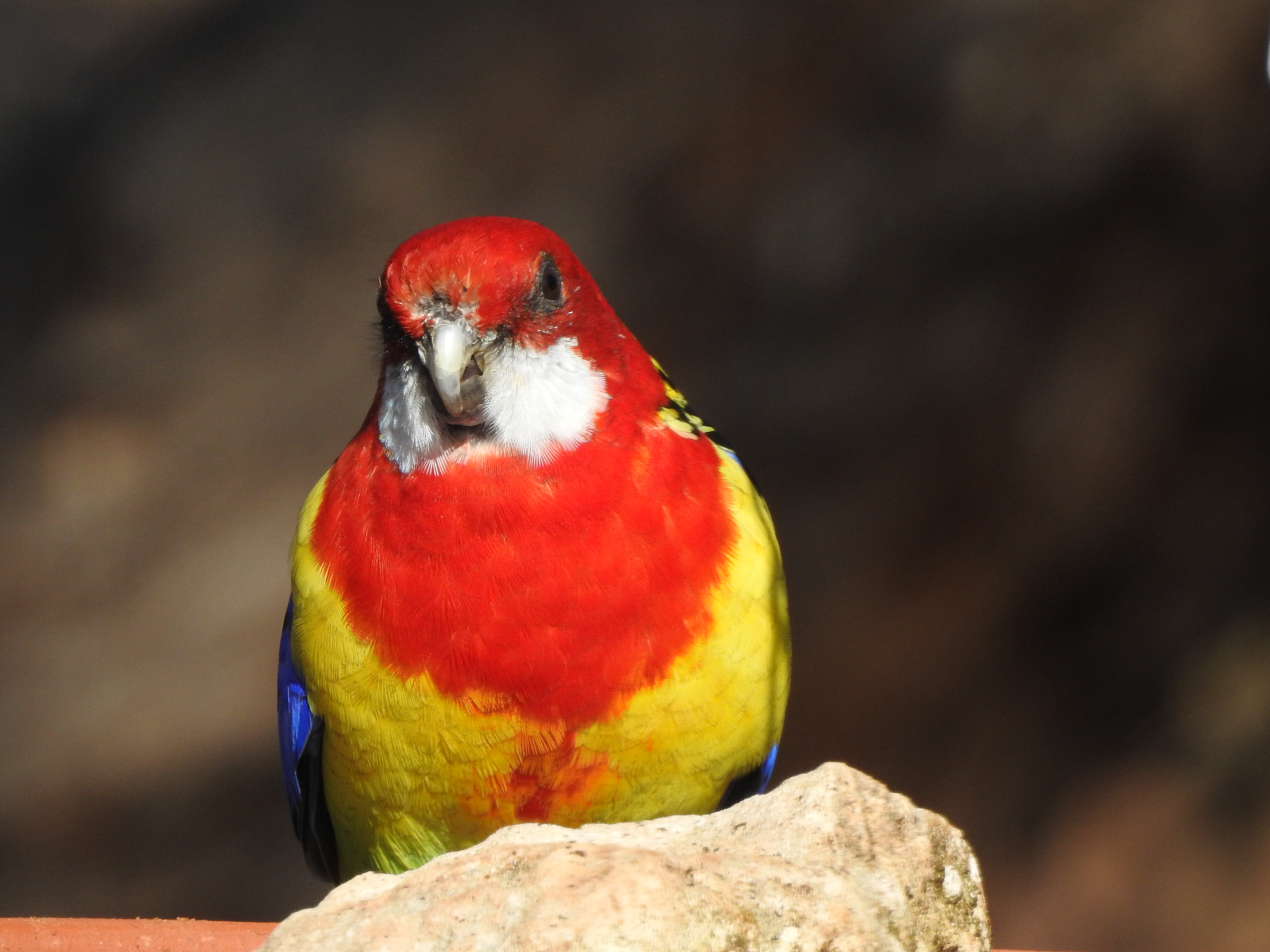
Eastern Rosella
WORLD ENVIRONMENT DAY 2018
World Environment Day is celebrated on the 5th June every year. I cannot remember posting anything about this day in all of the years I have been writing on this site. This is a first for me.
I live on the edge of a large country town in South Australia. My property is about 2 hectares (5 acres) in size, with over half of it either natural scrubland (mallee trees), or planted trees and shrubs. I have lived on this property for well over 30 years and have kept a bird list for all of that time. The current list has reached 112 different species, the high number due in part to the presence of suitable habitat for a wide range of species.
Over those years we have planted many hundreds of trees and shrubs in addition to those occurring naturally. Not only have we taken delight in the wide range of birds that visit or are resident, we also enjoy the many flowering species of plants. Planting is one easy and very rewarding way of improving the environment. Even if you only have a small courtyard for a garden, having a few plants – both native and exotic – will attract our native birds for you to enjoy. The same could be said for those who live in a high-rise apartment with a balcony. Even having five or six plants in pots improves the environment, as well as helping your own well-being.
Another way I like to encourage the birds in my garden is to have several bird baths. I have placed these within close viewing distance from our sunroom. Over the years this has given me much pleasure. On really hot days, the birds flock to the baths in large numbers, either to drink or to bathe. Today I have included some recent photos taken of birds which have visited my bird baths. These were all taken when the weather was much cooler than our hot summer days, so even in cool weather, we have the delight of many birds coming to visit the bird baths.
Enjoy.
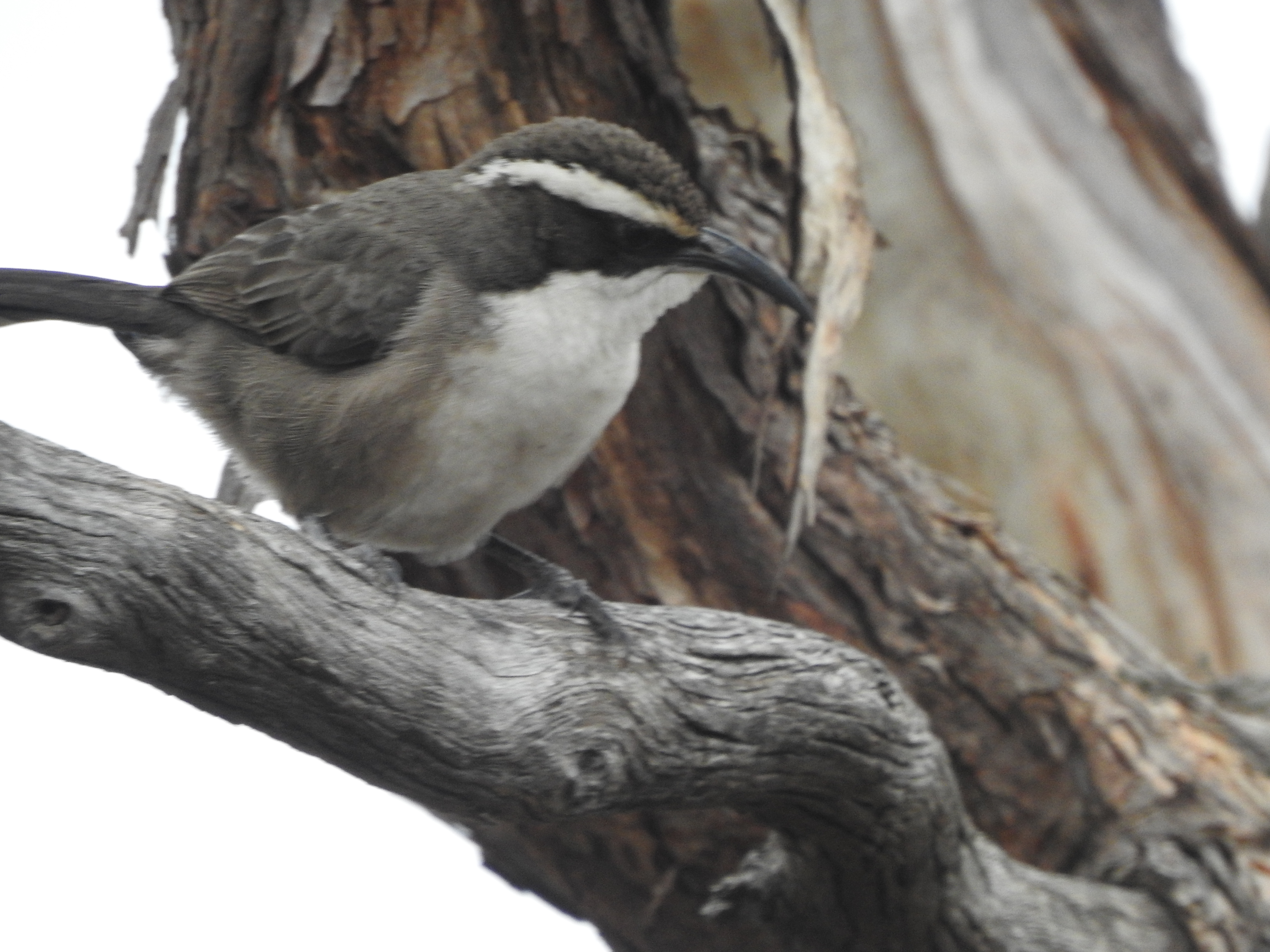
White-browed Babbler
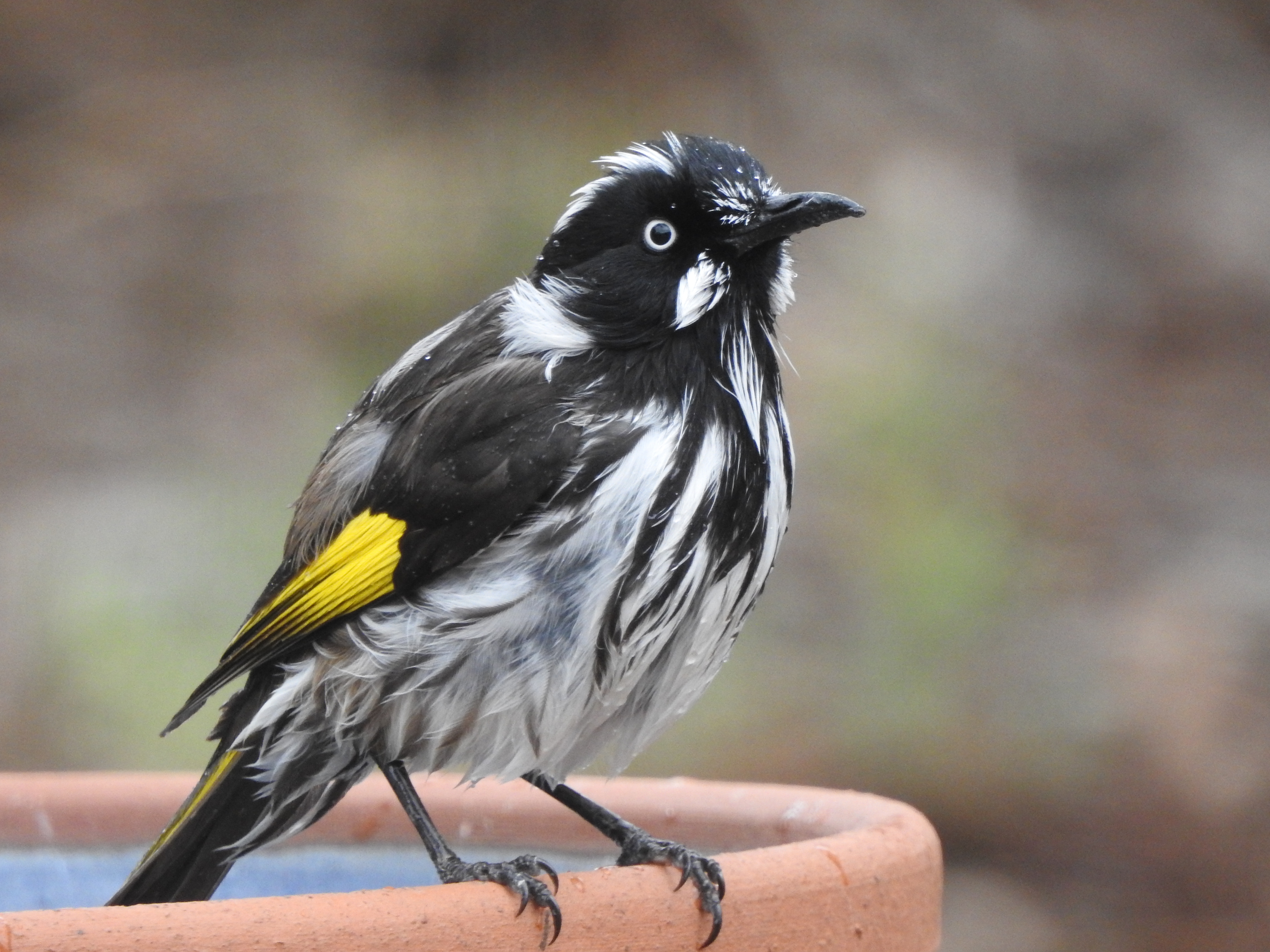
New Holland Honeyeater
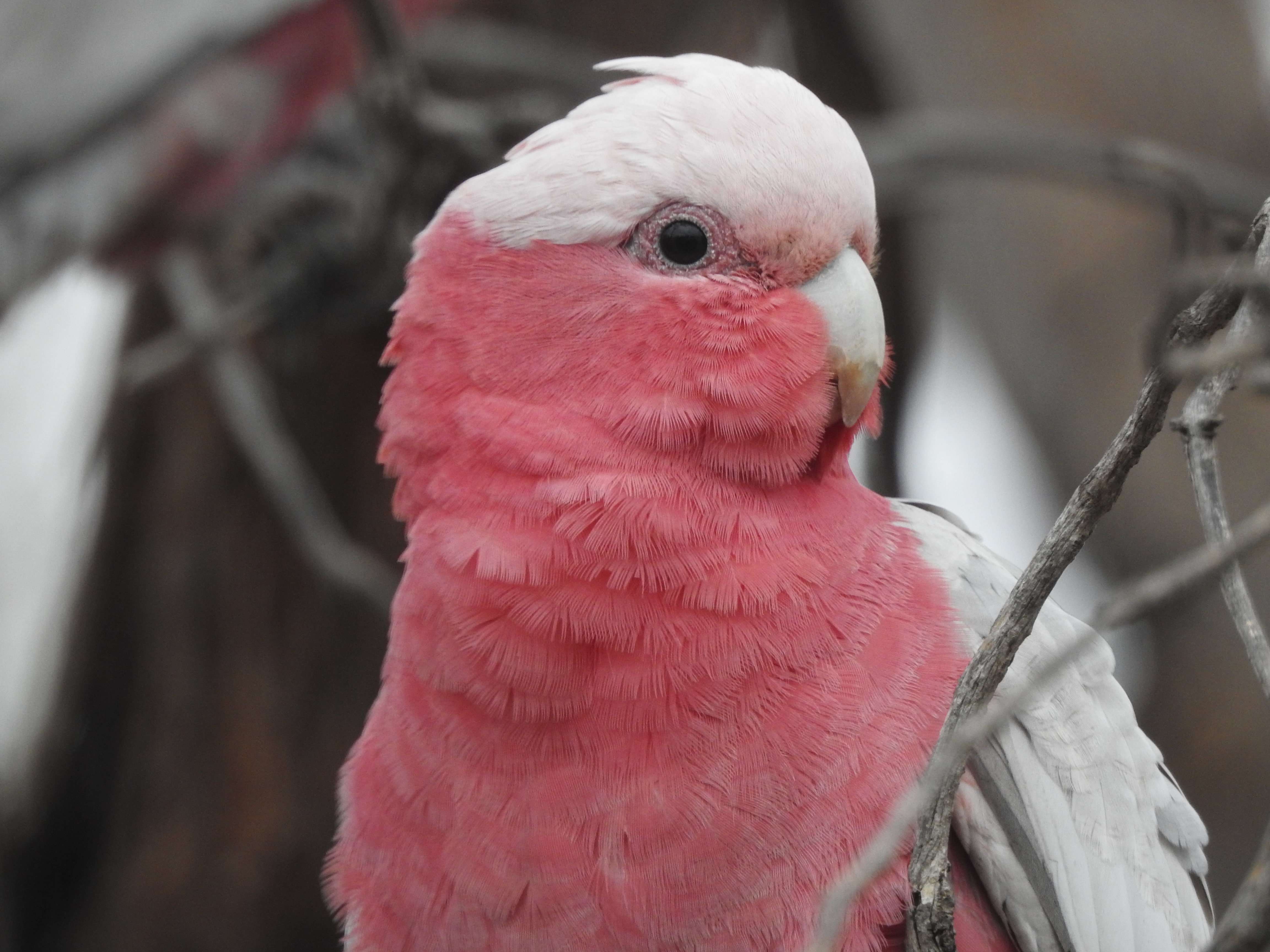
Galah